Note: This is part 2 of the discussion of circle breathing systems. If you have not read part 1, please click here to go to part 1.
Positive pressure ventilation:
So far we have discussed how the circle system works in a patient breathing spontaneously. Let us now discuss how the circle system works when the patient is ventilated using positive pressure. While the basic concepts remain the same for both, spontaneous and positive pressure ventilation, there are also some differences.

The circle system behaves somewhat differently, depending on if you use your hand and reservoir bag to ventilate the patient, or if you use a mechanical ventilator to ventilate the patient.
Positive pressure ventilation using reservoir bag :
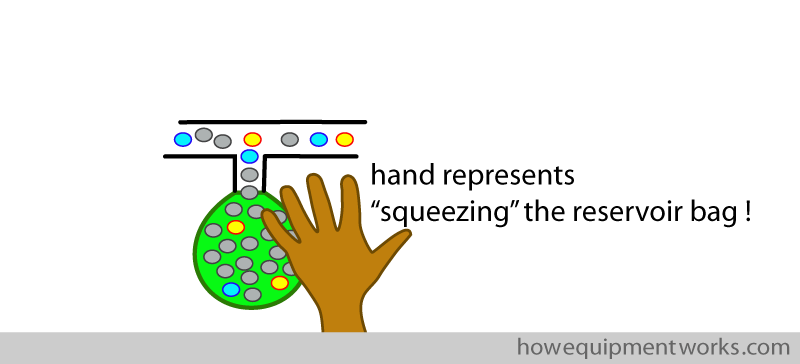
I will first discuss ventilation using a reservoir bag and your hand. Let us now try and give the patient some positive pressure breaths by squeezing the bag. I am no artist, so will indicate squeezing the reservoir bag using a symbol of a hand.
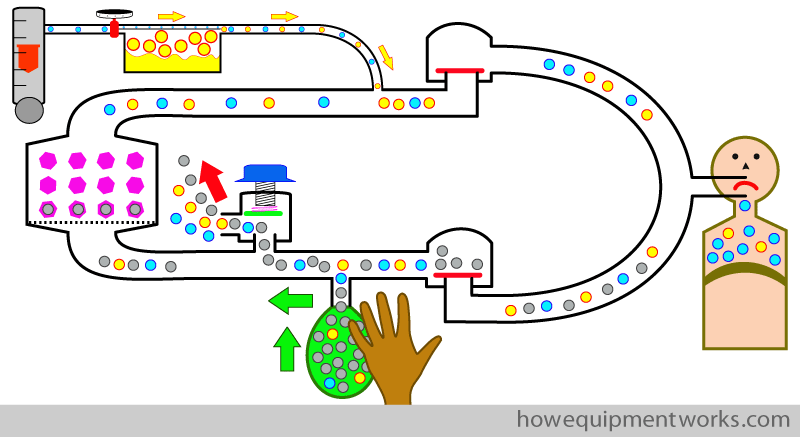
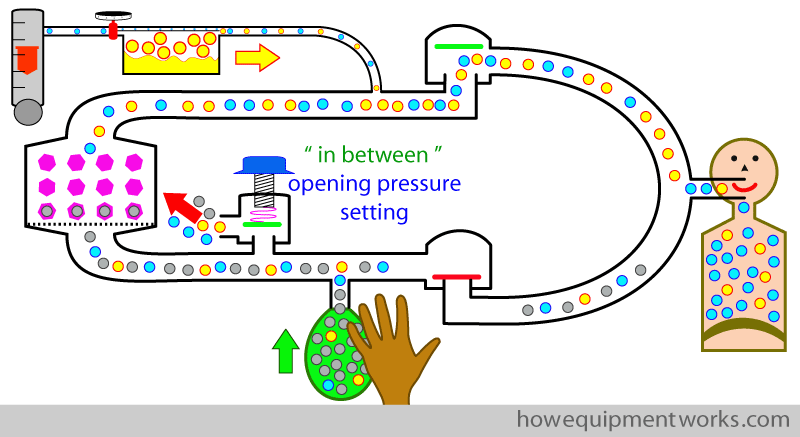
You will see in the diagram below, that squeezing the bag doesn’t seem to ventilate the patient! This is because the positive pressure created by squeezing the bag opens the pressure-limiting outflow valve, letting the gas flow out (red arrow) instead of going into the patient.
At this point, I need to make a small confession. I didn’t tell you the full story about what I have, so far in our discussions, called the “pressure limiting outflow valve”.
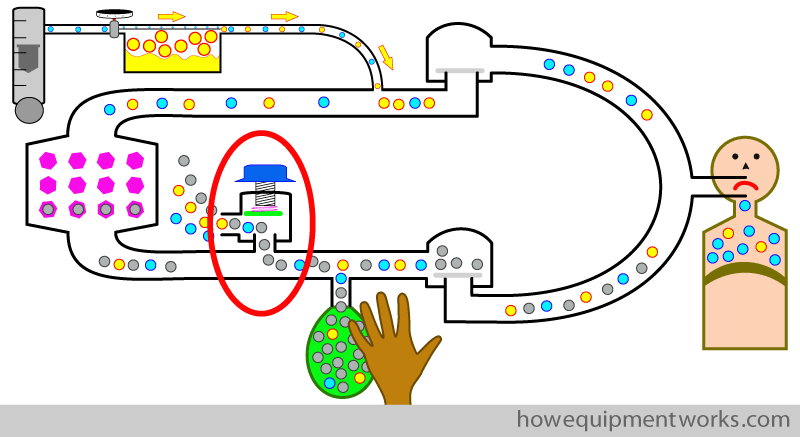
As mentioned before, I have been calling the valve a “pressure-limiting outflow valve”. What I did not tell you before is that this valve is actually “adjustable” by you. i.e. it allows you to “adjust” the pressure at which the valve opens. I will next explain how it does this, as you need to know more about this valve to understand positive pressure ventilation using the reservoir bag. Since the valve is adjustable, we should call it an “adjustable pressure limiting outflow valve” ( APL outflow valve).
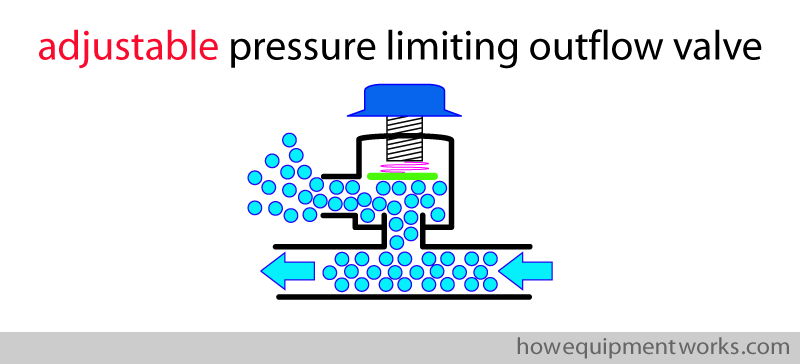
The valve has a spring which I have shown in pink below.
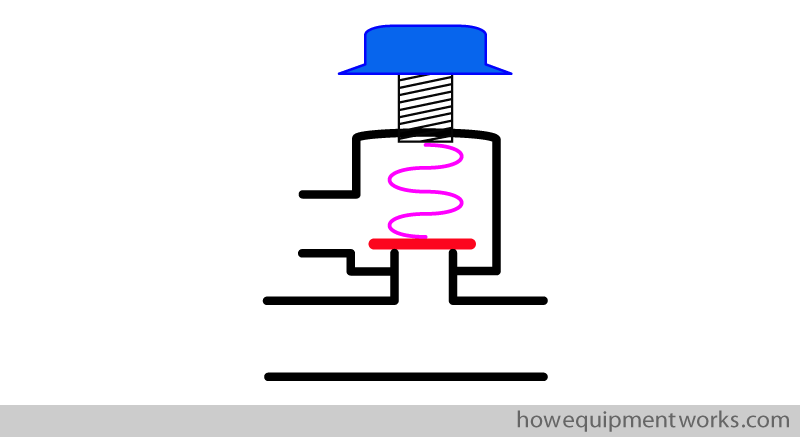
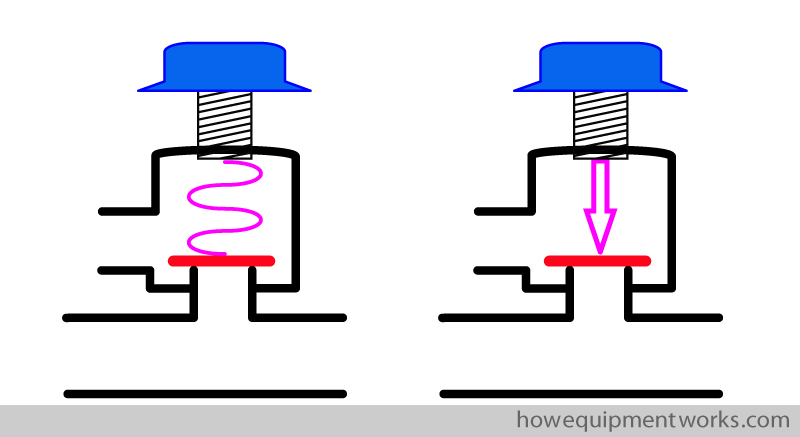
The spring applies a force onto the disc.
The valve will open only when the pressure inside the circle system generates a force ( shown as a green arrow ) high enough to overcome the force applied by the spring ( pink arrow ).
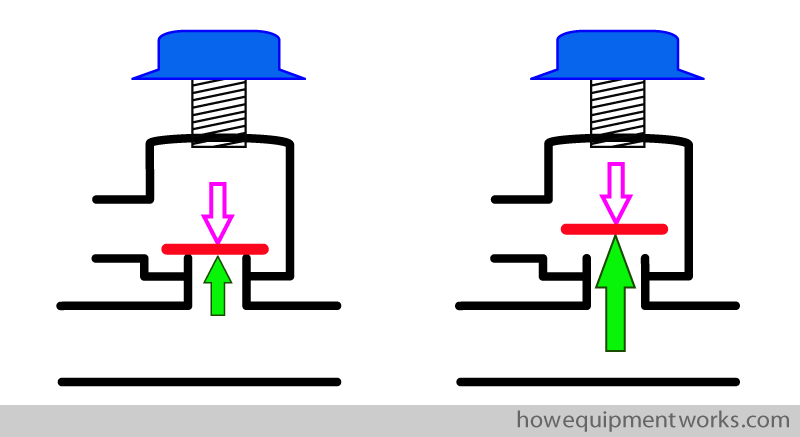
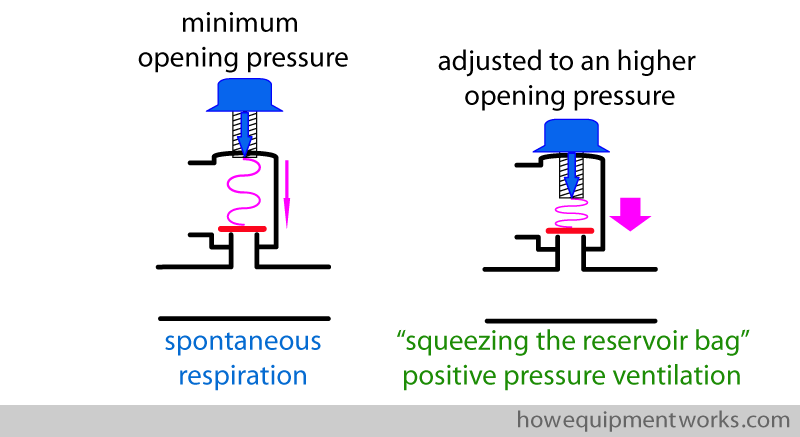
You can adjust the pressure applied onto the disc by turning the knob of the adjustable pressure limiting outflow valve. When you want the valve to open even for low pressure in the circle system, the spring is kept in a very relaxed state. If you want the valve to open at higher pressures, you turn the knob to make the spring more compressed. This increases the force the spring applies to the disc.
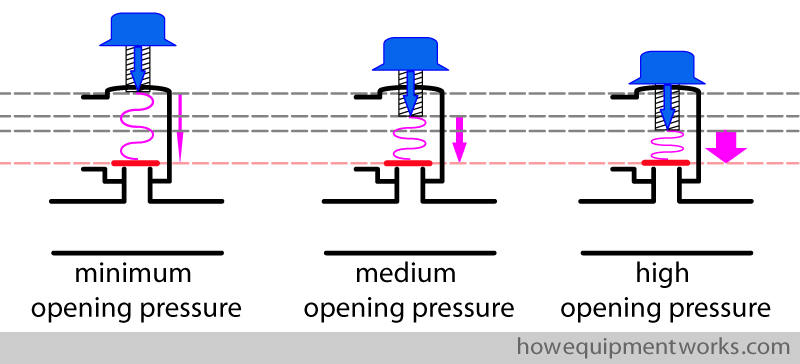
In this way, you can adjust the circle system pressure at which the adjustable pressure limiting outflow valve (APL outflow valve) will open.
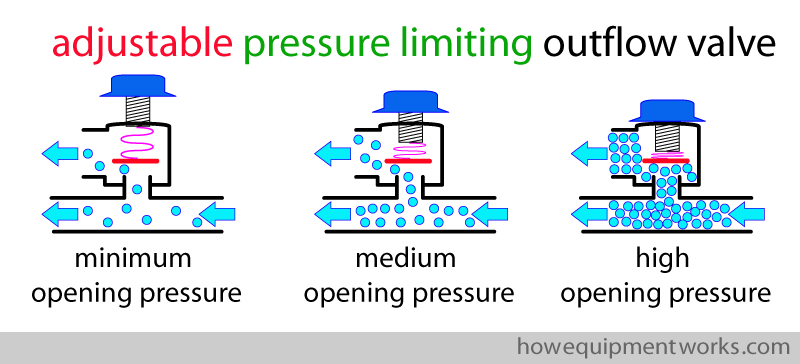
Normally for spontaneous respiration, this valve is set to open at a minimal pressure (i.e. only a slight pressure in the circle system will make the valve open). When you use the reservoir bag to provide positive pressure ventilation, you need to adjust the APL outflow valve to open at a higher pressure. Do not worry, I will explain this to you in more detail later.
Unfortunately ( or fortunately ?) most modern anaesthesia equipment tends to keep “ugly” tubes etc hidden. So in your anaesthetic machine, the adjustable pressure limiting outflow valve may look only like this!
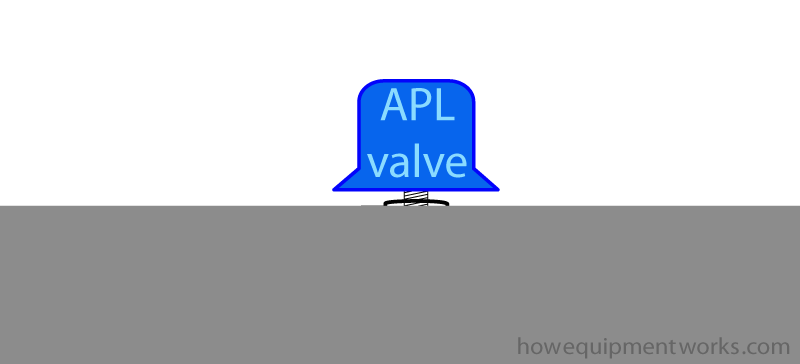
By the way, the outflow of gases from the APL outflow valve is often connected to a scavenging system, so that the gases are safely sent to the outside of the hospital.
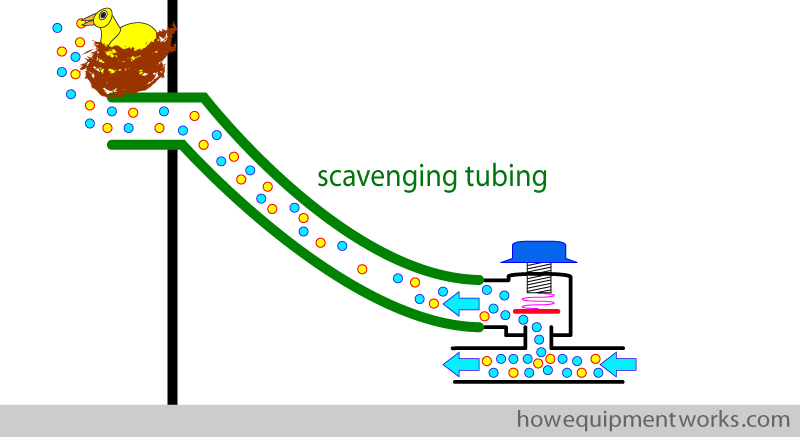
Scavenging systems are an important topic which I cannot discuss further here. Let me know, through the “contacts” page of this website, if you want me to add a section on scavenging systems.
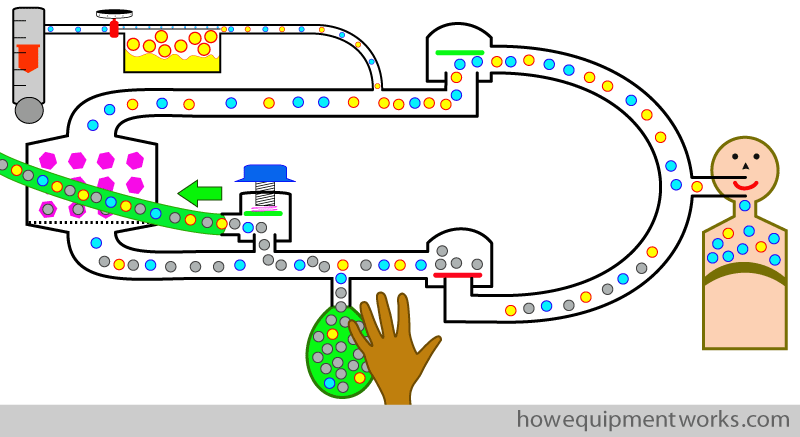
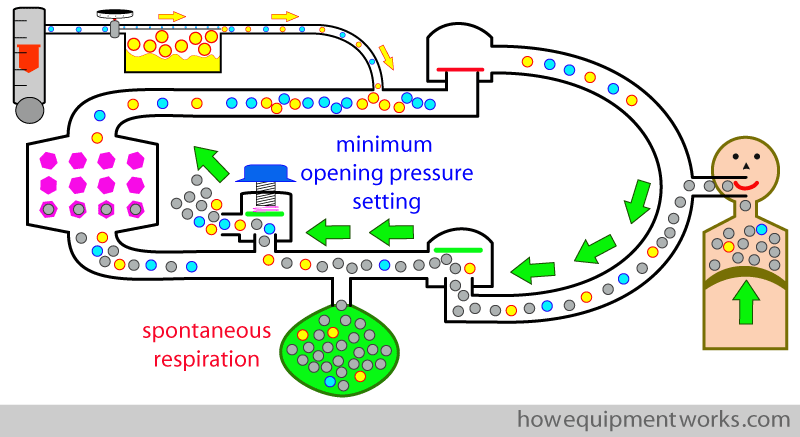
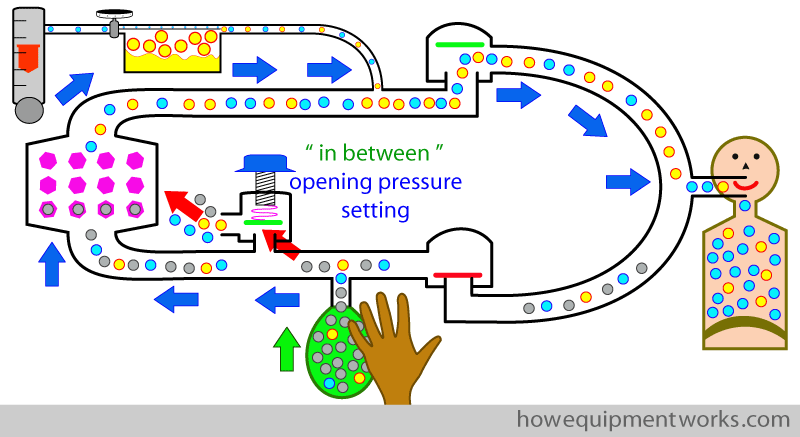
Now let us return to the circle system, where we are trying to use a reservoir bag and your hand to give positive pressure ventilation. Below is the circle system as it was used in our previous discussion on how it works with spontaneous respiration. As mentioned before, when using the circle system with spontaneous respiration, the APL outflow valve is set to a minimum (i.e. it opens at a very low pressure).
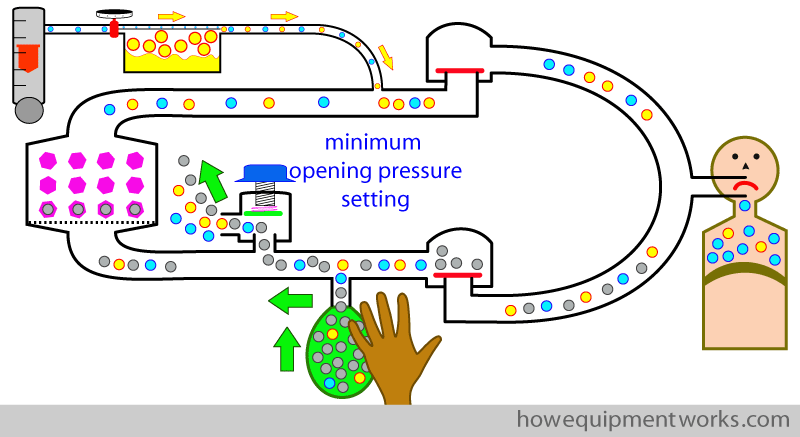
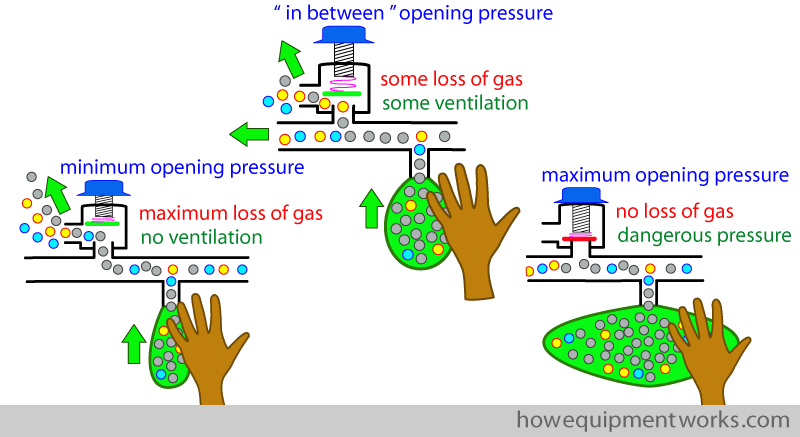
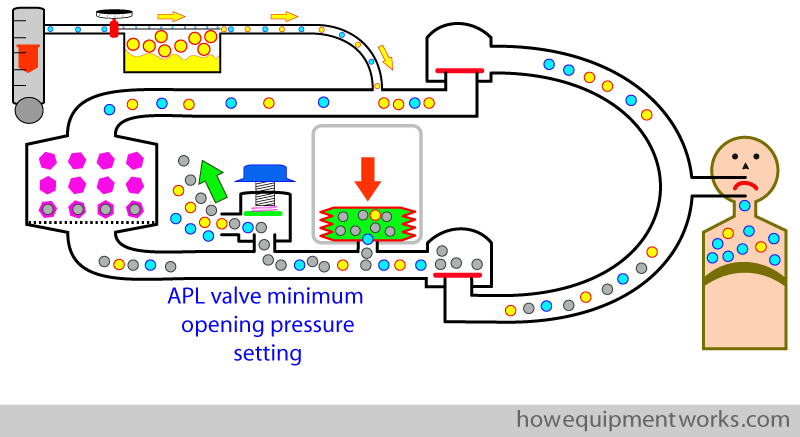
Now with this setting ( minimum opening pressure setting ), if you try to give a positive pressure breath to the patient by squeezing the reservoir bag, the gases go out of the APL outflow valve, and the patient does not get ventilated.
Let us try again. This time we set the APL outflow valve to its maximum opening pressure (i.e. it will open only when a very high pressure develops inside the circle system). Now, you will find that we can give positive pressure breaths as nothing goes out of the APL outflow valve.
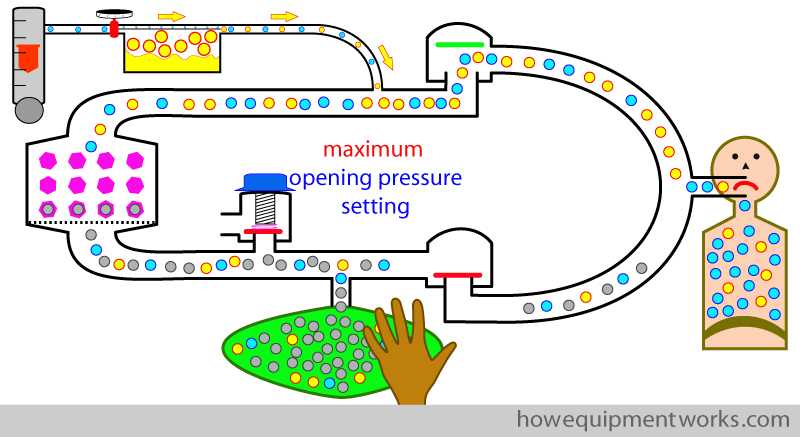
Oh! oh! There is a problem! You will remember from our previous discussion on circle system basics, that excess anaesthetic gases need to come out of the APL outflow valve. However, in our example, we have adjusted the APL outflow valve to the maximum opening pressure. In this setting, the excess anaesthetic gases can’t flow out of the APL, and instead, it collects in the reservoir bag, distending it to dangerous levels! So, in the maximum opening pressure setting, you may be able to give a few breaths, but soon the circle system pressures will rise to a dangerous level.
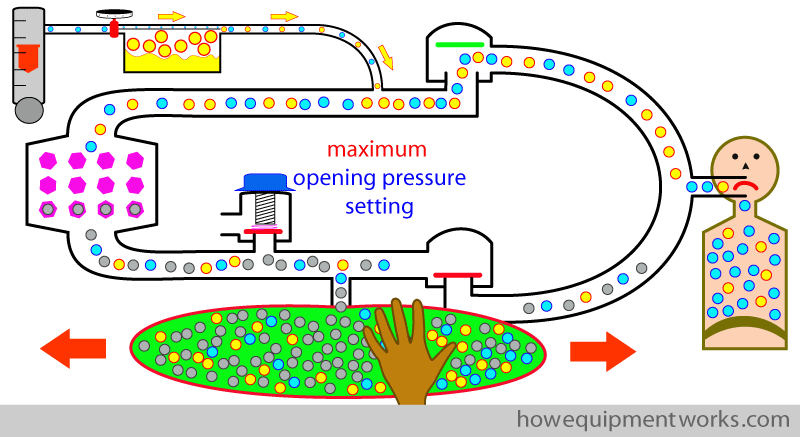
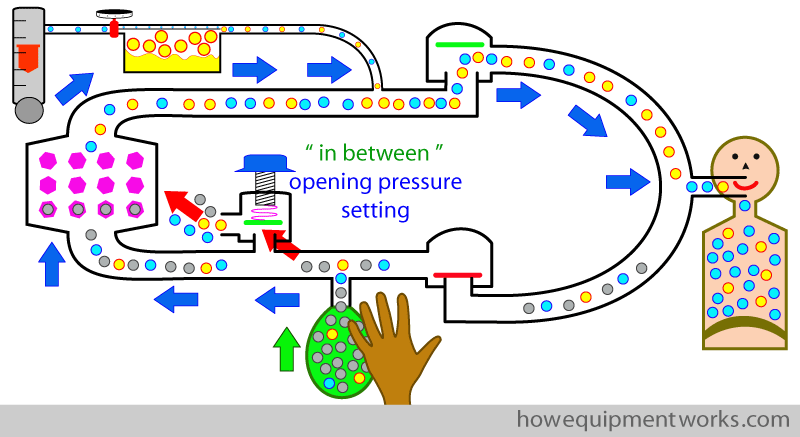
The answer is to set the APL outflow to a pressure that I would like to call the “in-between pressure”. This is an APL opening pressure you choose that is somewhere in between being too low ( causing excessive gas loss) and being too high ( causing over-distention of reservoir bag and dangerously high pressure).
With the APL outflow valve is set appropriately somewhere in between minimum and maximum, part of the anaesthetic gases from the reservoir bag goes to the patient ( blue arrows) while at the same time, another part of the anaesthetic gases go through the APL outflow valve ( red arrows).
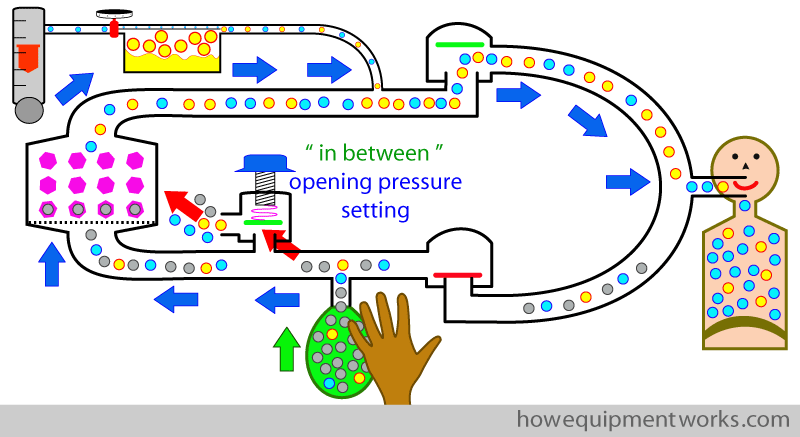
The gases that flow out of the APL outflow valve during the positive pressure inspiration are wasted ( red arrow). Therefore, to compensate, one may have to increase the fresh gas flow ( yellow arrow) to compensate for this loss.
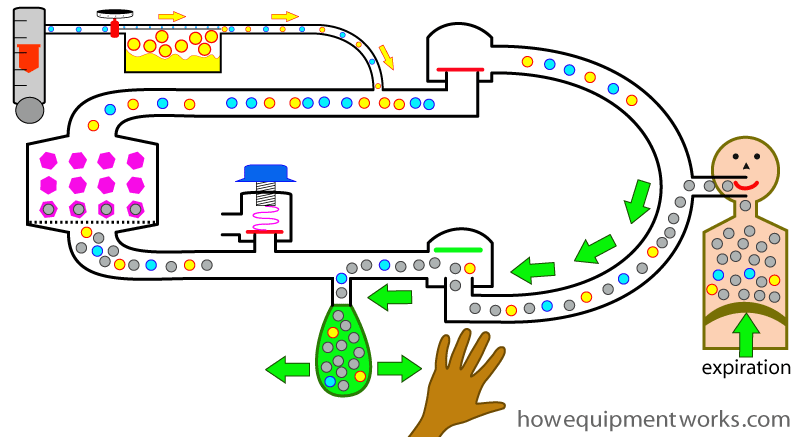
During expiration, the expired gases go into the reservoir bag.
The circle system works slightly differently depending on whether you give positive pressure ventilation by squeezing the reservoir bag ( as we discussed before) or by using a mechanical ventilator. We will now put our hands away and discuss how mechanical ventilation works in the circle system.

Achieving happiness in our stressful lives can be challenging. On the free website at the link below, you will find practical advice on finding happiness, presented in a unique way. The website features a fictional story in which a monk uses everyday examples to explain how to find happiness. This approach explores many ideas about finding happiness which you can use in your own day-to-day life. You are welcome to read and benefit from the story at the link below.

Positive pressure ventilation using a ventilator :
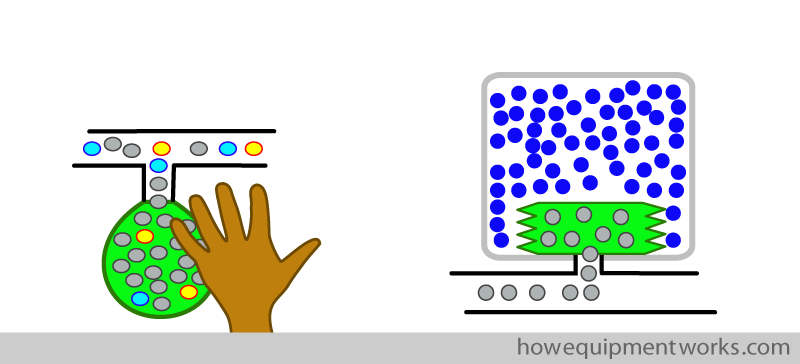
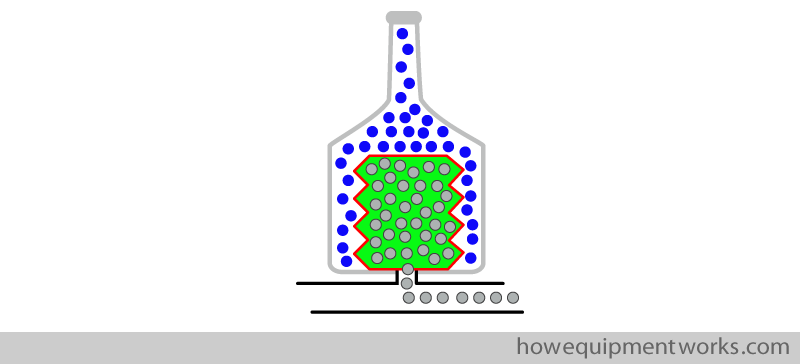
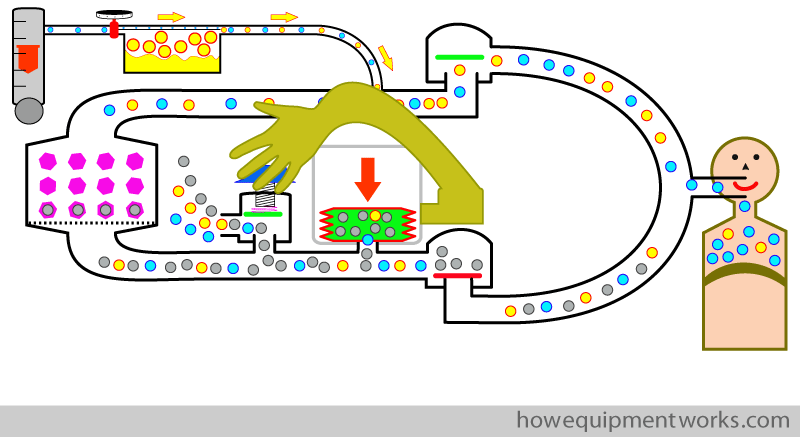
I will not discuss ventilators in great detail here as it is an extensive topic on its own. One example of ventilator design is the so-called “bag squeezer ventilator “. Basically, as the name implies, this type of ventilator “squeezes” the bag. However, this ventilator doesn’t have hands like you and me, so it uses a clever design to replace our hands. The bag is placed inside a sealed “container ” shown as a grey outline below. In practice, the “container” is usually transparent so that you can see what is going on.
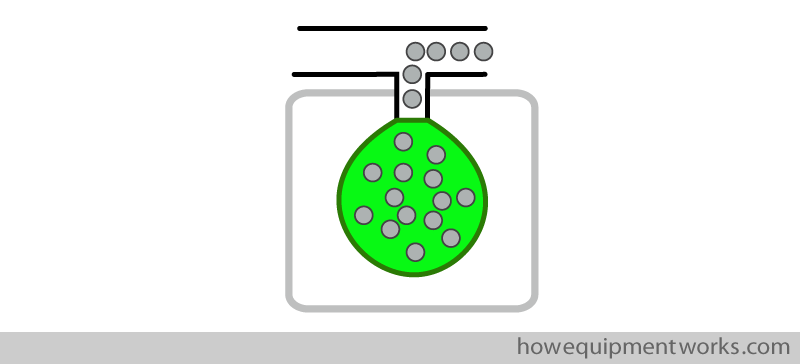
In this ventilator design, the “container and bag” is placed “upside down”.
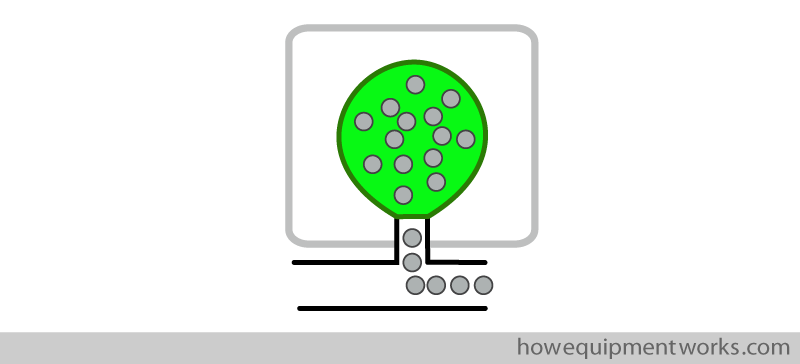
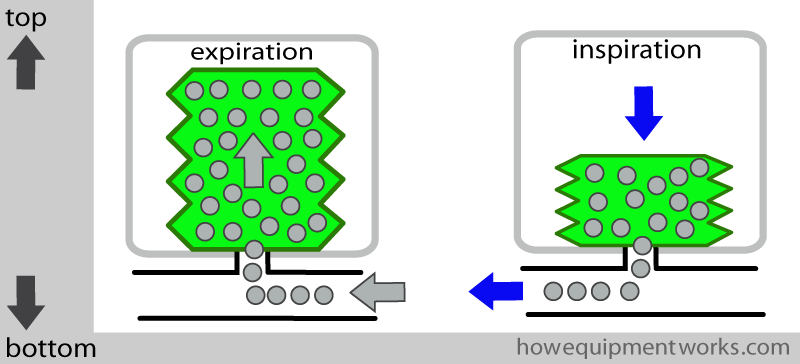
The “bag” in these ventilators is present in the form of collapsible bellows. During expiration, the gases in the patient’s lungs empty into the bellows, making the bellows rise upwards. For inspiration, as I will soon explain, the ventilator “squeezes” the bellows downwards, pushing the gases towards the patient.
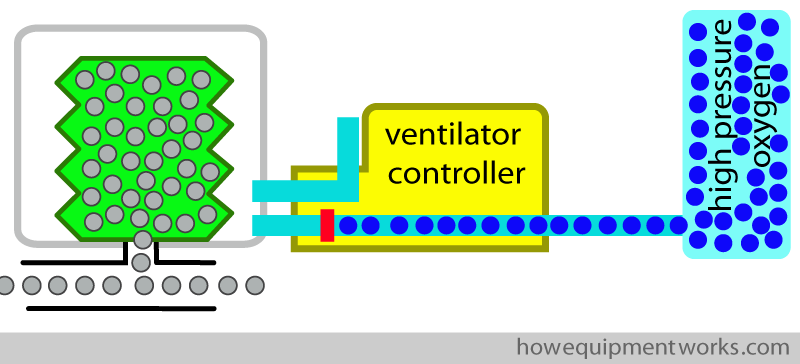
The ventilator “container” is connected to a ventilator controller. The controller is in turn connected to an high pressure source of oxygen. As I will explain soon, this oxygen at high pressure ( blue dots) will be used to “squeeze” the bellows.
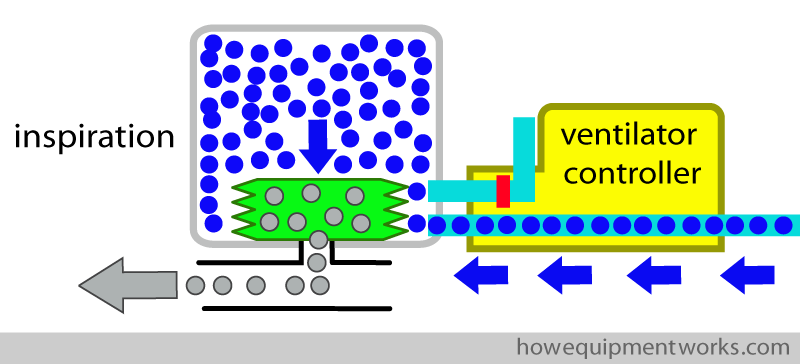
Let us first talk about inspiration. It begins with the ventilator controller letting oxygen at high pressure enter into the container.
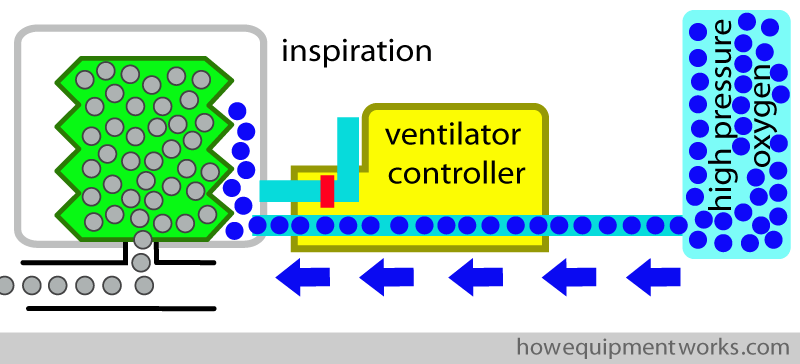
The oxygen at high pressure pushes down (“squeezes”) the bellows, pushing the anaesthetic gases into the patient. The high-pressure oxygen is often called “the driving gas”.
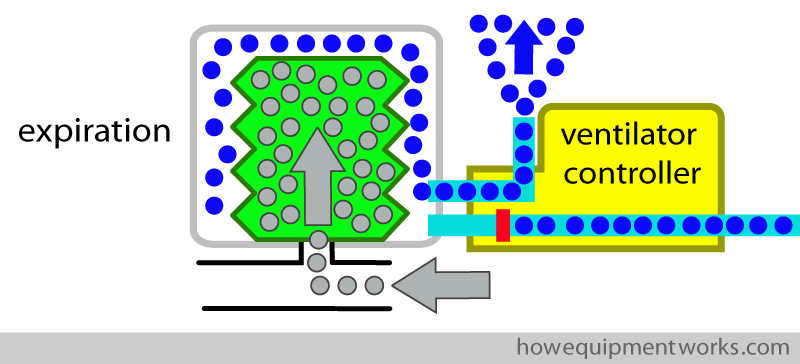
For expiration, the ventilator controller stops the flow of pressurised oxygen into the container. During expiration, the gases in the patient’s lungs empty into the bellows, making the bellows rise up. The rising bellows push out the “used up” driving gas (oxygen) through the ventilator controller into the atmosphere.
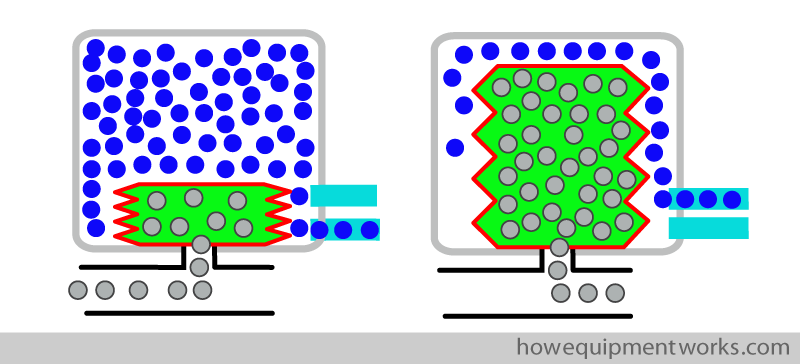
It is important to note that the pressurised oxygen ( blue dots) used to squeeze the bellows does not go into the patient. Similarly, the patient gases ( grey dots) do not go into the container.
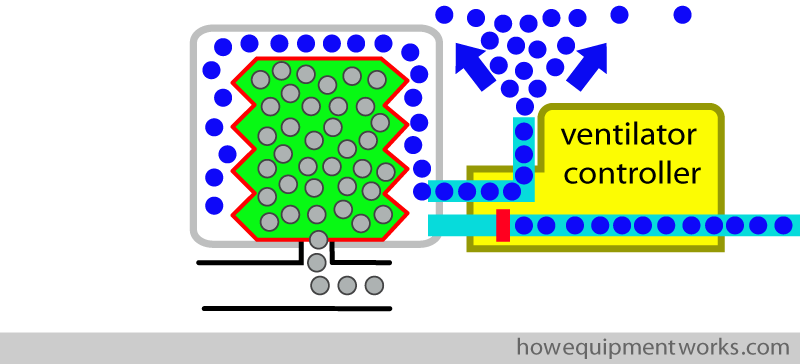
In other words, the oxygen used to squeeze the bellows (driving gas) is thrown away after each breath.
Some people imagine that this design is like placing the reservoir bag in a “transparent bottle “. For this reason, this design is often called a “bag in the bottle ” ventilator (you do have to exercise your imagination a bit to see that the bellows look like a bag and that the transparent container looks like a bottle).
Now let us connect our ventilator to the patient and see what happens. At the moment, the APL valve is set at the minimum opening pressure and you notice that the patient is not get ventilated! This is because, during the positive pressure inspiration, the gases are flowing out of the APL outflow valve and not going to the patient.
During positive pressure ventilation using a mechanical ventilator, the APL outflow valve is used in a different way to how it is used during spontaneous respiration. To discuss this, I need to briefly go back to talking about hand ventilation using a reservoir bag.
You will remember that when we talked about hand ventilation using the reservoir bag, one can set the APL outflow valve to an “in-between setting”. In this setting, you will also recall that while there is some ventilation, there is also wastage of some gas ( red arrow).
However, at the time of discussing hand ventilation, I did not mention another method of adjusting the APL outflow valve. This alternate method is different to the “in-between APL outflow valve setting” method discussed so far. I will explain this alternate method of adjusting the APL outflow valve during hand ventilation now because it has something to do with how the APL outflow valve is used when using a mechanical ventilator. I would like to name this alternate method as the “rapid open-close method”. In the “rapid open close method”, when giving a positive pressure inspiratory breath by squeezing the reservoir bag, one fully closes the APL outflow valve. Since the valve is closed (i.e. maximum opening pressure), there is no loss of anaesthetic gases.
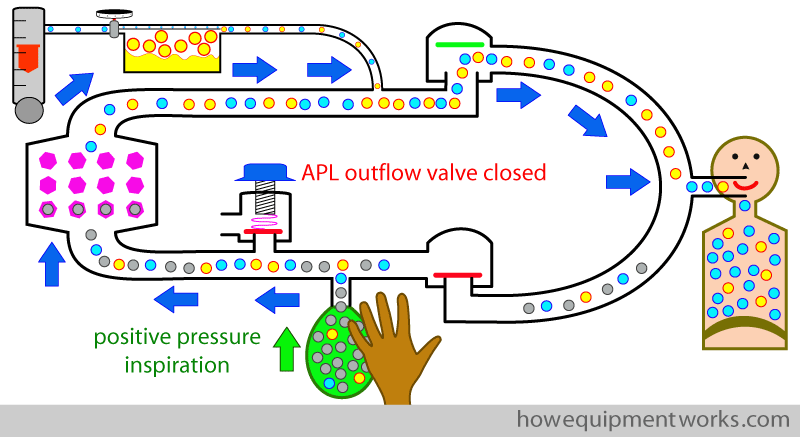
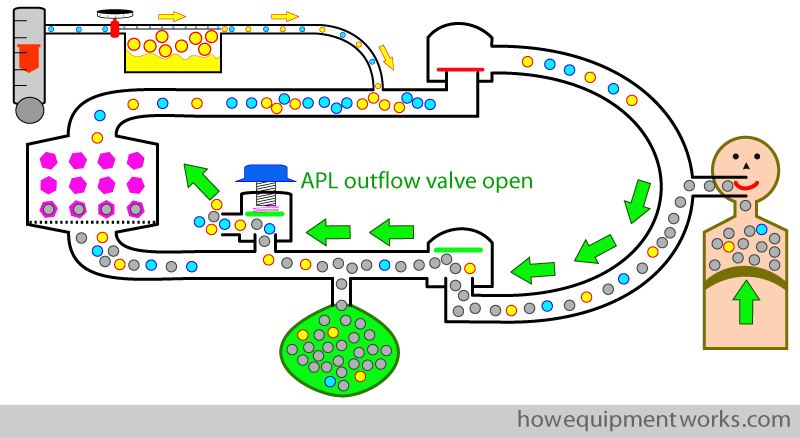
Then in expiration, one fully opens the APL outflow valve (i.e. minimum opening pressure). Most of the expiratory gas will go into the reservoir bag, where it will collect. Only once the bag is full, will the excess gases go out of the APL outflow valve.
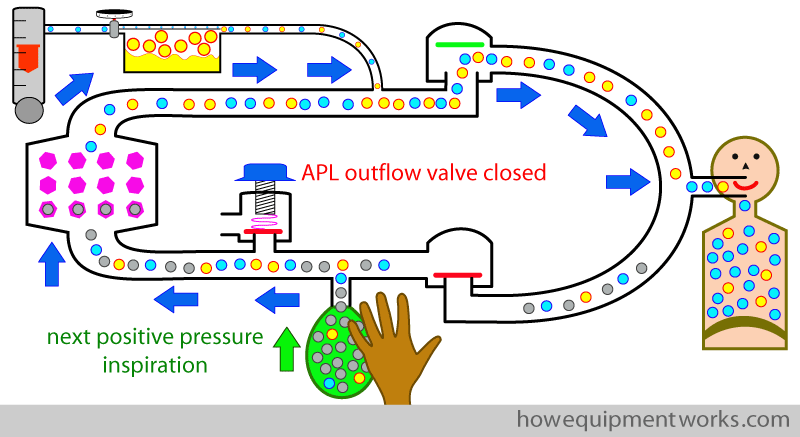
For the next positive pressure inspiration, the APL outflow valve is again closed and the bag is squeezed. Since the APL outflow valve is closed, no gases leak out during the positive pressure inspiration.
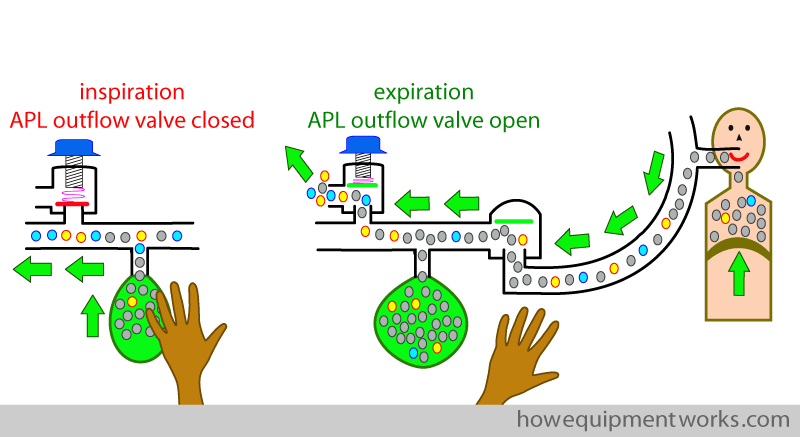
This “rapid open close” method is quite economical as no gas is lost during inspiration, and during expiration, the bag is filled before the excess gases are thrown out of the APL outflow valve.
You may now ask, if this “rapid open close” method is less wasteful, why didn’t I mention it before? The reason is that to use the “rapid open close” method, you would have to open and close the APL outflow valve for each breath! Imagine that you decided to use the “rapid open close” method to hand-ventilate a patient for one hour, at a rate of ten breaths per minute. That means that you would have to open and close the valve 600 times in that hour! So the “rapid open-close method” is a theoretical method. Please do not do it in practice!
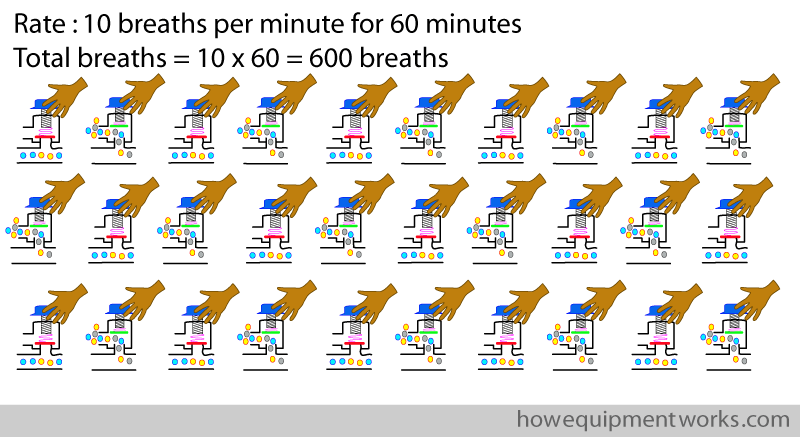
So, to prevent breaking your hand and breaking the APL outflow valve, better to stick to the “in-between setting” method!
Now let us return to the mechanical ventilator. Unlike us delicate humans, it is capable of working tirelessly! The ventilator can rapidly open and close an APL outflow valve many thousands of times a day with no complaints.
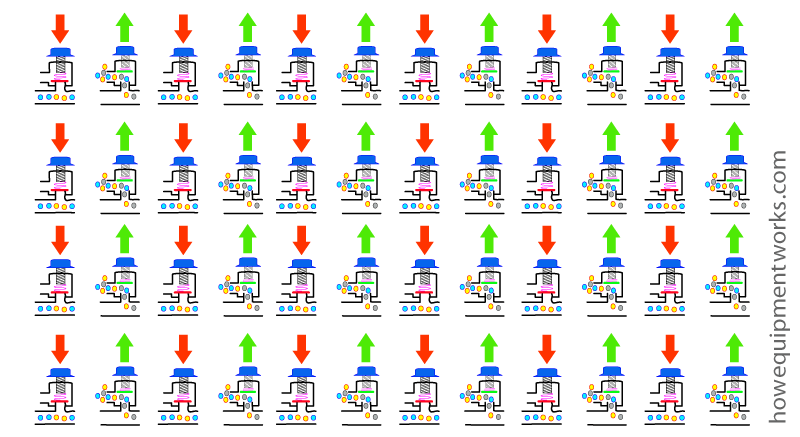
Since the ventilator can do things tirelessly, it would make sense for it to use the “rapid open close method”, as this method wastes less anaesthetic gases through the APL outflow valve. In practice, the ventilator of course doesn’t use some kind of mechanical “hand ” that turns the APL outflow valve ( though that would have looked great).
In practice, the ventilator has its own APL outflow valve that it can control. We will call this the “ventilator outflow valve”.
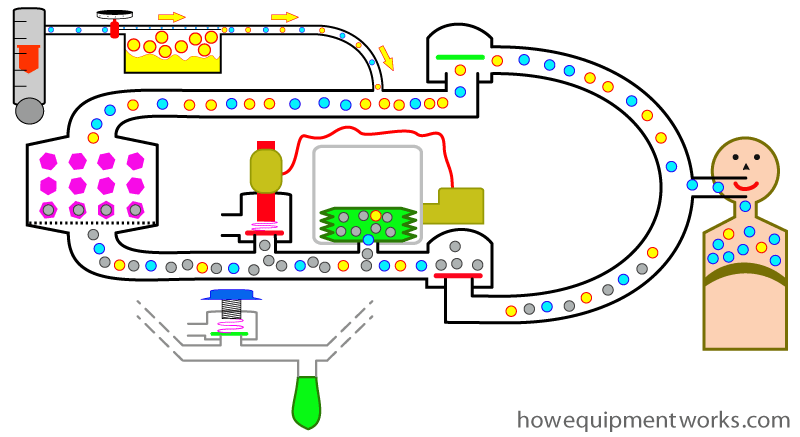
During inspiration, the ventilator closes the “ventilator outflow valve” and “squeezes” its bellows in the manner described earlier. No gases go out of the ventilator outflow valve during inspiration.
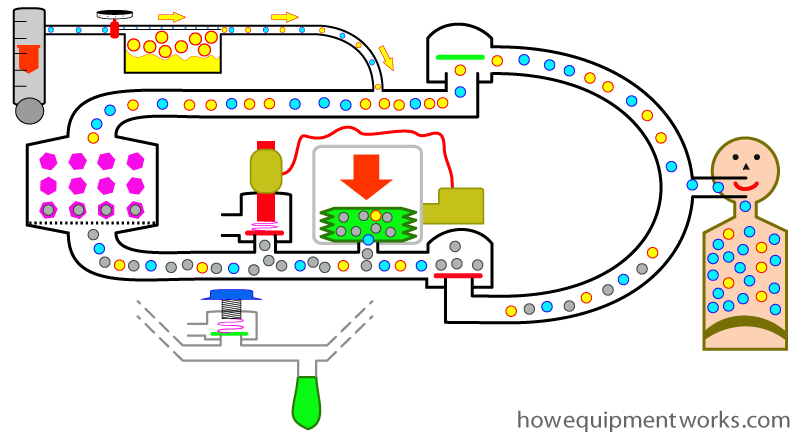
During expiration, the ventilator sets the ventilator outflow valve to a minimal pressure setting. The expiratory gases first fill the bellows and any remaining excess gas goes out of the ventilator outflow valve.
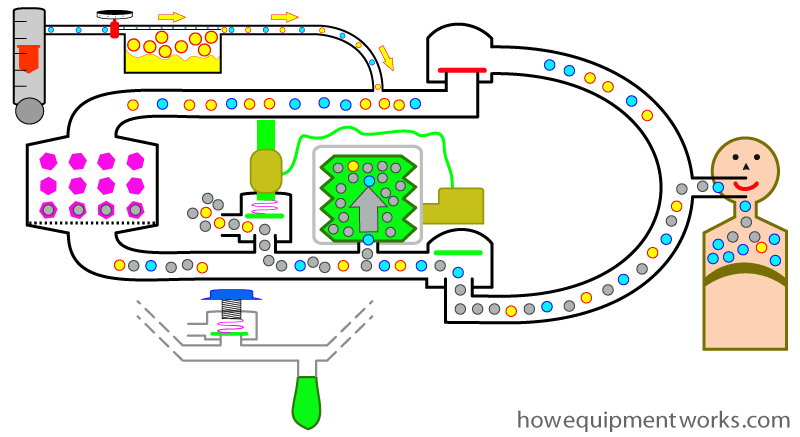
The cycle then repeats itself. The ventilator closes its ventilator outflow valve and gives the next inspiratory breath.

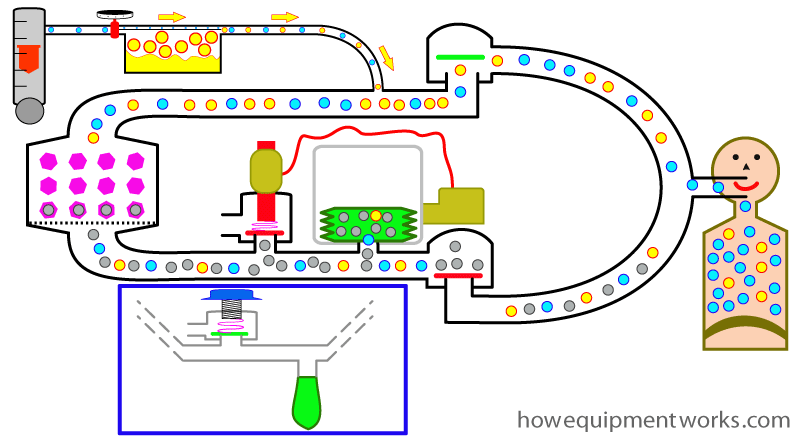
When the ventilator is in use, ” your APL outflow valve ” and ” your reservoir bag ” ( both shown inside the blue box below) are not used. Therefore in many modern anaesthetic machines, when you select the ventilator, these are automatically disconnected from the circle system.
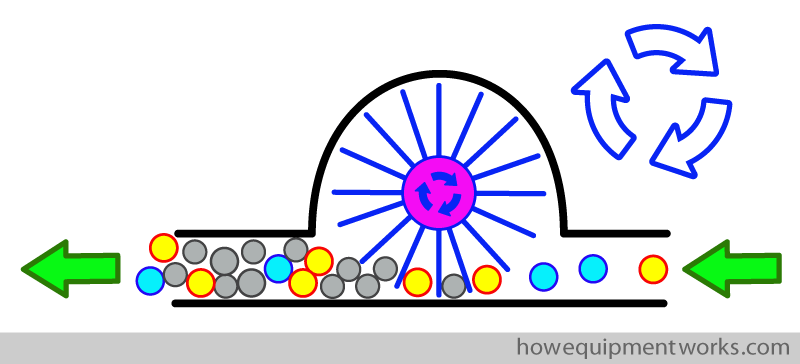
It is very important to keep in mind that I have discussed just one type of ventilator so that you can generally understand how things work. Your anaesthetic ventilator system may be completely different and for patient safety, you must refer to appropriate documentation and understand its functioning before using it. Modern engineering makes it possible to have many different designs. For example, one design of a ventilator uses a fan (turbine) that spins extremely fast and pushes the anaesthetic gases forward during inspiration (i.e. it doesn’t have any bellows).
Please click the “Next” button below to read the final part. Thank you.