Note: This is part 2 of the discussion of how anaesthesia vaporisers work. If you have not read part 1, please click here to go to part 1.
Desflurane Vaporizer
Before we proceed to talk about the desflurane vaporizer, we need to understand what vapour pressure is.
VAPOR PRESSURE (also called SATURATION VAPOR PRESSURE)
The process of evaporation in a closed container will proceed until there are as many molecules returning to the liquid as they are escaping (equilibrium). At this point, the vapour is said to be saturated, and the pressure exerted by the vapour (usually expressed in mmHg) is called the saturated vapour pressure.
Since the molecules move faster (more kinetic energy) at higher temperatures, more molecules can escape the surface and the saturated vapour pressure is correspondingly higher. i.e. higher the temperature, the higher the saturated vapor pressure.
The temperature at which the vapour pressure is equal to the atmospheric pressure is called the boiling point.
Desflurane has a very low boiling point (about 23 degrees Centigrade) and even at room temperature, has a high vapor pressure.
Also, for small changes in temperature, the vapour pressure of desflurane changes quite dramatically. I.e. desflurane is said to have a very steep “Vapor Pressure versus Temperature curve”.
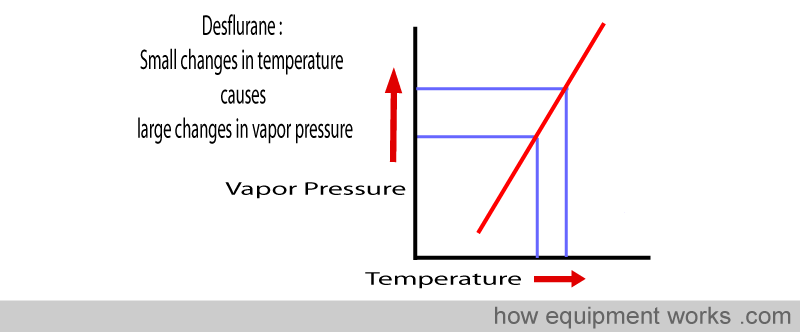
These physical properties of desflurane create a big headache for vaporiser designers.
An operating room temperature is not perfectly constant. It keeps changing slightly depending on various factors including the number of medical students (young body heat) watching the surgery. These changes in operating room temperature then change the temperature of vaporisers present in that room. As discussed elsewhere, the standard vaporisers try to resist changes in temperature (e.g. by having thick metal construction). However, these mechanisms are not perfect and in practice, small changes in vaporiser temperature still occur. This is not a big problem with anaesthetic agents such as Isoflurane or Sevoflurane which have a relatively less steep “Vapor Pressure versus Temperature curves”. In them, small temperature changes will lead to only small changes in vapour pressure and this can be compensated by mechanisms such as the bimetallic strip. With Desflurane, with its steep “Vapor Pressure versus Temperature curve”, even these small temperature changes can cause large changes in vapour pressure which cannot be compensated for with simple devices such as a bimetallic strip. So a whole new vaporiser design had to be made.
The solution chosen for the problem is to have a vaporiser that heats the Desflurane to a very precisely controlled temperature that is not affected by changes in room temperature. The heated vapour is then “injected” into the fresh gas flow.
You will recall that “standard” vaporisers work by splitting the fresh gas flow into two pathways, one going through the vaporising chamber and picking up the anaesthetic agent and the other “bypasses” the chamber and thus has no anaesthetic. The two streams then mix at the end of the vaporiser to give the final concentration of anaesthetic.
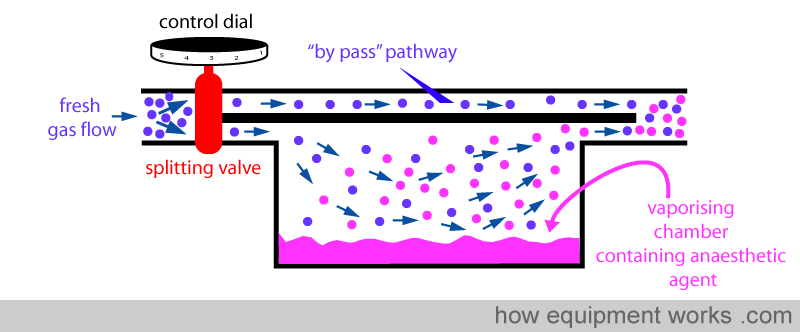
The desflurane vaporiser works differently. It “injects” the anaesthetic agent directly into the fresh gas flow. In this method, the fresh gas flow coming from the flow meters does not split into two streams. There is only one stream for the fresh gas flow, and into this stream, the anaesthetic agent is directly injected.
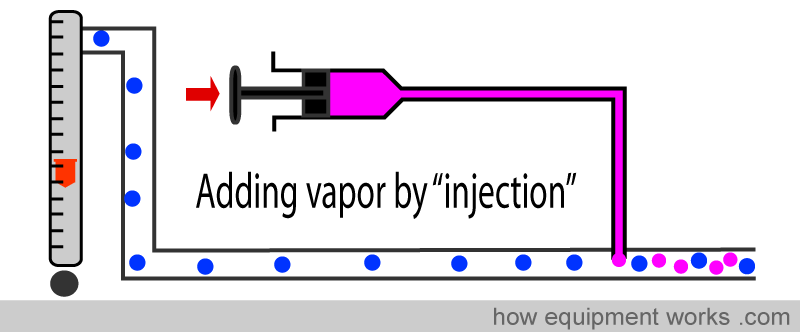
However, the design is more complicated than the simple syringe system shown above. The system is more complex; but don’t worry, we will go through each part of it slowly.
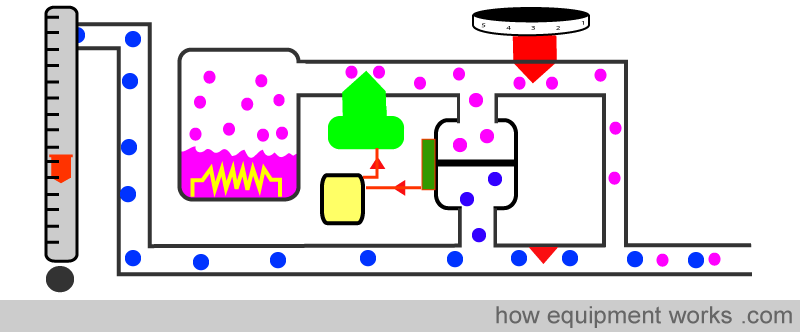
There is a tank (sump) which contains desflurane which is electrically heated to a highly controlled constant temperature (approximately 40 degrees C). Because of the heat, the liquid Desflurane becomes gaseous Desflurane at a pressure of about two atmospheres (about 1500 mmHg or 200 kPa). This Desflurane gas is injected into the fresh gas flow.
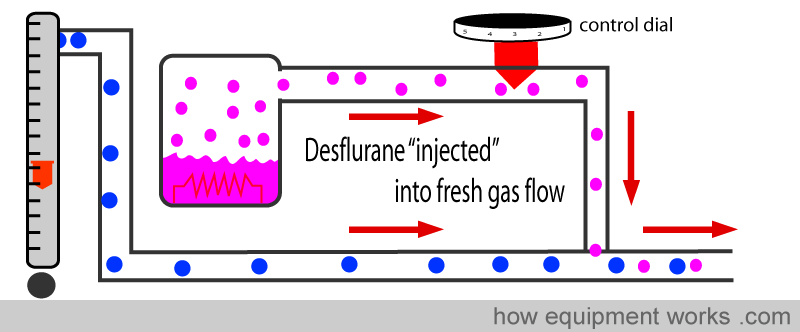
The amount of Desflurane concentration in the fresh gas is controlled by the dial setting set by you. The dial moves a valve which varies the resistance to Desflurane flow from the tank to the fresh gas.
If you want a higher concentration of desflurane, the valve attached to the dial reduces the resistance to the flow of desflurane and more of it gets injected into the fresh gas.
Conversely, if you want a lower concentration of desflurane, the valve attached to the dial increases the resistance to the flow of desflurane and less of it gets injected into the fresh gas.
The rate of desflurane gas injection must be adjusted to match the fresh gas flow going through the vaporiser.
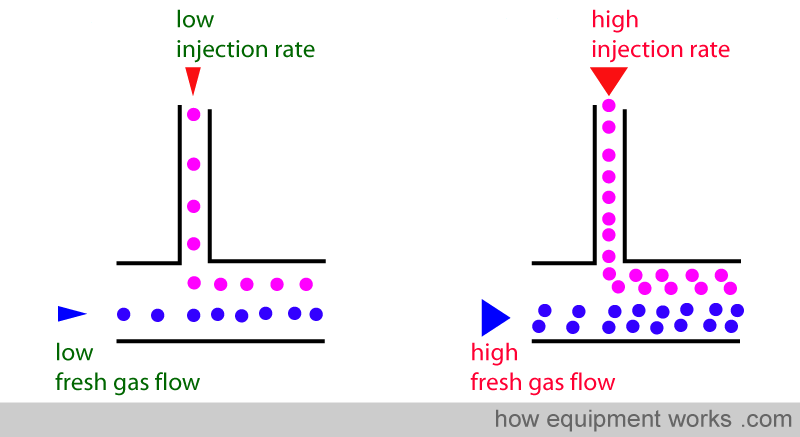
If you increased the fresh gas flow but didn’t increase the injection rate, the emerging mixture will now be inaccurate, the concentration being lower than before.
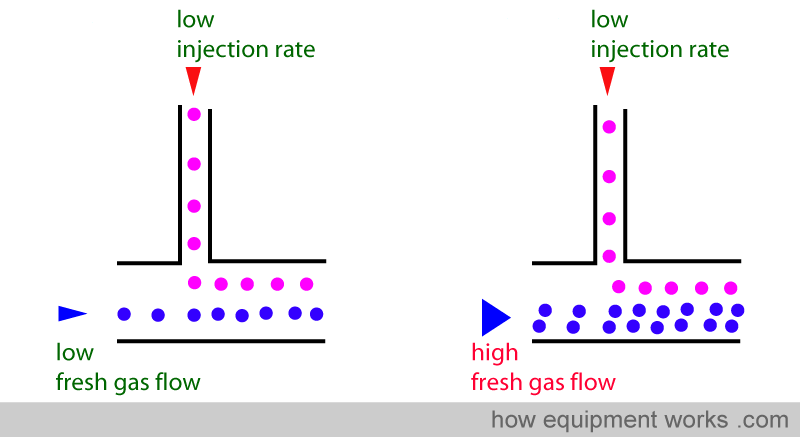
Similarly, if you decreased the fresh gas flow, but didn’t decrease the injection rate, the emerging mixture again will be inaccurate. This time, there will be relatively more anaesthetic agent, making the mixture higher than intended.
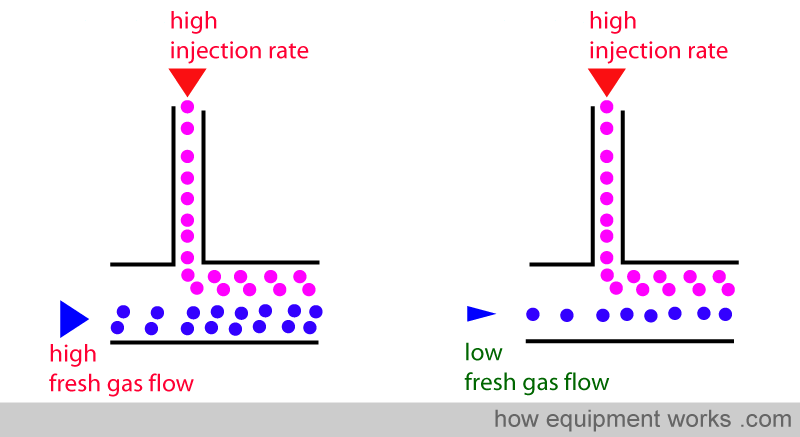
One solution would be for you to manually adjust the dial setting to match the fresh gas flow. For low flows, you will have to reduce the dial setting to reduce the rate of Desflurane injection, and for high fresh gas flows, you will need to do the opposite. This would be really tedious in our modern times. Fortunately, the Desflurane vaporiser automatically adjusts the rate of injection of desflurane to match the flow rate and thus keeps the delivered concentration constant.
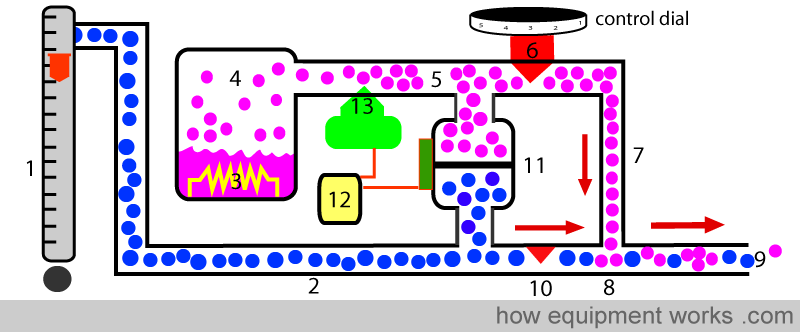
We are now ready to discuss the workings of the Desflurane vaporiser. You will need to refer to the numbers on the diagram under the description.
Your flow meters deliver the fresh gas flow (1). The fresh gas travels through the pipe (2). Note that, unlike other vaporisers, none of the fresh gas goes to the vaporising chamber (4).
The vaporising chamber is electrically heated (3). Using sensors for feedback, the temperature is kept very constant. The heating causes the Desflurane to become a gas under pressure (4) and this travels down the pipe (5).
The flow of Desflurane is resisted by two valves (6,13). Valve (6) is the valve that you control when you set the dial to a particular concentration. When you increase the concentration setting, the valve (6) opens a bit and lowers the resistance, allowing more Desflurane to flow through. Valve (13) is an electronically controlled valve. Computer (12), the vaporiser’s “brain”, is able to also alter the flow of Desflurane by controlling the valve (13). i.e. both you and the computer can adjust the desflurane injection rate. The Desflurane then goes via pipe (7) and meets the fresh gas at (8). The Desflurane mixes with the fresh gas (8) and a final concentration emerges from the exit of the vaporiser (9).
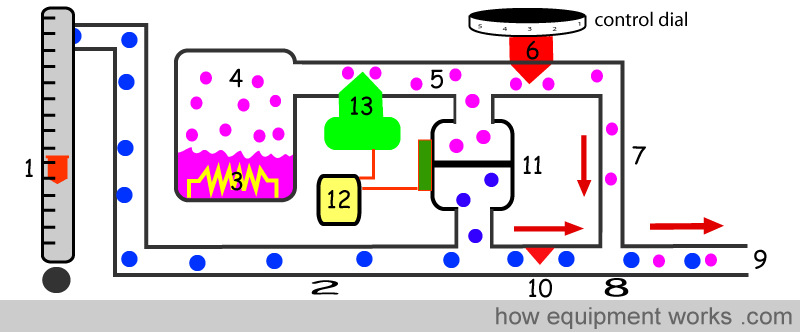
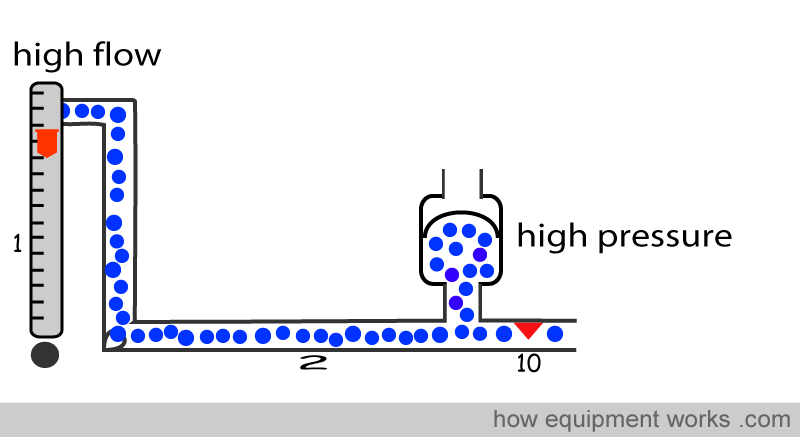
Now we can discuss how the vaporiser, to keep the output concentration accurate, adjusts the Desflurane flow when the fresh gas flow changes. As explained before, the fresh gas flows in the pipe (2). This pipe has a fixed resistance (10) in its path. For the fresh gas flow to overcome this resistance (10), the pressure in the pipe (2) rises. The higher the fresh gas flow in the pipe (2), the higher the pressure rise in the pipe will be (2) since more flow has to occur through the same fixed resistance (10).
Similarly, when the fresh gas flow is decreased, the lesser flow will find it easier to go through the fixed resistance and the pressure in the pipe (2) drops. It is important to remember that the pressure in the pipe (2) is proportional to the fresh gas flow going through it. The higher the flow, the higher the pressure will be in the pipe (2). The lower the flow, the lower the pressure.
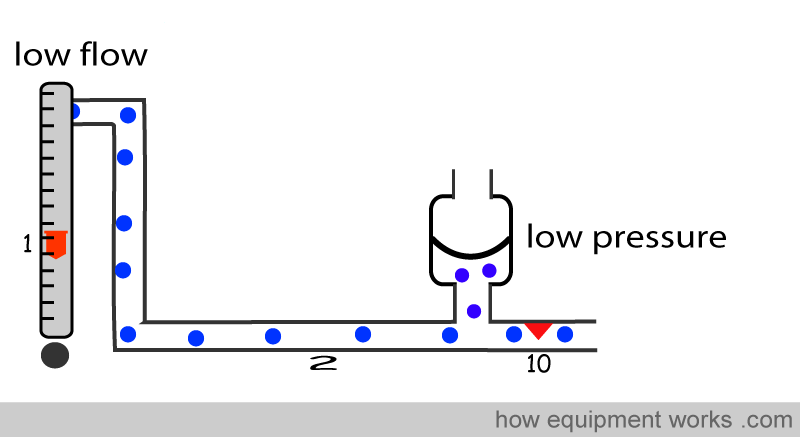
Device (11) is called a “differential pressure transducer”. It has a diaphragm that on one side is exposed to the pressure in the pipe (2) carrying fresh gas and the other side of the diaphragm is exposed to the pressure in the pipe (5) carrying Desflurane. When the pressure is equal on both sides of the diaphragm, it lies in a neutral position. i.e. pressure P 1 equals pressure P 2.
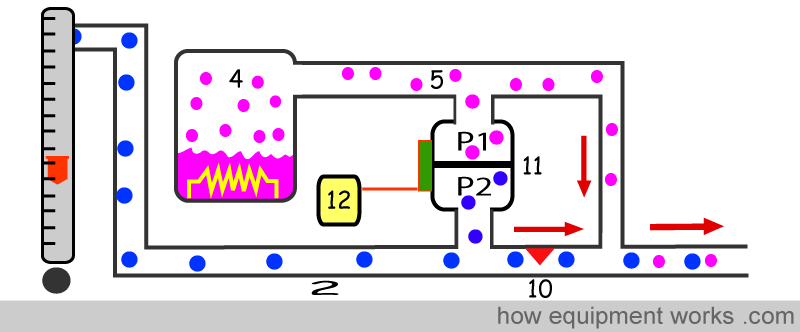
If one side of the diaphragm is at a higher pressure than the other side, the pressure difference makes the diaphragm move. In this way, the differential pressure transducer (11) is able to measure the pressure difference between the fresh gas flow pipe (2) and the Desflurane flow pipe (5). It continuously keeps the computer (12) informed about pressure difference information.
Now let us see how the vaporiser copes when the fresh gas flow is increased. The fresh gas flow has been increased by you (1). Increased fresh gas flow flows through pipe (2) and meets fixed resistance (10). The increased flow through the fixed resistance (10) makes the pressure in the pipe (2) rise and this pressure is experienced by the differential pressure transducer (11). Since the desflurane pressure in the pipe (5) is now lower than the fresh gas pressure in the pipe (2), the diaphragm in the differential pressure transducer (11) moves and a signal about the pressure difference is sent to the computer (12).
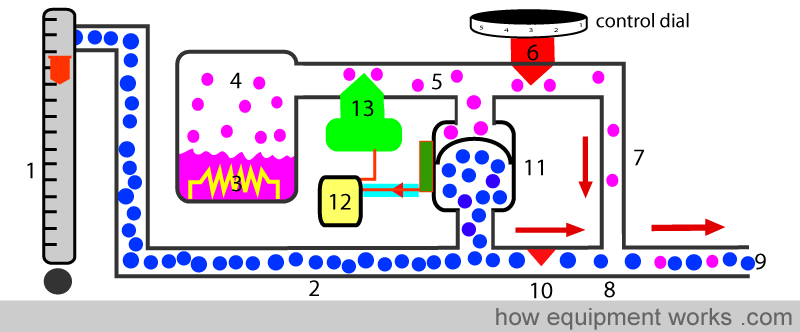
The computer (12), acts on the information provided by the differential pressure transducer. It proceeds to increase the flow of desflurane to inject into the increased fresh gas flow. It commands the electronically controlled valve (13) to reduce the resistance to flow. As the valve (13) opens up and lowers the resistance, the Desflurane flow increases.
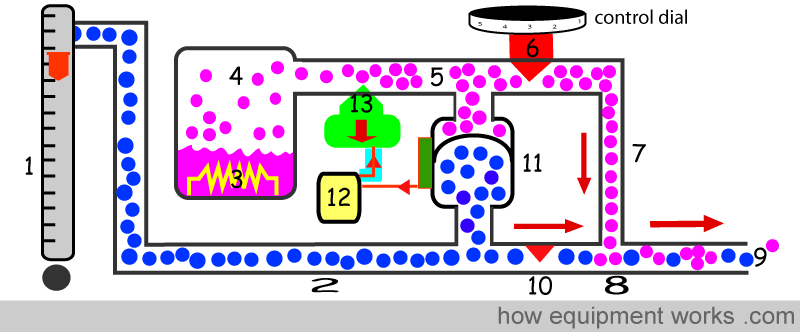
The increased flow of Desflurane causes the pressure in the pipe (5) to rise. This pressure rise pushes the diaphragm of the differential transducer back to its neutral position (11). The differential transducer (11) informs the computer (12) that the diaphragm is in the neutral position. The computer (12) is now happy that it has increased the flow of desflurane sufficiently to match the increased fresh gas flow rate and it therefore stops further opening of the valve (13). Since the two flows are matched, the output concentration (9) does not change despite the increased fresh gas flow. If you again change the fresh gas flow rate, the system will again adjust the desflurane injection rate.

I am the author of this medical equipment website, and I hope you are enjoying it. As a side interest, I am fascinated by the psychology of happiness. I have made a website that explains a concept called “Happy Thinking”, which is about finding happiness by changing negative ways of thinking. You are welcome to visit the free website at the link below to learn about Happy Thinking. The ideas in it could help you become happier!

Interlock Mechanism
Many anaesthetic machines have more than one vaporiser attached so that one has a choice of inhalational agents to use. However, it is important that only one vaporiser be used at a given time to avoid overdose with different vapours going into the patient simultaneously. There are many different safety mechanisms available which prevent more than one vaporiser from being used simultaneously. I describe one such system below. Please note that your anaesthesia machine may use a different system.
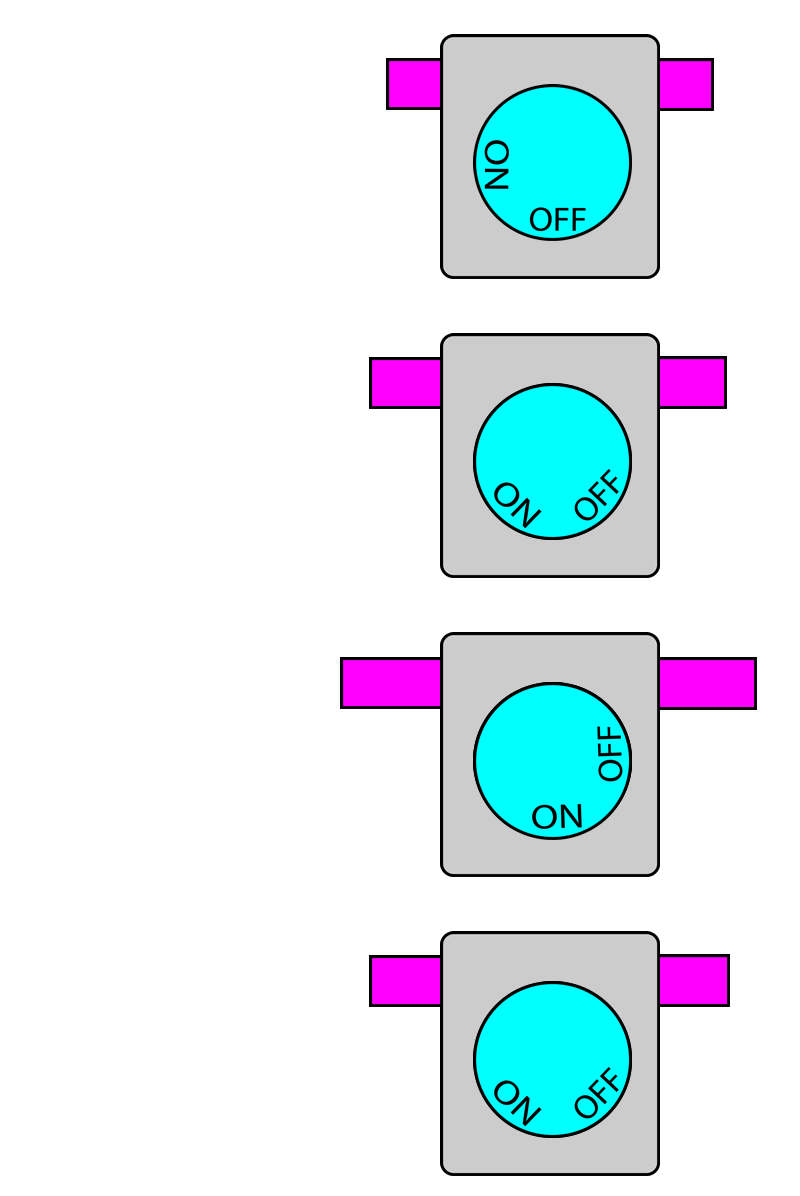
In this system, each vaporiser has two pins protruding out. When the vaporiser is in use, the pins protrude outwards. When the vaporiser is turned off, the pins retract back to where they were.
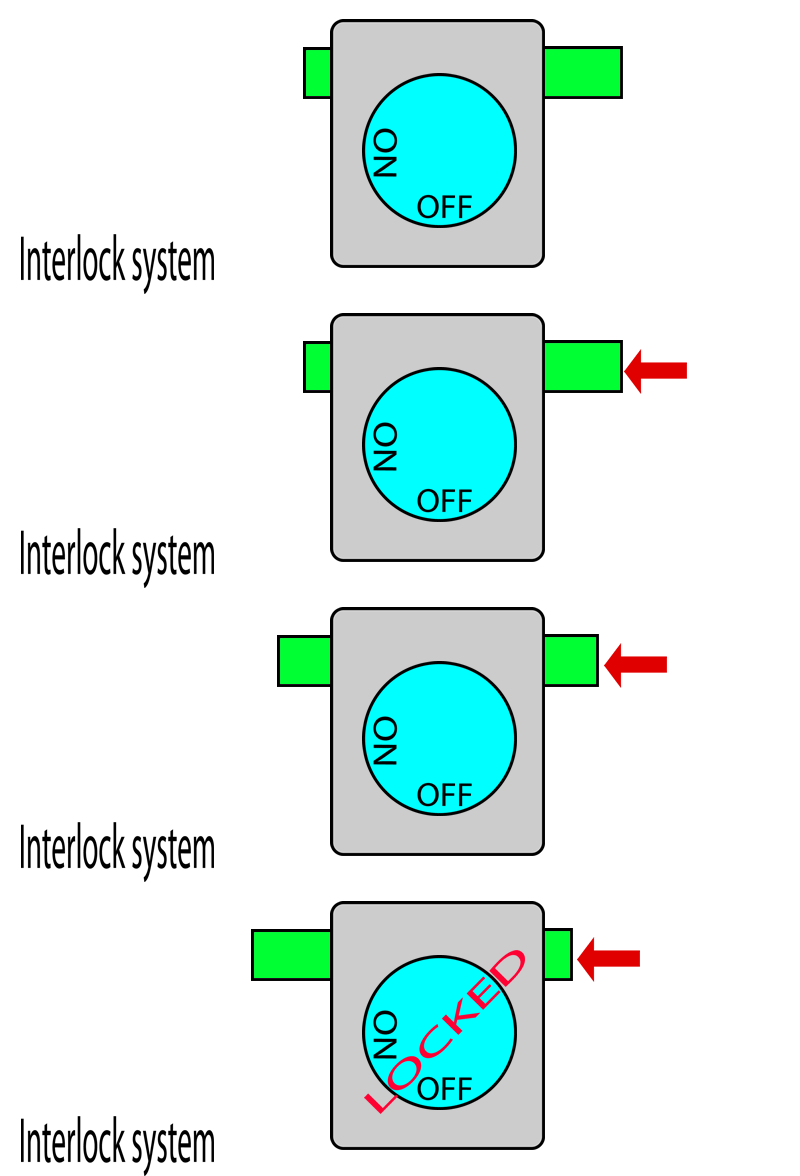
On the other hand, if any of the pins are pushed in (i.e. by another vaporiser) this locks the vaporiser dial in the OFF position. When the pin is no longer pushed in, the dial once again becomes unlocked and can be turned.
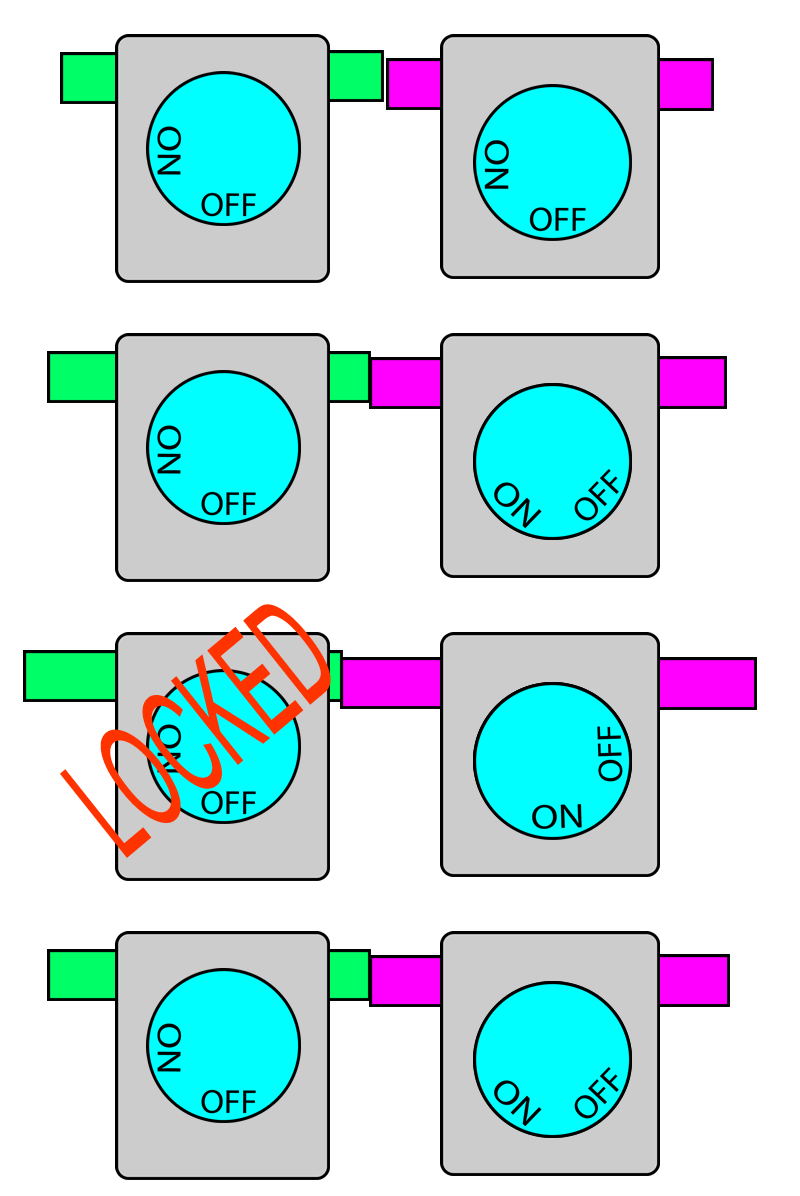
When you put two vaporisers together, their pins touch.
When one vaporiser is turned on, it protrudes its pins which then pushes in the pins of adjacent vaporisers and locks them. When this vaporiser is turned off, its pins retract and release the pins on the adjacent vaporisers thereby unlocking them. In this way, only one dial can be turned on at a given time.
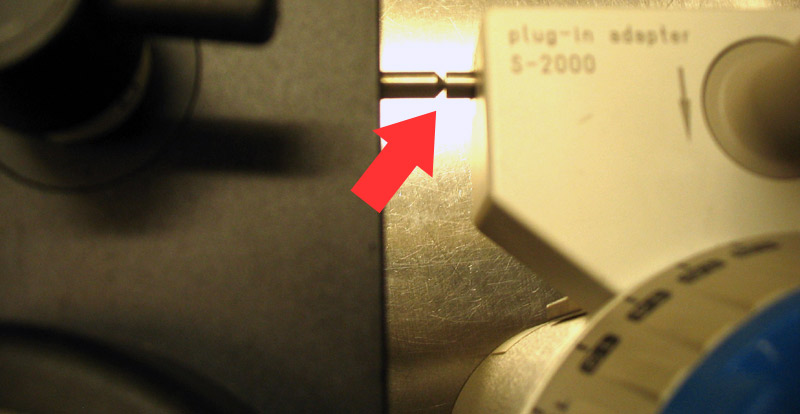
Below is a photograph of an interlock mechanism.
Agent Specific Fillers
It is important to fill the correct agent into the correct vaporiser. If a wrong agent is filled into a vaporiser, you will be vapourising the wrong drug, and worse, since vaporiser designs for different agents vary, you may seriously overdose your patient.
Early vaporisers had simply a funnel into which you could pour virtually anything by mistake (including coffee).
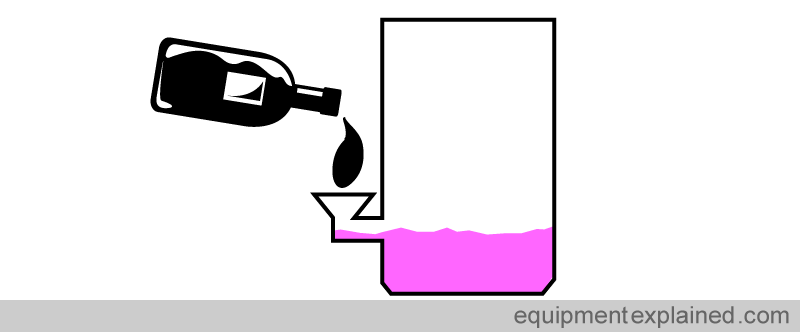
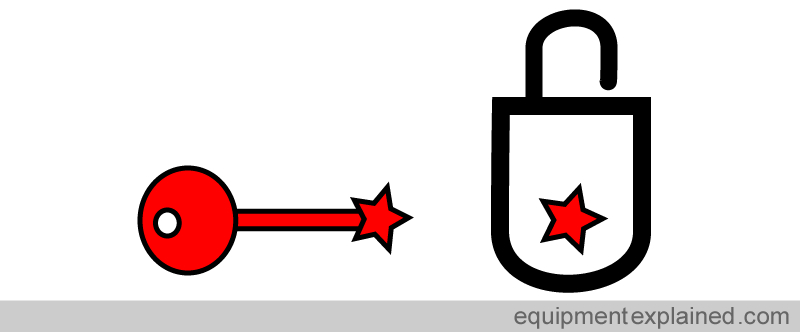
Modern vaporisers have special filling systems specific for each anaesthetic agent to prevent inadvertent filling with the wrong agent. Think of it as a “lock and key” system, i.e. a particular key will fit only a specific lock.
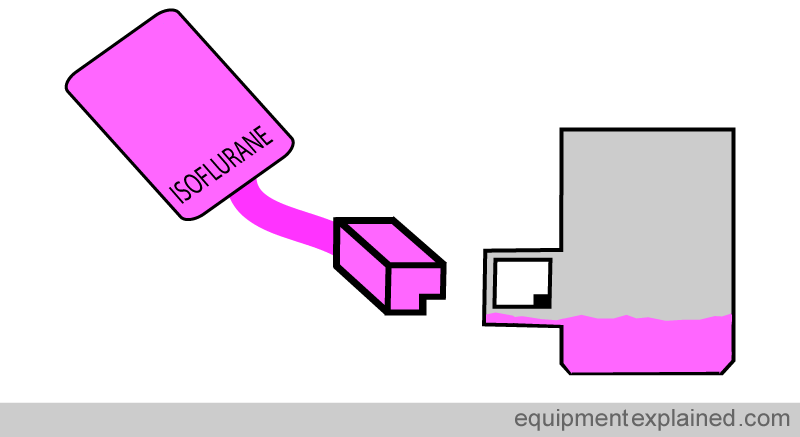
There are various systems in use. In the system below, the Isoflurane filler (key) has a notch in a corner. This fits perfectly with the filling hole in the Isoflurane vaporiser. The filling hole has a pin at the corner over which the notch of the Isoflurane filler key can pass over.
A different anaesthetic agent such as Halothane (not commonly used anymore) has a different filling key. In this case, the key has a notch at the side instead of at the corner. So the Halothane filler key will not fit into the Isoflurane vaporiser filling hole.
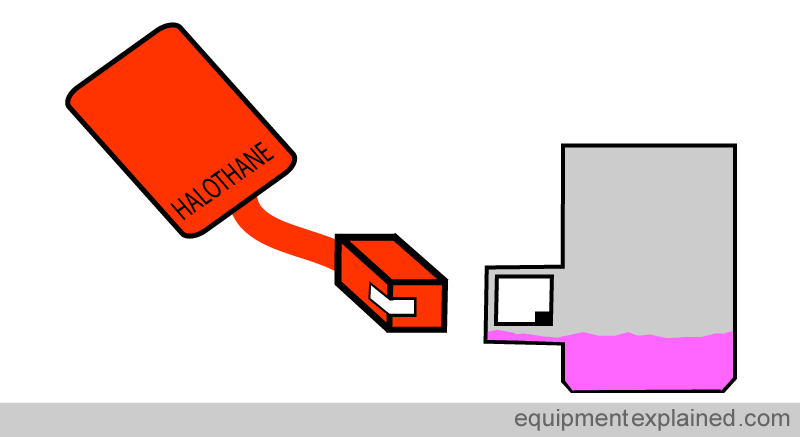
The system described above is only one type of agent-specific filling system. There are others that are there and depend on the manufacturers and the country you work in.
In addition to the physical shapes being different, the key fillers are also color-coded (purple for Isoflurane, yellow for Sevoflurane, blue for desflurane).
Here are some actual images of a filler in use. However, please note that the system used in your country/hospital may be different from what is shown.
Isoflurane Filler
The Isoflurane bottle has notches in them arranged in a way that is specific to Isoflurane. The Isoflurane key filler has specific corresponding cuts where the notches of the bottle will fit. This makes sure that you cannot fix the wrong filler key in to the wrong bottle.
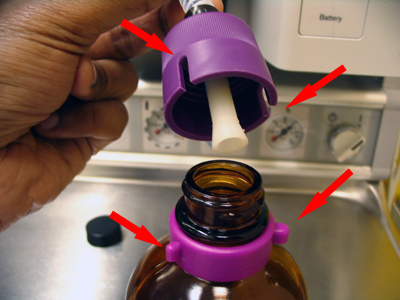
The notches on the bottle fit perfectly into the key filler.
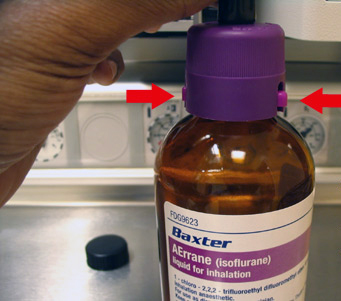
The correct key filler is on the correct bottle and is ready.
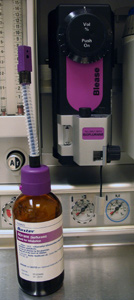
Note the corner notch in the vaporiser end of the Isoflurane key filler.
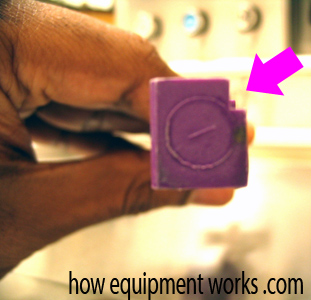
The corner notch in the Isoflurane key filler aligns with the corner notch of the Isoflurane vaporiser.
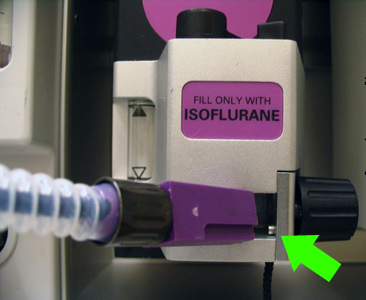
Filling with the correct agent.
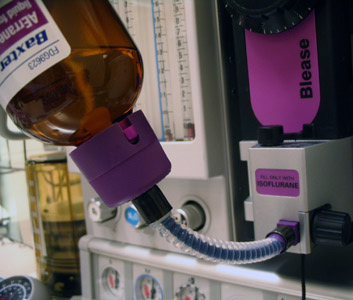
We have now reached the end of our discussion on anaesthesia vaporisers. I hope it has given you a good introduction to the subject and will help you when you read further on this topic. Bye and see you soon on another topic!

Hello! My name is Pras, and I am the author of this website. I have made the website completely free to access so that people from all over the world can benefit from it.
If you can afford it, I would be very grateful if you would consider making a single donation of one dollar (or the equivalent in your currency) to help cover the expenses needed to run this website (e.g. for special software and computers). For this website to survive, donations are desperately needed. Sadly, without donations, this website may have to be closed down.
Unfortunately, perhaps because many people think that someone else will donate, this website gets only very few donations. If you are able to, please consider making a single donation equivalent to one dollar. With support from people like you, I am sure this educational website will continue to survive and grow. Thank you very much for your support.