Note: This is part 3 of the discussion of how MRI machines work. If you have not read previous parts, please click here to go to part 1.
Quenching
Before I proceed, let me tell you that this is an extremely rare occurrence. So please do not worry excessively about it happening to you either as a member of the staff or even as a patient.

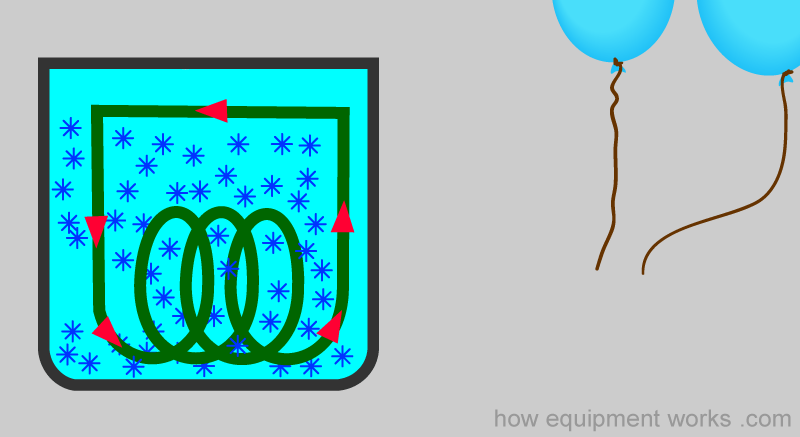
Quenching is the shutting down of a super-conducting magnet. Rarely, it can happen spontaneously due to a fault in the magnet. For example, a fault in the magnet can cause a small length of wire to heat up (pink area in diagram).
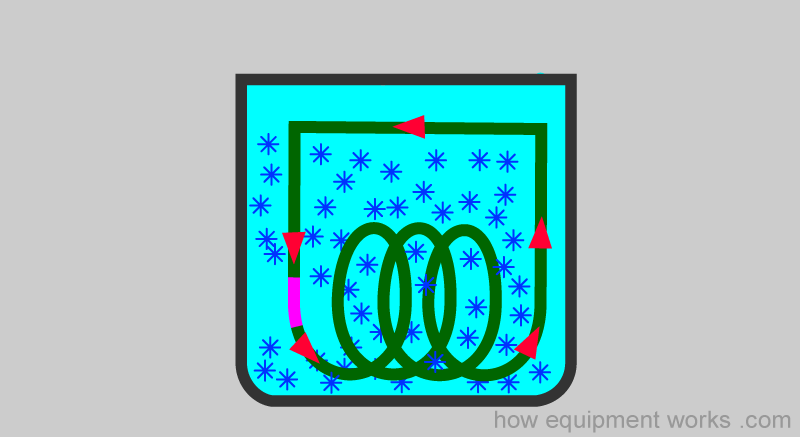
The heating of the wire due to the fault makes that part of the wire ‘non-super conducting’ and it therefore develops a resistance to current flow (pink area). The current from the other still superconducting portions of the wire (green) tries to cross this localized area of high resistance and this leads to additional heat generation (yellow).
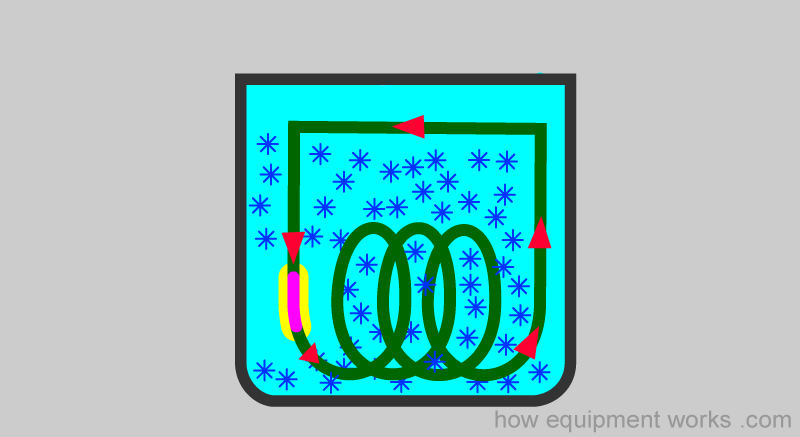
The additional heat spreads and causes adjacent parts of the wire to also warm up and become non-superconducting. This leads to further areas of the wire losing their superconductivity status and developing high resistance to current flow. Current trying to flow through this increased resistance creates even more heat and the process continues.
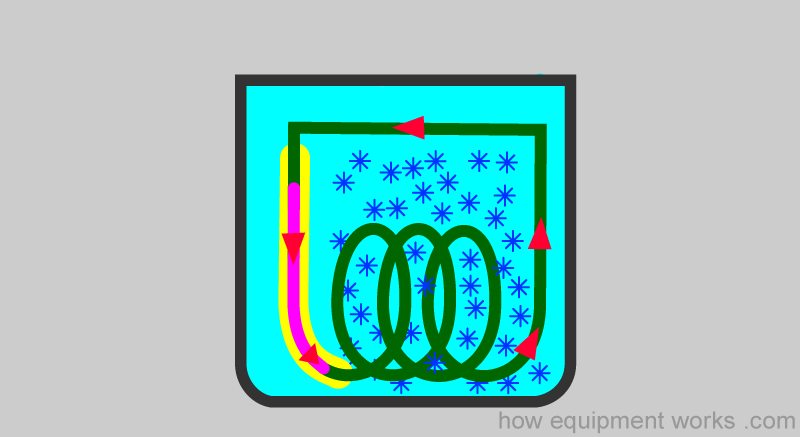
Soon the whole wire coil heats up.
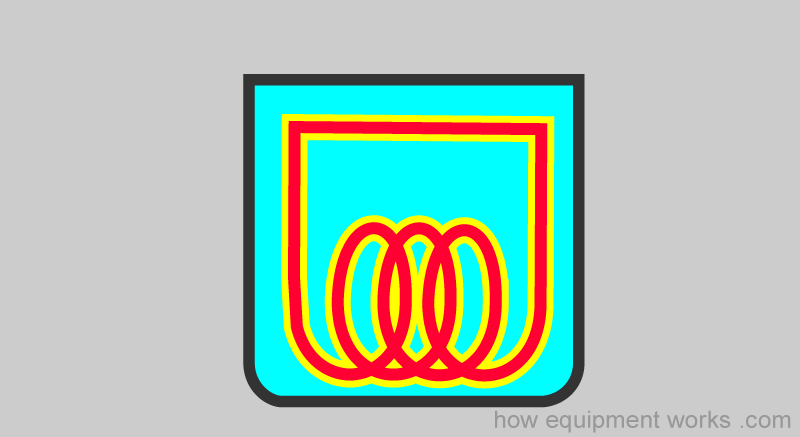
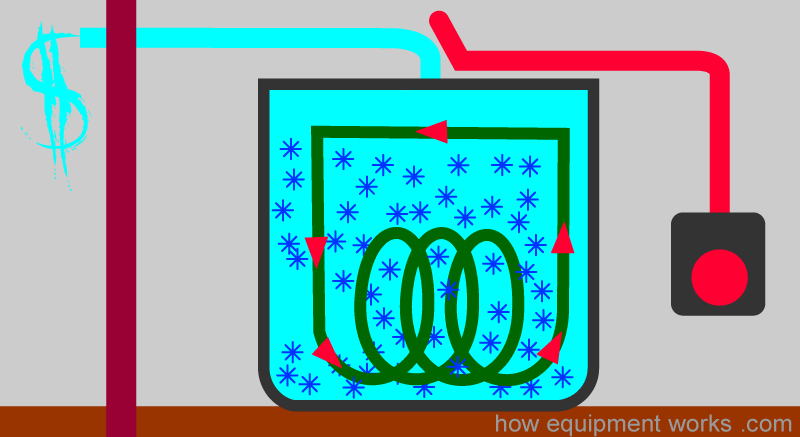
The heat starts to “boil” the Helium. There is a build-up of high pressure as the liquid Helium wants to expand and get out. This is a dangerous situation as the Helium tank could now explode. Fortunately, the MRI machine designers have thought of this situation and have placed a pipe (green) connecting the tank of Helium to the outside of the hospital.
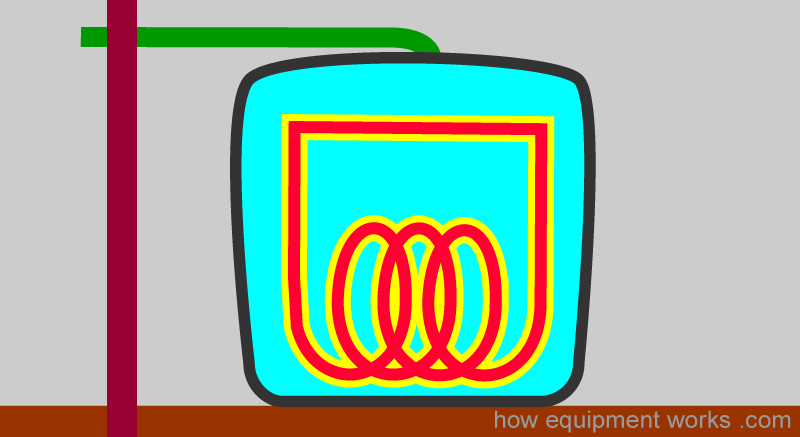
A safety valve opens and releases the Helium safely out of the hospital.
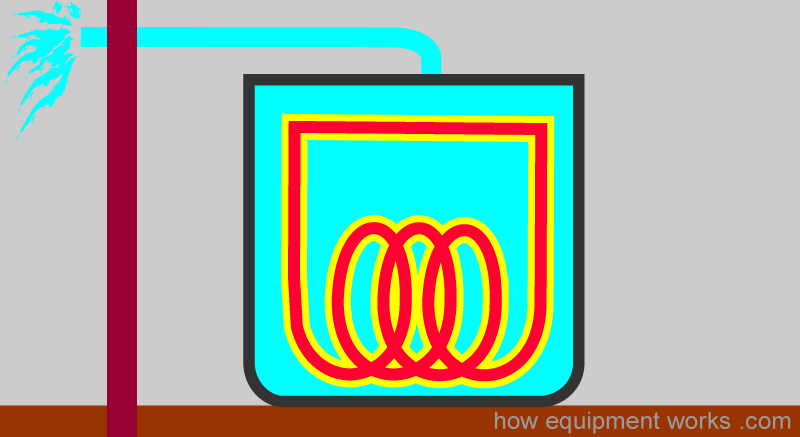
Once all the Helium has been vented out, the magnet is safe.
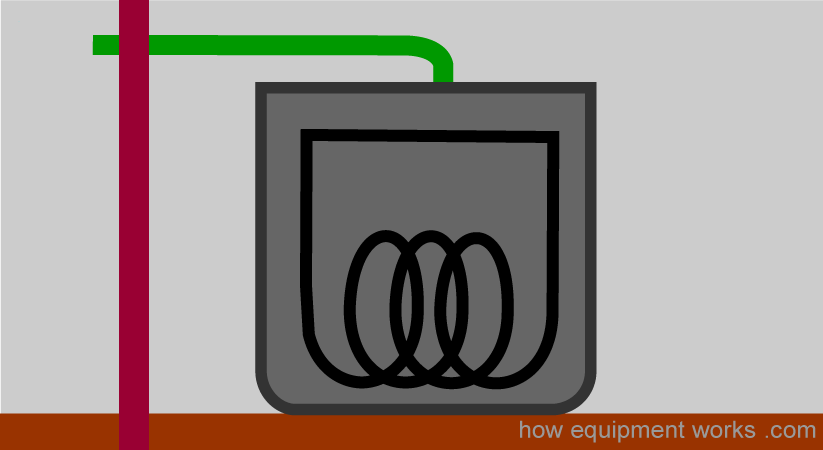
Magnet quenching is not always due to a magnet fault. In very specific circumstances, it may be necessary for the MRI operator to shut the magnet down. Let me explain how this “staff-initiated quenching “ happens. Somewhere near your MRI machine will be a STOP button used to stop (quench) the magnetic field. ( As you look at the button you will notice that the MRI staff will be staring at you with fear, worrying that you might press it by mistake).

The “ magnet stop “ button is a button that you certainly don’t want to press by mistake. The button is connected to the venting system.
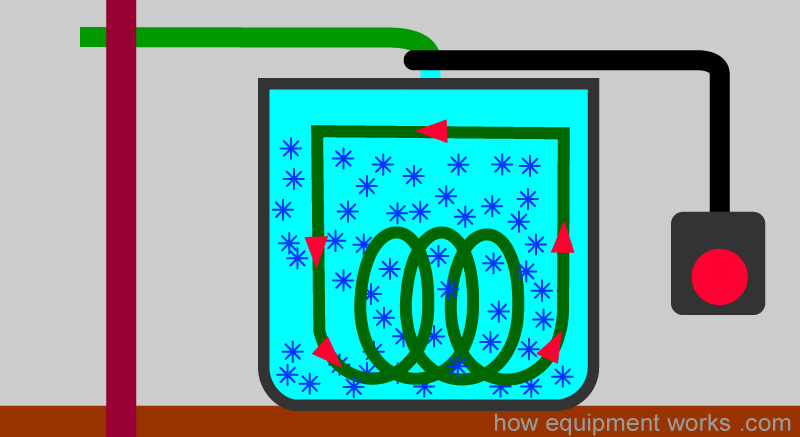
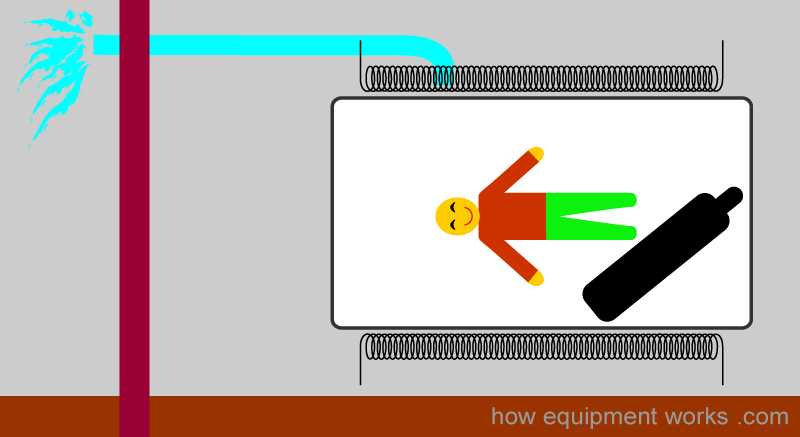
If the button is pressed, a valve opens the venting tube. The Helium is then safely released to the outside of the hospital.
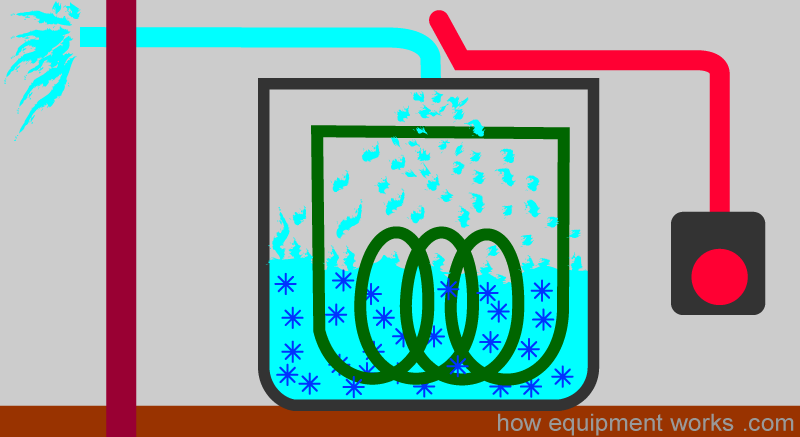
The loss of Helium warms the magnet and stops the superconductivity. The wires now develop a resistance to the current flow which then stops.
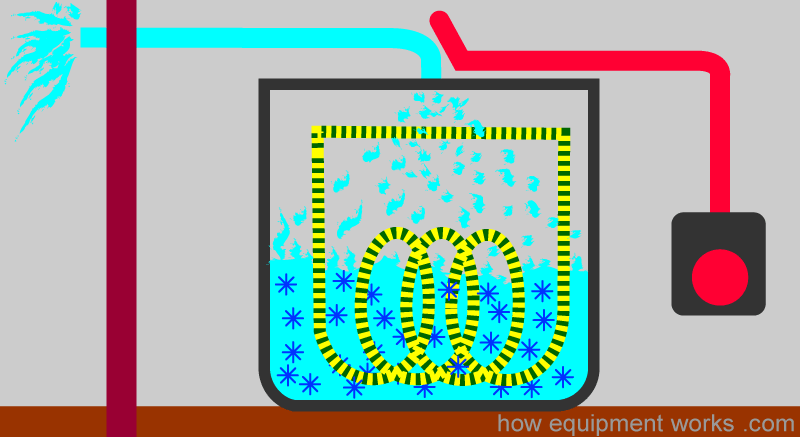
Without current flow, there will no longer be magnetism. The magnet now has been successfully quenched.
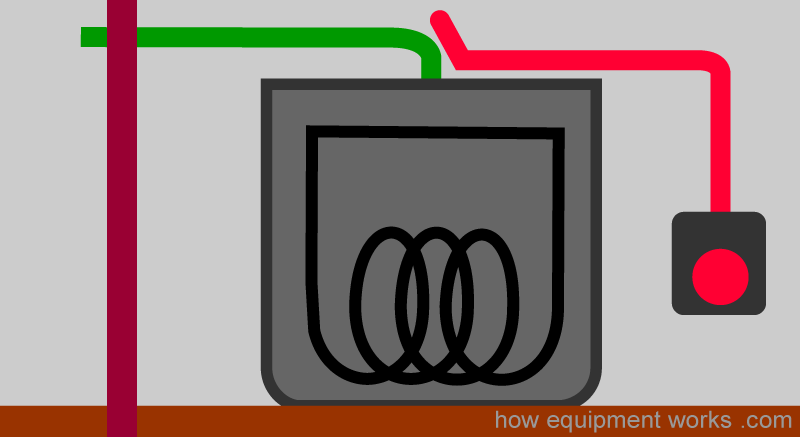
You should not use the emergency quench button for every type of emergency. Quenching results in the loss of Helium which is extremely expensive to replace. Furthermore, the process of quenching can damage the magnet which can take a long time to repair, making the MRI unavailable for other patients.
Most emergencies in the MRI room will not need you to press the quench button. You can manage emergencies in the MRI machine room itself provided you have the appropriate MRI-safe equipment. Other emergencies you can manage by taking the patient to a room located next to the MRI machine, where you can safely use standard hospital equipment. However, in certain rare situations, you may have to stop the magnetism by quenching the magnet. For example, just imagine that someone, by mistake, brought in a steel oxygen cylinder near the MRI machine.
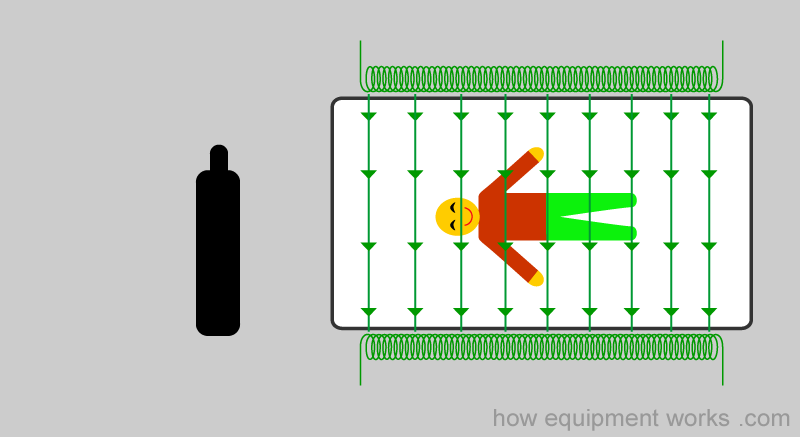
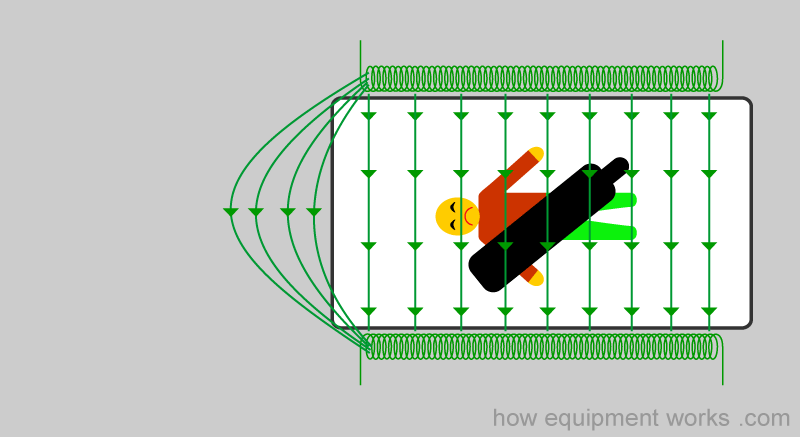
It is important to recognise that the magnetic field of the MRI machine extends beyond the patient scanning table.
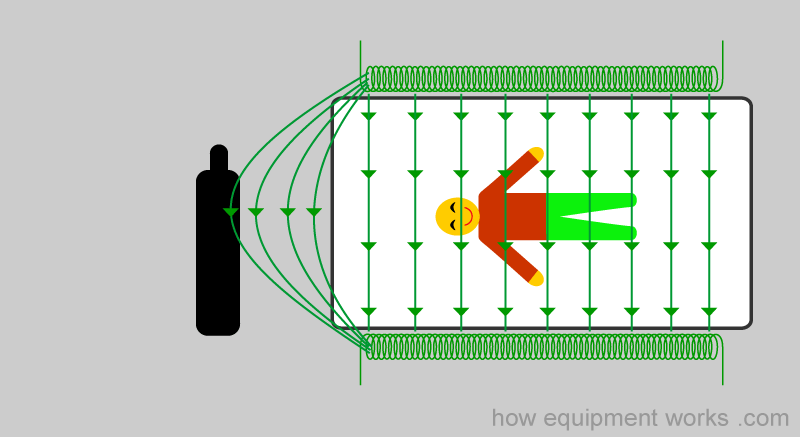
Imagine that the cylinder now gets pulled into the magnet and traps the patient underneath it.
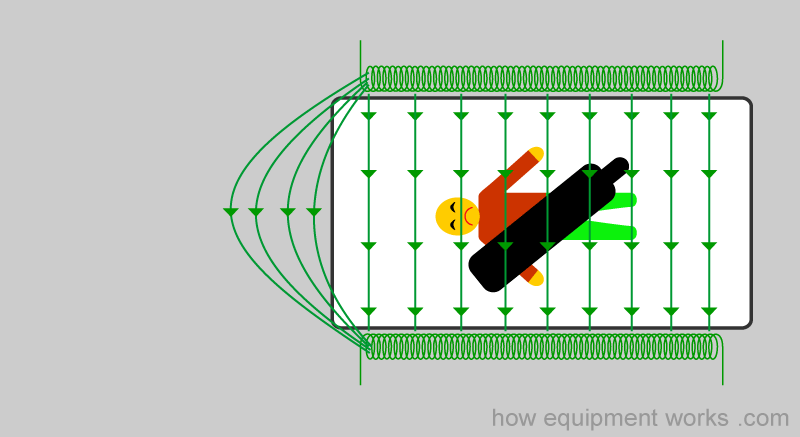
If you can’t physically remove the cylinder using normal force, your only option might be to put the magnet off by quenching it. Now that the magnetic field is gone, you can easily remove the steel cylinder.
Potential issues during magnet quenching:
During a quench, certain conditions such as blockage of the venting pipe can result in Helium getting released into the room containing the MRI machine rather than being released to the outside of the building. The liquid Helium that enters the room will rapidly become a gas at room temperature and will rapidly expand to fill the room.
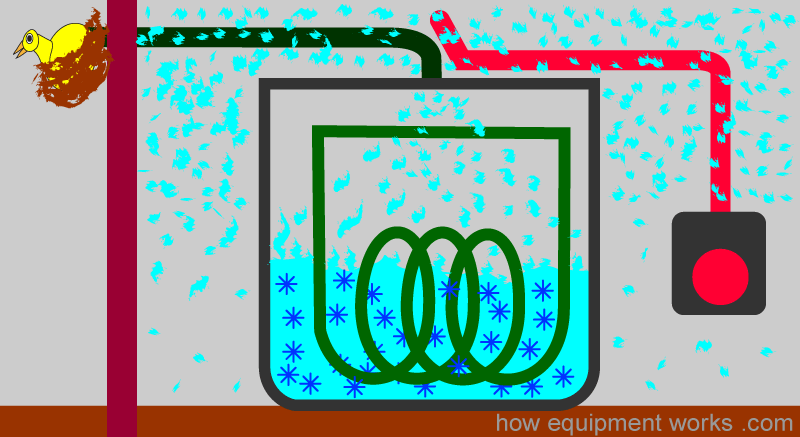
There are some risks to patients and staff associated with Helium release into the MRI room. One consequence can be quite funny. The Helium will raise the “pitch “ of people’s voices making them sound like characters in children’s cartoons. This happens because Helium has a low density and this makes sound travel faster. If you want to hear a sample of a helium voice, I suggest that you visit YouTube.com and type in the search term “funny helium voice “. While you are at Youtube.com, you can also type in the search term “MRI quench” to see some videos of real MRI magnets quenching.
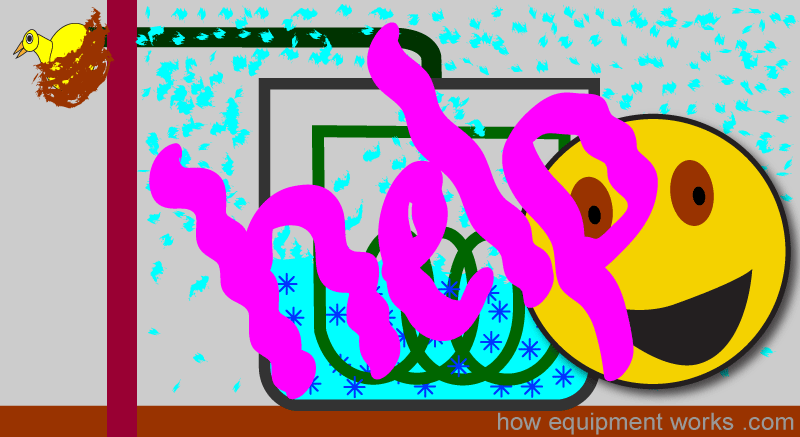
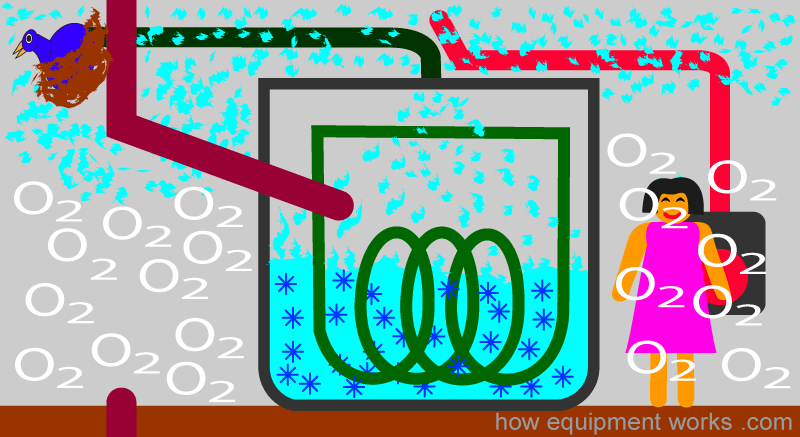
A much more serious consequence is that the Helium can push the oxygen to the bottom of the room resulting in hypoxia to the patient and anyone else in the room.
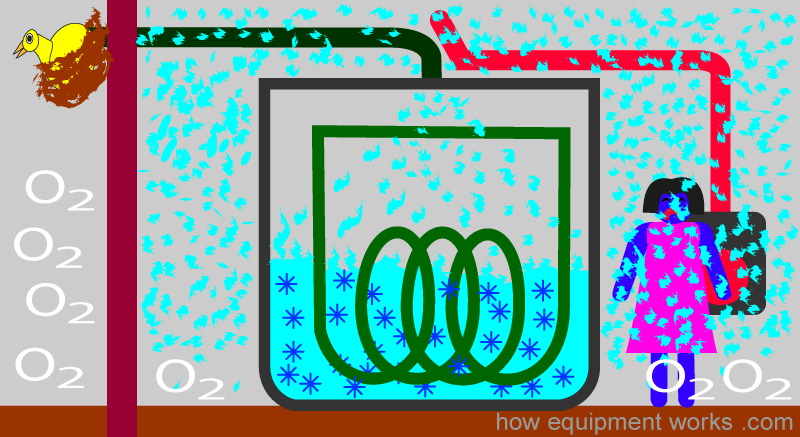
Therefore, during quenching, it is important to open the door of the MRI room to let the Helium out. One must also calmly but quickly evacuate the patient and staff. I have only given a very brief introduction to quenching. You must prepare for this rare eventuality using information from your hospital policies.
A small note to end this section: While reading around to write about the MRI machine, I was shocked to read news articles that say that the world’s Helium supply is diminishing. This news is making me wonder about the Helium that is used to inflate party balloons that float. As you may know, balloons filled with Helium float in the air because Helium has a low density. They are beautiful to watch.
But I wonder if we should be wasting such a useful resource on floating party balloons. Instead, shouldn’t we safeguard the world’s Helium reserves for MRI machines?

Do you work in the anaesthetic team? If you do, please visit the free website below, which has anaesthesia-related fun and safety material. Click the button below to visit.

Why MRI machines are so noisy: The “Gradient Coil Guitar”
If you have been next to or inside an MRI machine (as a patient !), you would know that it can be noisy. However, if you have only been inside the MRI control room, you may not appreciate how loud it is. Furthermore, the MRI machine produces a large variety of different sounds.
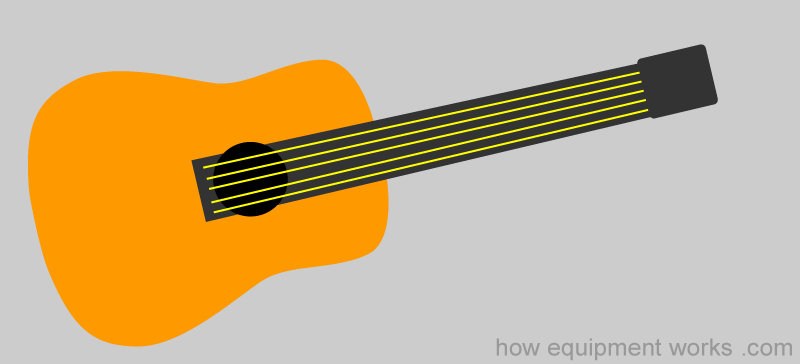
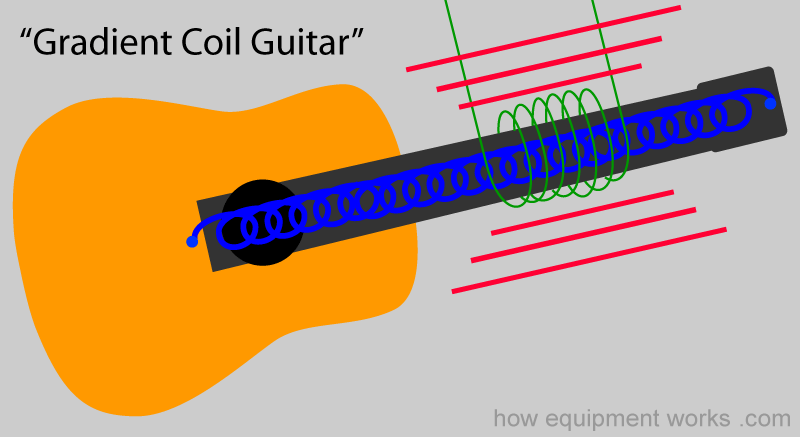
The reason why the MRI machine is so loud is that it is actually a “huge guitar”. Don’t worry, I will explain it to you.
As mentioned before, the MRI machine has an extremely strong magnet, shown as the green coil below. This magnet produces a field that is equally strong everywhere.
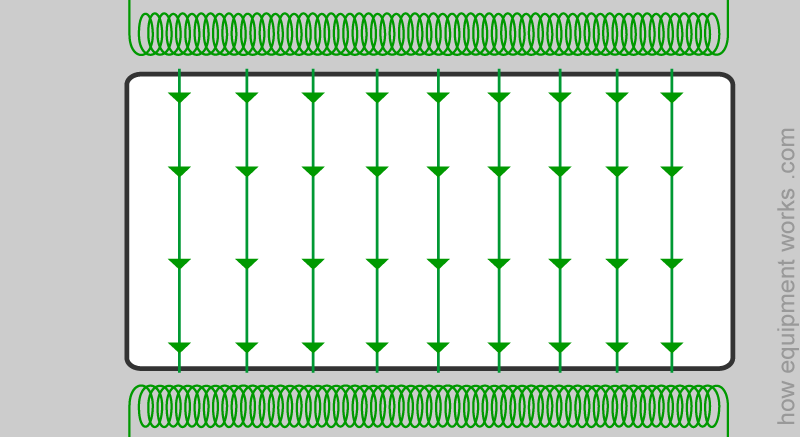
You also know that there are ‘gradient coils’ ( blue coils below) that modify the main magnet’s uniform field to produce magnetic gradients.
The gradient coils create a gradient by producing a small magnetic field within the main magnetic field. The two magnetic fields interact and result in the magnetic gradient.
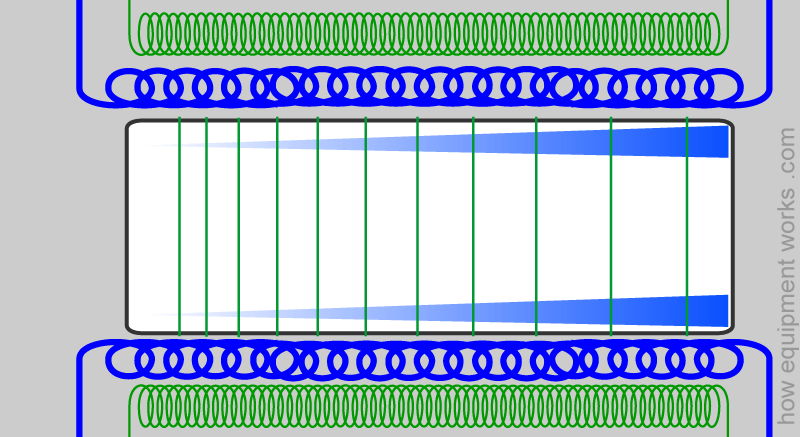
The gradients that I have shown in our discussions have been simplified greatly. In reality, there are many gradient coils and as the MRI machine scans different parts of the body, the coils work together to create very complex gradient fields.
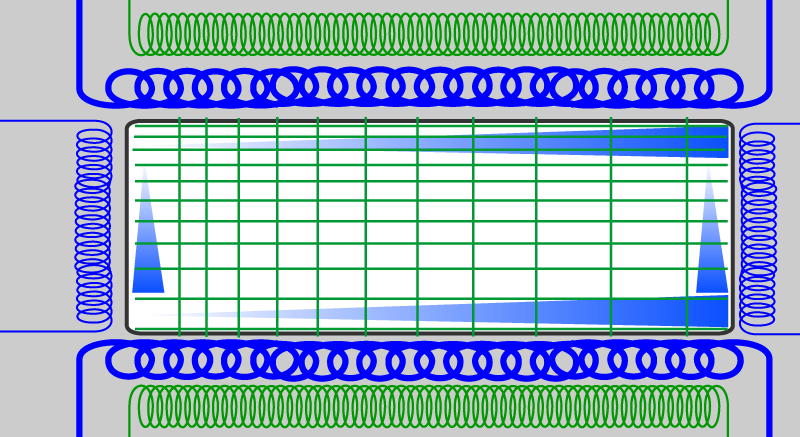
As the MRI machine scans different areas of the body, it changes the gradients as necessary. The changes in the gradients are made by rapidly changing the magnetic fields produced in the gradient coils. The gradient coils have a tough job to do. It is quite “difficult” for them to create their modifying magnetic fields in the presence of the extremely strong main magnetic field. When the gradient coils produce magnetic fields to alter the main magnetic field, due to the huge magnetic forces involved, they move slightly.
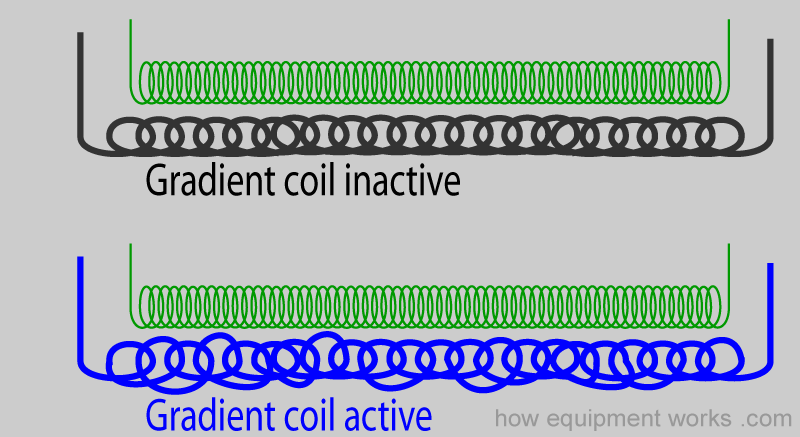
The MRI machine changes the gradients very rapidly in complex ways. This causes the gradient coils to rapidly move slightly(vibrate). The vibrating gradient coils now produce sound (red lines).
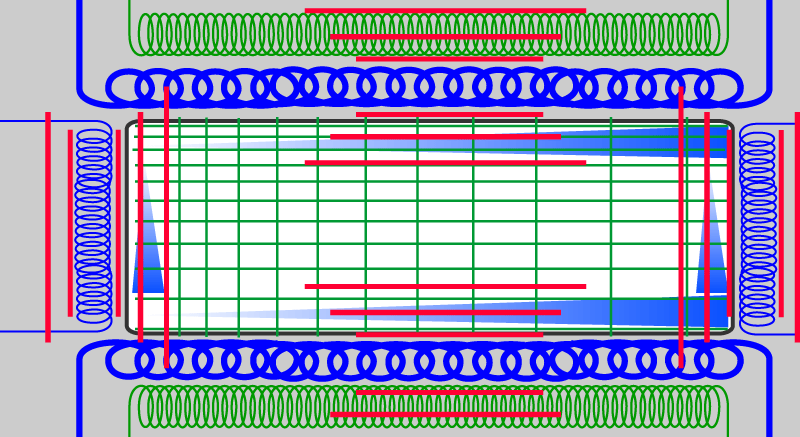
I see the MRI machine as a gigantic guitar, the gradient coils being the guitar strings. As the MRI creates complex gradients, the guitar strings (gradient coils) vibrate, producing the most amazing variety of tunes. If you have access to YouTube, please visit it and type “MRI sounds” to hear the amazing sounds I am referring to. Make sure you click on more than one video so that you can hear the wide variety of sounds produced.
Enjoy the “Gradient Guitar !”
Putting amusement aside, gradient coil noise is a huge problem with current MRI scanners. It is loud enough to require patients and staff to wear ear protection.
Anesthesia and MRI
This website is primarily written for personnel working in anaesthetics. However, I am aware that there are many thousands of non-anaesthetic visitors as well (who are of course most welcome). However, the next section is primarily focussed on those in anaesthetics, so some of you might wish to skip this section.
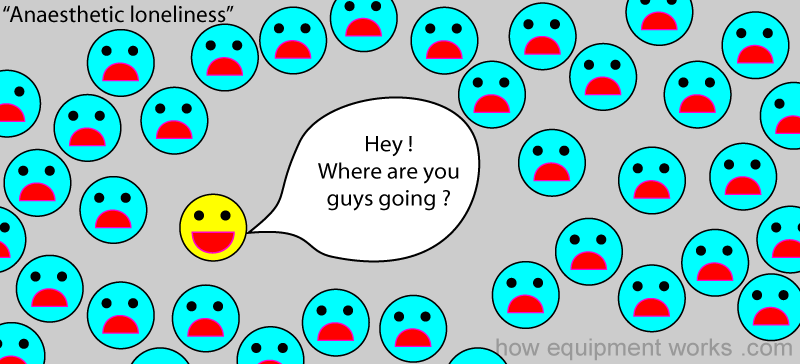
Providing anaesthesia services for MRI is very challenging. Only those who have the relevant expertise should be involved in the unique world of MRI. The focus of this website is mainly non-clinical and the discussion that follows is therefore very basic and may not be accurate for your clinical setting. Therefore, please do not rely on the information here for actual patient care.
Anaesthesia and MRI are like a married couple who often get irritated by each other.
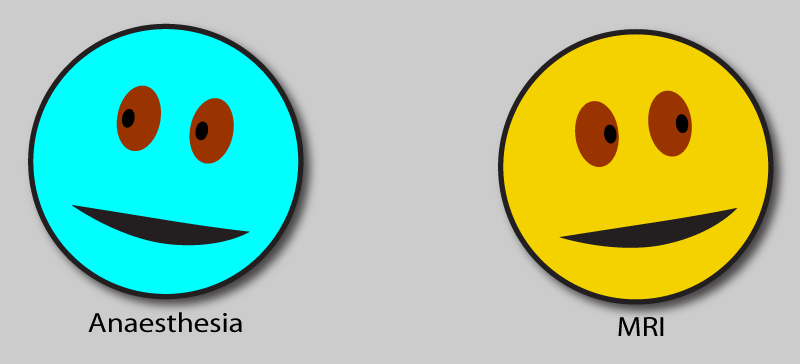
The MRI machine can get in the way of anaesthesia, and the reverse is also true, where the provision of anaesthesia can mess up MRI scans. However, for the sake of producing good images and keeping the patient safe, the couple needs to work together, taking care not to upset each other.

Let us discuss some challenges.
Distance:
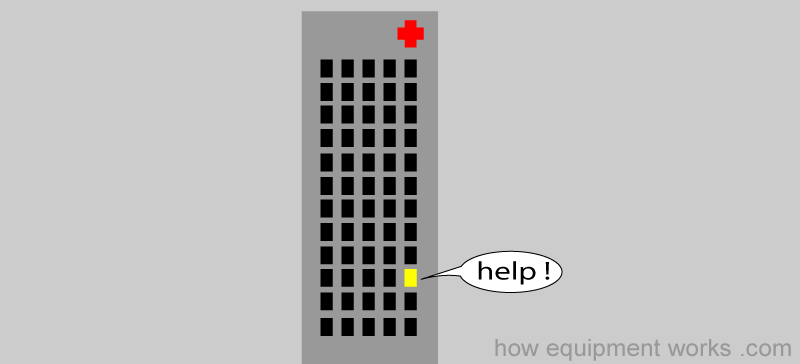
The MRI machine may be located some distance away from the operation theatres. The location of the MRI room has to take into account many considerations. The MRI magnet can weigh 3000 – 4000 kilograms (6600 – 8800 pounds) and therefore needs to be on a sturdy floor. One also needs to choose an area that minimises electrical, magnetic, and vibration interference. All this means that the MRI may be installed in a room that is distant from your normal area of work (e.g. operating rooms). If there is an emergency, it may be difficult to get appropriate help and equipment in a hurry. Therefore, you and your team should have the necessary skills to cope with emergencies. You will also need to keep appropriate equipment.
Magnetic field:
As discussed above, the magnetic field in and around an MRI machine is very strong. Therefore staff and patients must avoid taking with them items likely to be attracted by the magnetic field. To comply with this, the MRI personnel will administer a checklist to make sure everyone is in the clear. Even with the checklist, it is worth checking your pockets for items you may have forgotten about.
Small items can become lethal bullets as they get attracted by the magnetic field.
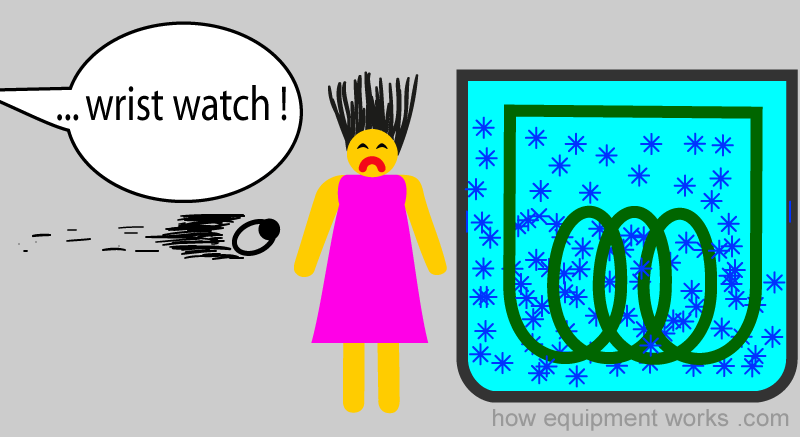
As you saw before, large objects can also be drawn into the MRI machine.
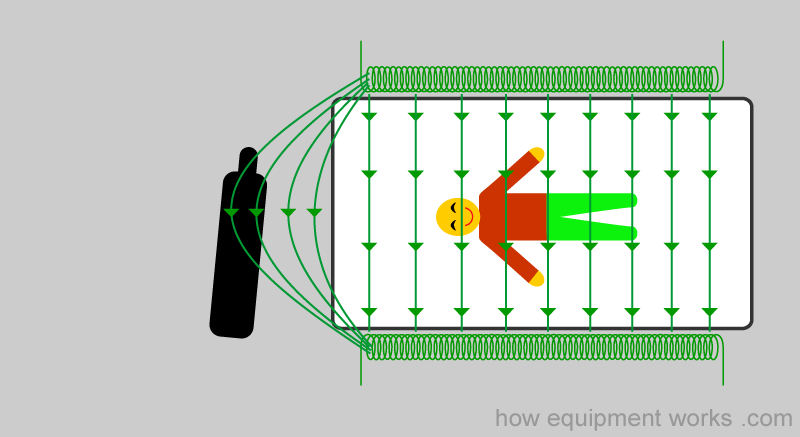
Such large objects may trap staff or the patient.
Radiofrequency burns:
You will recall that the MRI machine sends pulses of RF energy to the patient.
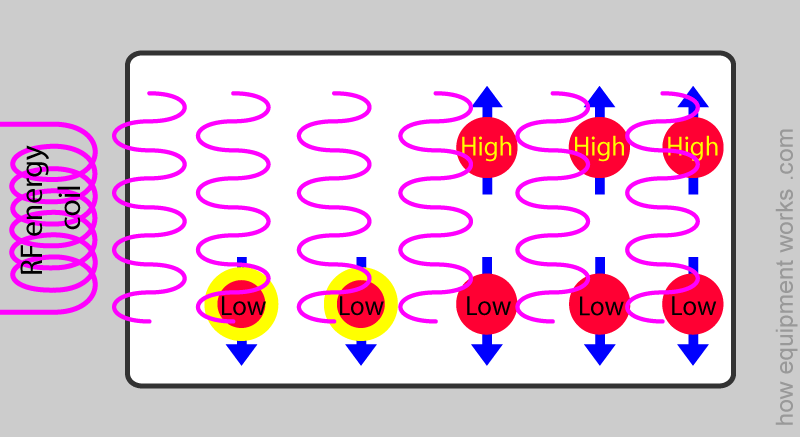
Unfortunately, this energy can also be picked up by wires and metallic objects. For example, electrocardiogram wires can pick up this energy and heat up, potentially causing burns to the patient.
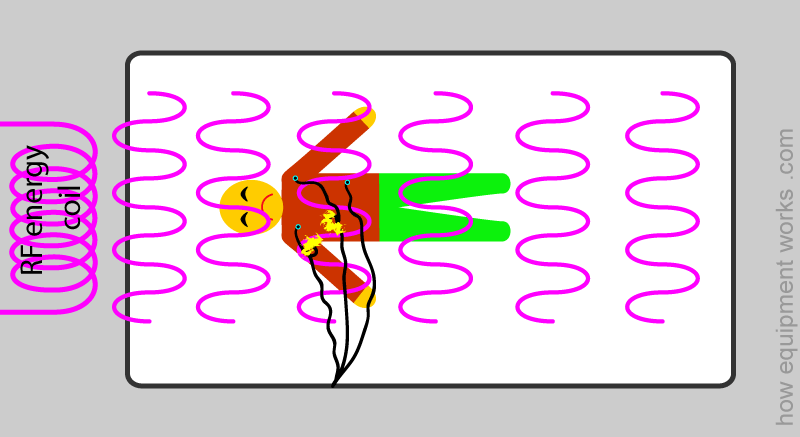
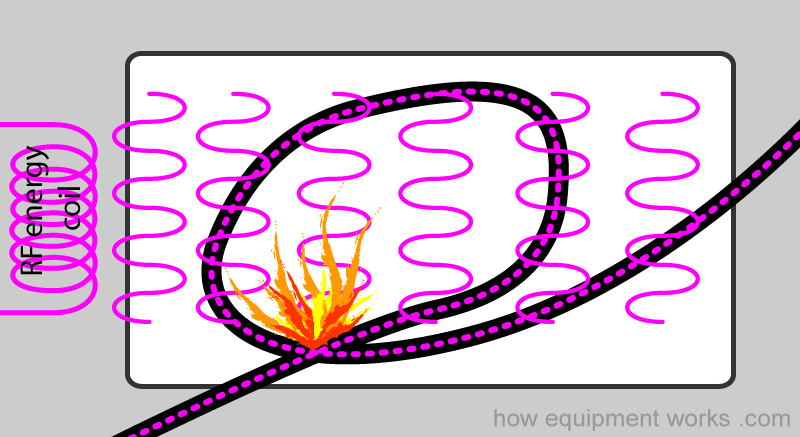
Special precautions must be taken to prevent RF energy-related burns. For example, to prevent burns, electrocardiogram leads should be specially designed, may need to be placed in a certain way on the chest, must not be allowed to form loops (which are very good at picking up RF energy) and should have an adequate insulation gap between the wire and the patient. As mentioned before, please get specific advice from experts regarding working in the MRI environment.
There are of course many other aspects such as remote monitoring, breathing systems, etc that I have not touched upon. I hope my discussions have given you a starting point for understanding the wonderful and mysterious world of the MRI machine. Thank you for sticking with me to the end (like a magnet !).
We have now reached the end of our discussion on the basic physics of magnetic resonance imaging. I hope it has given you a good introduction to the subject and will help you when you read further on this topic. Bye till we meet again in another section!

Hello! My name is Pras, and I am the author of this website. I have made the website completely free to access so that people from all over the world can benefit from it.
If you can afford it, I would be very grateful if you would consider making a single donation of one dollar (or the equivalent in your currency) to help cover the expenses needed to run this website (e.g. for special software and computers). For this website to survive, donations are desperately needed. Sadly, without donations, this website may have to be closed down.
Unfortunately, perhaps because many people think that someone else will donate, this website gets only very few donations. If you are able to, please consider making a single donation equivalent to one dollar. With support from people like you, I am sure this educational website will continue to survive and grow. Thank you very much for your support.