Note: This is part 3 of the discussion of circle breathing systems. If you have not read part 1, please click here to go to part 1.
Main advantages of the circle system
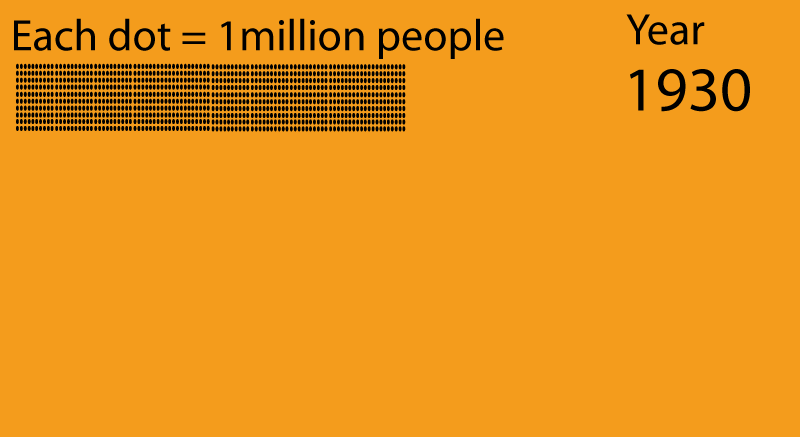
As you have seen, the circle system is a little complicated. So the next question is, “Why do we use it? “ The reason has got to do with “recycling”. Recycling is something we are all (hopefully) familiar with as the natural resources in the world are running out fast. The main problem I suppose is that the human population is growing very quickly and we all are consuming a lot of resources. I was quite surprised to learn that, less than a hundred years ago, the population on Earth was only 1 billion.
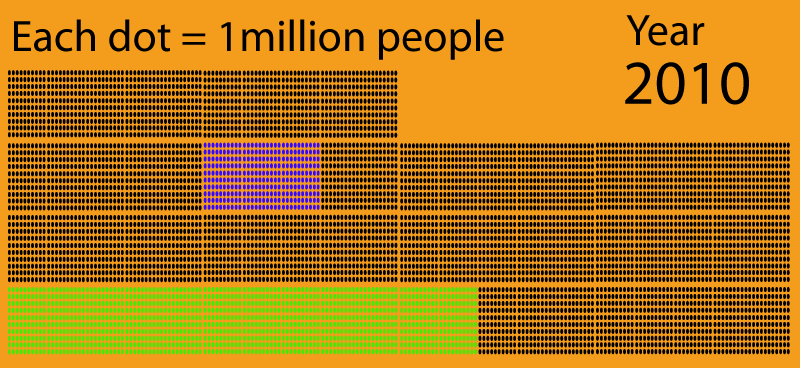
Only seventy years later, the population had risen to 7 billion! We continue to multiply fast and the population is expected to rise to 9 billion by the year 2040. To help you appreciate the numbers, I have coloured the population of India as green dots and the population of the USA as blue dots. With so many people consuming the limited resources of the world, it is very important that we recycle whatever we can.
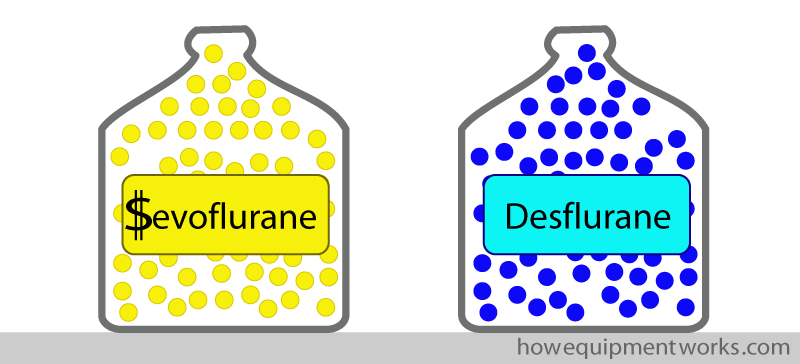
Let us return to the circle system! Well, in anaesthesia, we also need to worry about recycling. Now you may ask, “What is so precious in anaesthesia that we need to recycle? ” The answer is that some of the modern anaesthetic agents are quite expensive (e.g. Sevoflurane, Desflurane), so we would save significant amounts of money if we recycled them.
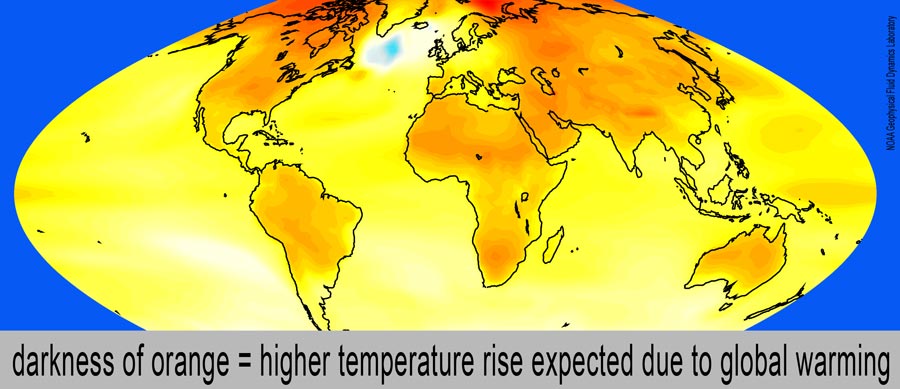
Apart from the cost, anaesthetic agents released into the atmosphere also contribute to global warming. Compared to other causes of global warming (e.g. cars), the effect caused by anaesthetic gases is tiny. Nevertheless, it still makes sense, whenever feasible, to recycle anaesthetic gases instead of letting them pollute the atmosphere.
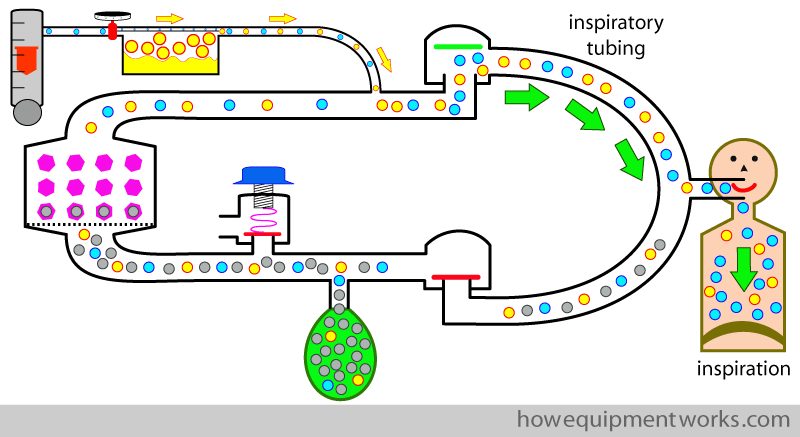
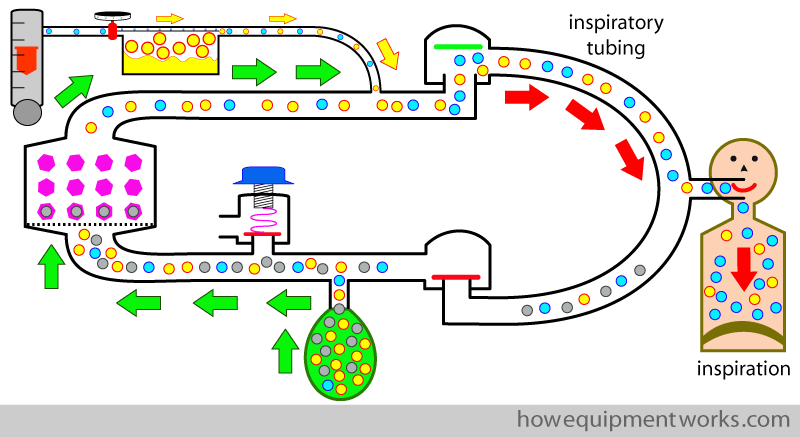
So how does the circle system come into the story of recycling? Well, the big advantage of the circle system is that it recycles expensive anaesthetic gases. Let me explain how it does this. During inspiration, an anaesthetic agent ( yellow dots ) goes into the patient.
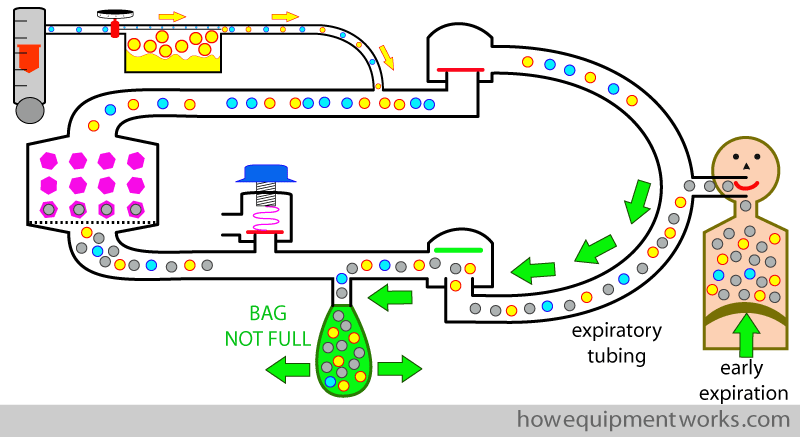
During early expiration, most of the anaesthetic agent that the patient has not taken up goes into the reservoir bag.
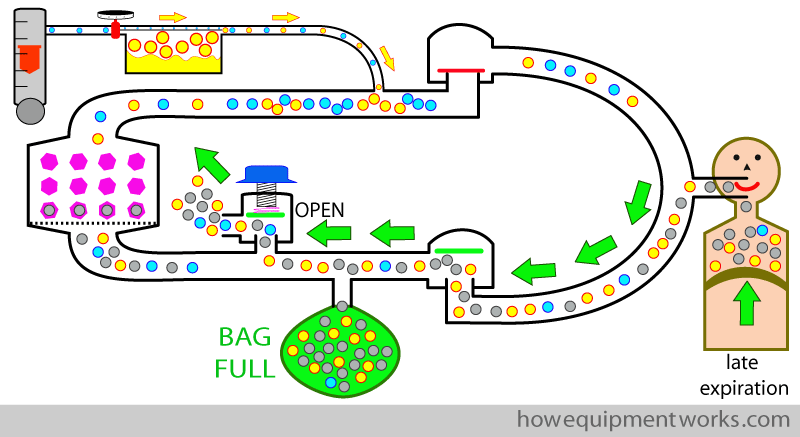
Once the bag is full, the remaining anaesthetic agent and other gases go out via the APL outflow valve. This bit of gas is lost forever and is therefore “wasted”.
During the next inspiration, the patient inspires from the reservoir bag. The gas from the reservoir bag contains anaesthetic agent that the patient expired in his previous expiration (green arrows) and this is added to the anaesthetic agent in the fresh gas flow ( yellow arrows). The combined mixture (red arrows) goes into the patient. The adding of the anaesthetic agent from the reservoir bag (i.e. “recycled anaesthetic agent”) reduces the amount of anaesthetic agent we need to give in the fresh gas flow, saving money and causing less pollution.
Along with the anaesthetic agent, there are two more things that are worth recycling: moisture and heat. The fresh anaesthetic gases are dry and cold. Continuous exposure to dry gases can make the respiratory tract dry leading to complications. Anaesthesia is also associated with heat loss, so any conservation of heat will be beneficial. The circle system helps to conserve both, moisture and, to a lesser extent, heat, by recycling them in a similar way to how the anaesthetic gases are recycled.
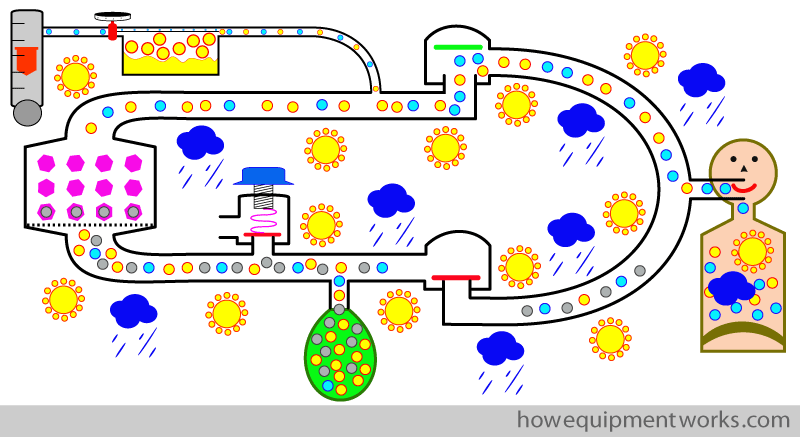
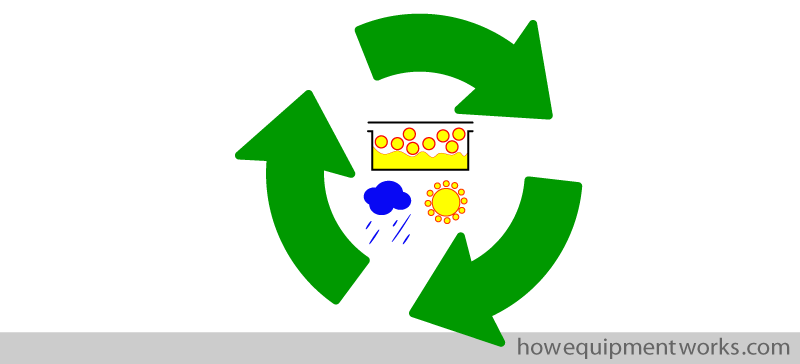
So, in summary, the circle system is great because it conserves (recycles) anaesthetic agent, moisture and some heat.
How does a circle system look?
The diagrams that I have drawn so far are “typical ” diagrams of a circle system. However, it is important to know that the individual parts can be arranged differently. For example, it is possible to attach the reservoir bag before or after the CO2 absorber as shown below. The chosen location of the bag will make the system operate slightly differently.
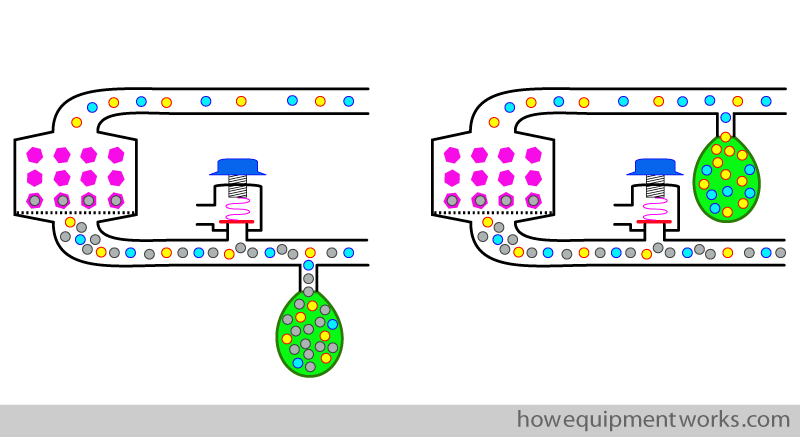
The other parts can also be arranged in a variety of ways. For further details regarding the arrangement of the individual parts of the circle system in your anaesthetic machine please refer to the instruction manual. However, my personal opinion is that at this stage, to understand the basic concepts, just stick to one diagram.
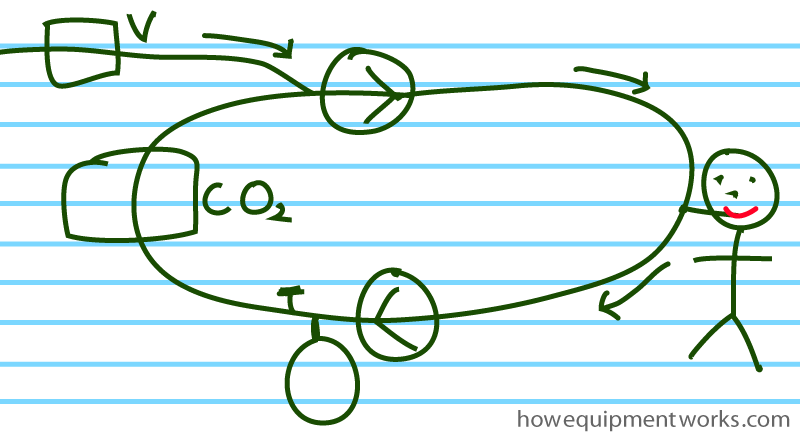
Also, I have so far drawn the circle system to look more or less like a circle!
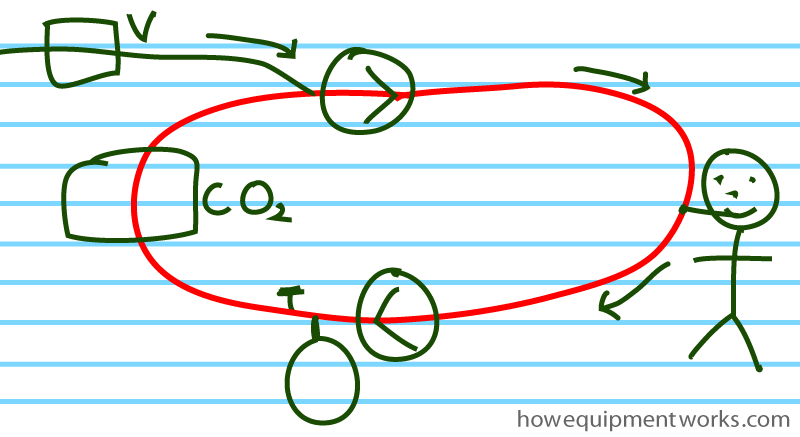
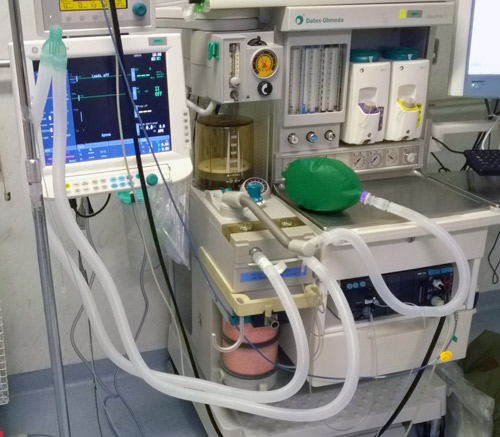
However, it is important to understand that I drew it as a “circle ” only to help you understand the concepts. In reality, you are not going to see a perfect circle coming out of your anaesthetic machine! The actual “circle ” will be quite distorted, the parts arranged in a manner that is practical. Modern anaesthetic machines tend to hide a lot of the tubing, so you will have to refer to the instruction manual to work out the gas flow path inside the machine.

Do you work in the anaesthetic team? If you do, please visit the free website below, which has anaesthesia-related fun and safety material. Click the button below to visit.

A little more detail of some of the parts:
To avoid confusion, in our previous discussions, I left out some details about some of the parts of the circle system. Let us discuss them now.
One-way valves:
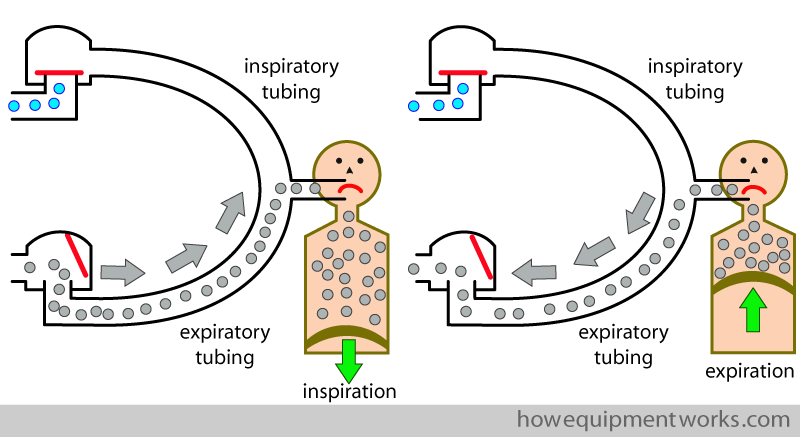
As discussed at the beginning, the circle system needs two one-way valves.
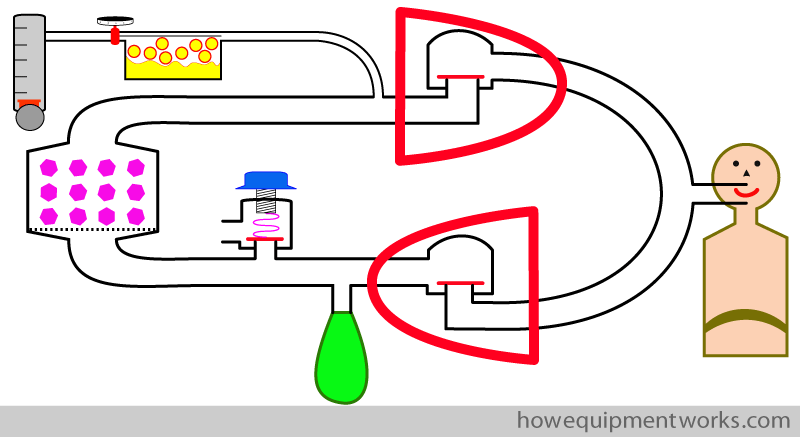
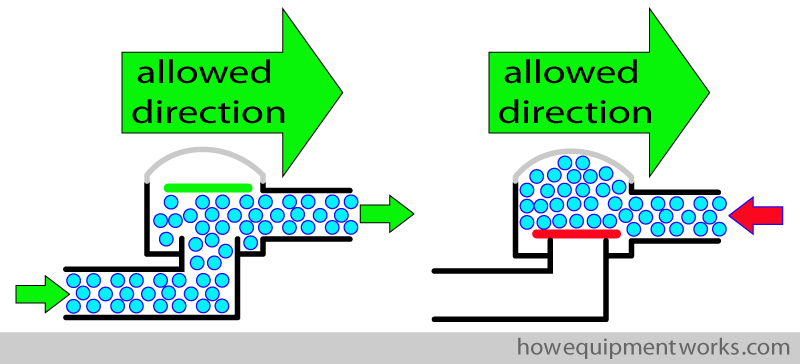
The one-way valves are specially designed to work reliably. A typical design will consist of a disc that sits over an opening. The disc opens one way, letting the gas through in that direction, but shuts the other way, preventing the gases from going the other way. The top of the valve enclosure is usually transparent so that you can observe the disc moving and confirm that it is working properly. The valve will usually have a “arrow ” marking, showing the direction of flow it allows.
The correct functioning of these one-way valves is important for the correct functioning of the circle system. For example, if the expiratory one-way valve fails and gets stuck in the open position, the patient may just breathe in and out from the expiratory side of the circle and not get much oxygen.
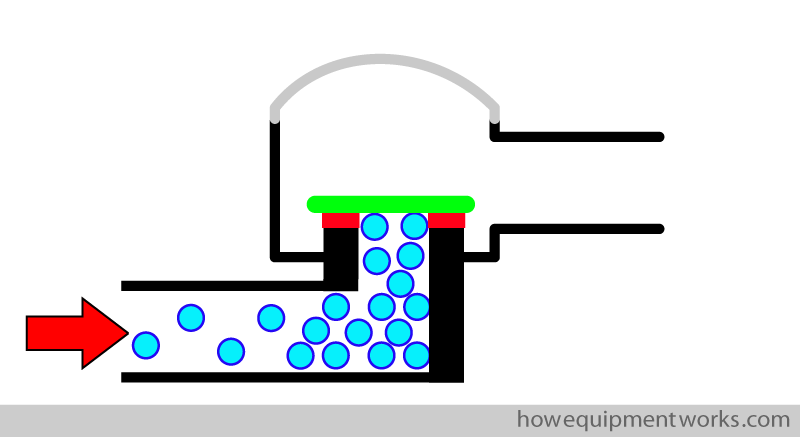
If the disc of the valve “sticks ” to its supports ( red squares in the diagram), there will be an obstruction to flow.
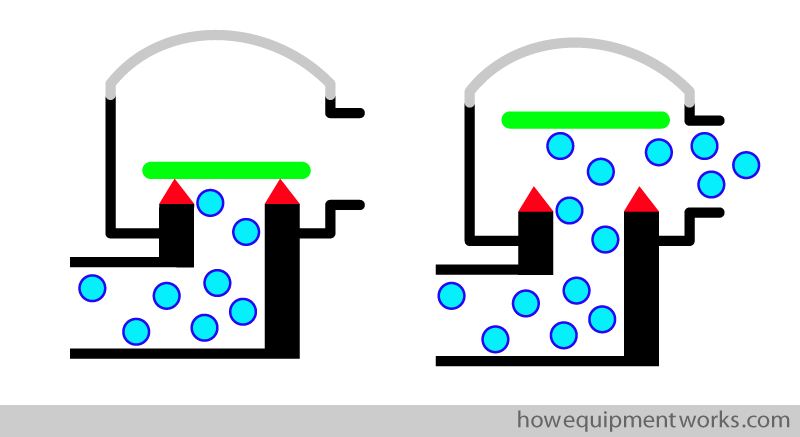
To minimise this happening, the disc is usually made to sit on “sharp” supports ( red triangles in the diagram) to reduce the area of contact between the disc and its supports. The reduced surface area of contact reduces the area that can “stick to each other” and the valve therefore opens easily.
Carbon dioxide absorber:
A key component of the circle system is the carbon dioxide absorber ( CO2). As you have seen, in the circle system, the patient inspires his own previously expired gas from the reservoir bag ( grey arrows). This expired gas has CO2 which needs to be removed. This is done by a container called a “CO2 absorber ” inside of which are chemicals that combine with the CO2 and remove it from the gas mixture.
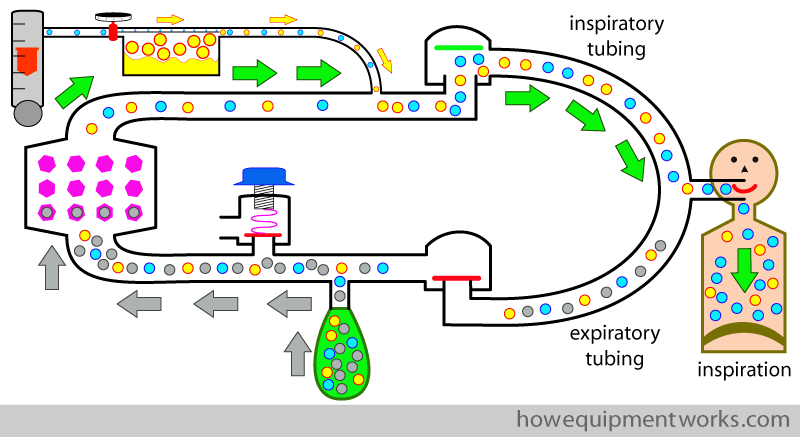
The CO2 is removed by chemical reactions. My chemistry knowledge is minimal, so I am sorry I cannot give you details. The main chemical that is often used to absorb CO2 is calcium hydroxide. The basic equation is given below. This reaction also produces water and heat.
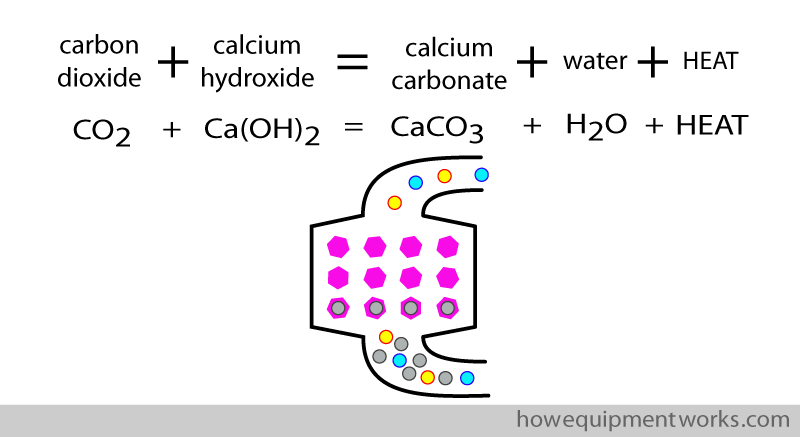
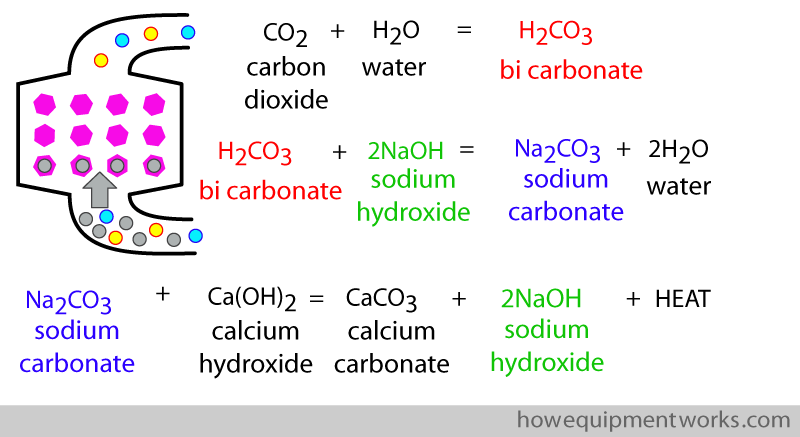
The above reaction can be quite “slow”, so a small quantity of sodium hydroxide ( NaOH) may be added to speed things up. Below is a more complete set of equations describing what happens inside the carbon dioxide “absorbing” container. The equations start with the patient’s carbon dioxide reacting with water that is present in the mixture of chemicals.
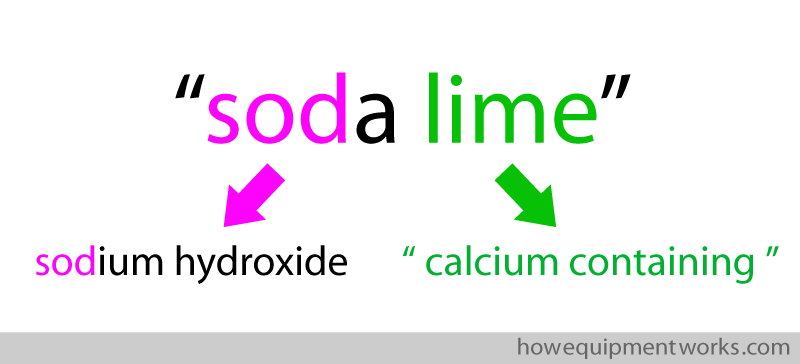
When a CO2 absorber contains sodium (like the sodium hydroxide in the above equations), it may be called “soda-lime “. “Lime” is a word used to describe calcium-containing material.
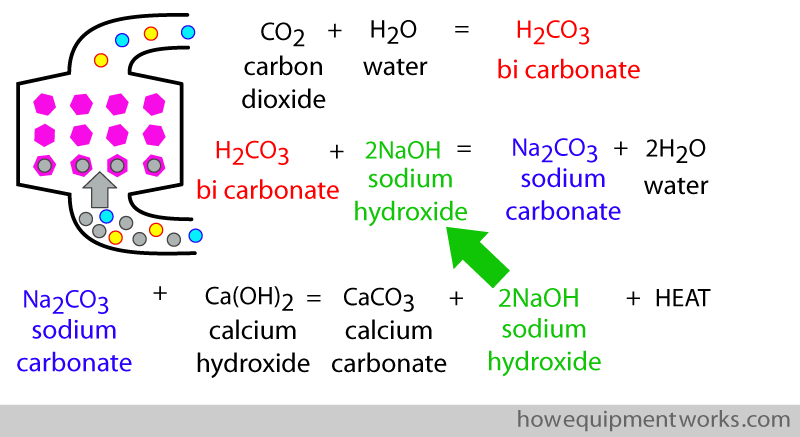
Note that in the equations, the sodium hydroxide is reused ( “recycled” ). Therefore the CO2 absorber does not need to contain much sodium hydroxide.
If all this is confusing, just try and remember that the CO2 ultimately becomes calcium carbonate plus water plus heat.
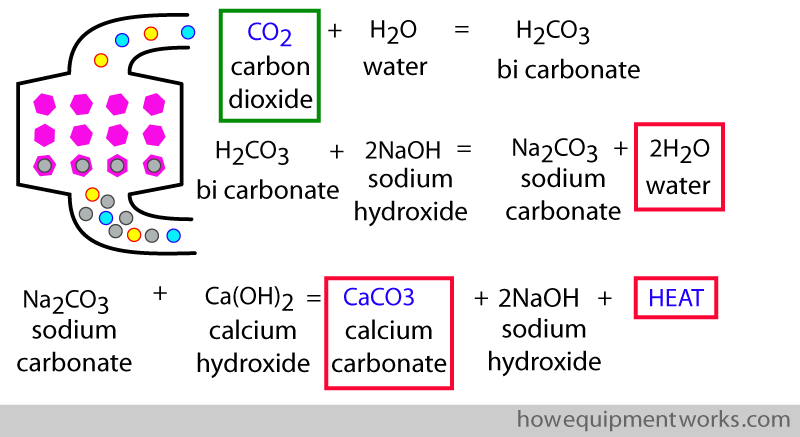
Once the calcium hydroxide is used up, the equations cannot “move forward” and the absorber cannot combine with any more CO2. One would say that the absorber is “exhausted ” and the chemicals in it will need to be replaced.
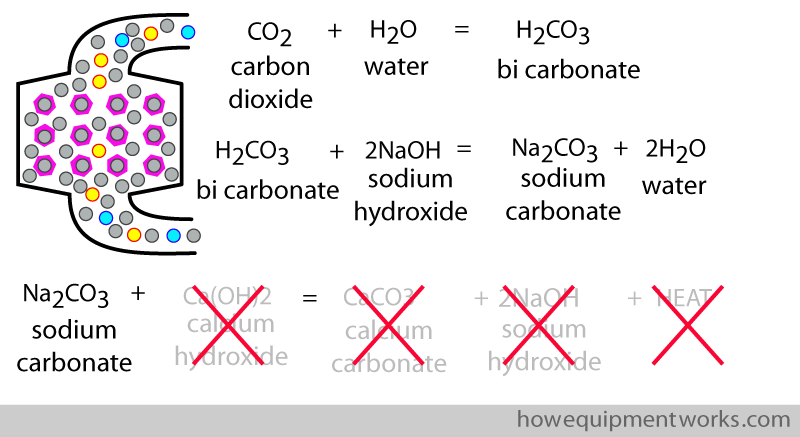
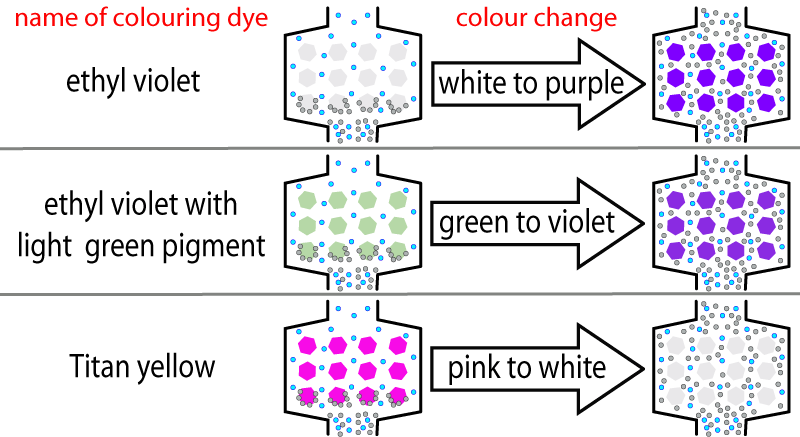
So how would you know when an absorber needs replacing? When the absorber chemicals get used up, the pH decreases (i.e. it becomes acidic). The absorber has a colouring dye that is sensitive to the pH of the mixture. When the pH changes ( due to exhaustion), the dye changes colour telling you that it is time to change the absorber chemicals. There are different dyes available, so you must check to see which one is in use in your absorber and know what colour change will indicate absorber exhaustion. Below are some examples of dyes used. The colours are only approximate, so the diagram below is not for clinical use.
The chemicals that are to be used in absorbers are available in the form of granules ( small pieces). These granules are placed inside the absorber container. When the absorber chemicals are ” exhausted ” they are removed and replaced with fresh chemical granules. The anaesthetic gases and carbon dioxide pass between the spaces of the granules. As the gases come into contact with the granules, the chemicals in the granules combine with the carbon dioxide as shown in the equations shown before.
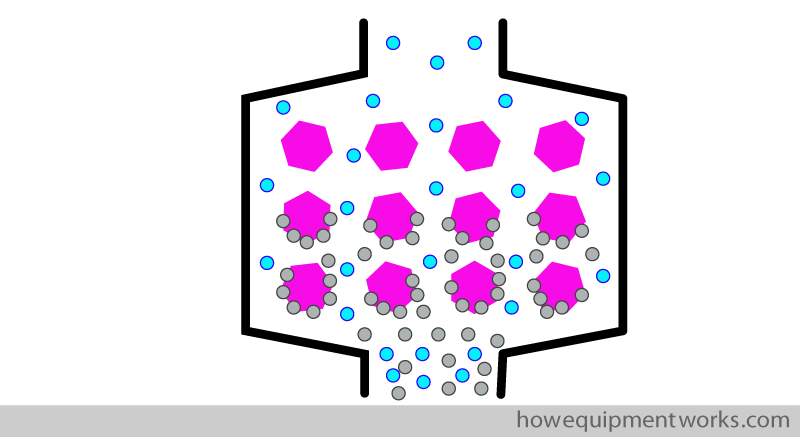
The granule size needs to be chosen carefully. If the granule size is too small, they will become more “tightly” packed and there will be inadequate space between the granules for the gases to pass, leading to an unacceptably high resistance to flow.
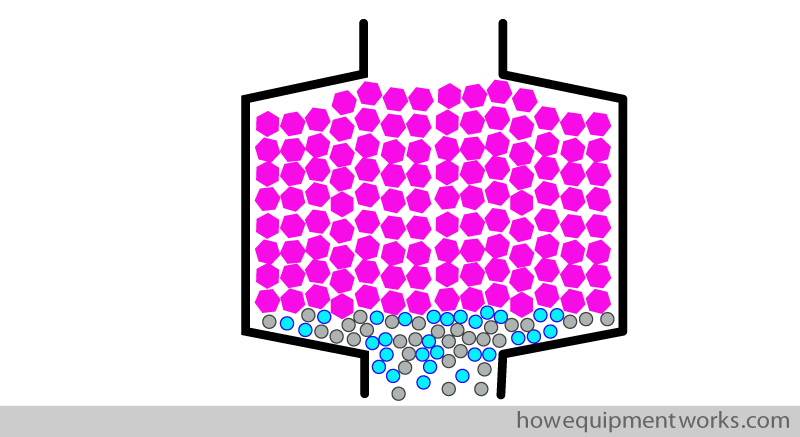
If very big granules are used, there will be enough space for the gases to pass through. However, this will reduce the surface area of the granules that will be available to combine with the passing CO2. This may lead to inadequate CO2 removal.
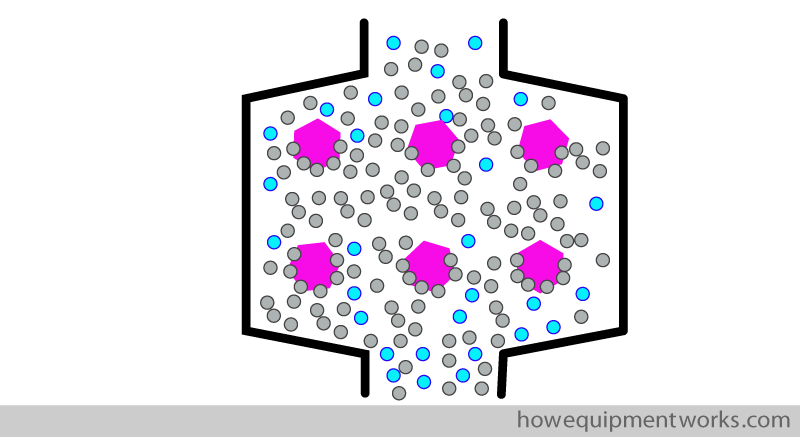
The optimum size of the granules is therefore a compromise between the resistance to gas flow and available surface area for the chemical reactions to occur. Typical diameters chosen for granules are between approximately 1.5 and 5 mm.
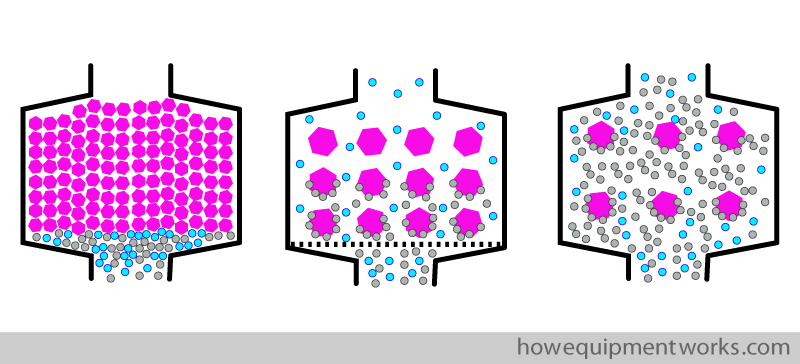
The resistance of the CO2 absorber along with the resistance due to all the tubing and valves can add to the work of breathing in spontaneously breathing patients. Therefore there is a patient weight limit, below which a circle system should not be used in spontaneously breathing patients ( please refer to your local guidelines).

Toxic reactions:
There is a possibility that under certain circumstances, toxic substances can be produced when anaesthetic agents react with the chemicals in the absorber. ( e.g. carbon monoxide, compound A). It is beyond the scope of my discussion here, and I recommend that you check the latest guidance on this issue elsewhere.
We have now come to the end of our discussion on the basics of the circle system and I hope you enjoyed it. I have another section which deals with some advanced concepts regarding circle systems. Please click here to go to “Advanced concepts of circle breathing systems explained”.

Hello! My name is Pras, and I am the author of this website. I have made the website completely free to access so that people from all over the world can benefit from it.
If you can afford it, I would be very grateful if you would consider making a single donation of one dollar (or the equivalent in your currency) to help cover the expenses needed to run this website (e.g. for special software and computers). For this website to survive, donations are desperately needed. Sadly, without donations, this website may have to be closed down.
Unfortunately, perhaps because many people think that someone else will donate, this website gets only very few donations. If you are able to, please consider making a single donation equivalent to one dollar. With support from people like you, I am sure this educational website will continue to survive and grow. Thank you very much for your support.