Note: This is part 2 of the discussion of how defibrillators work. If you have not read part 1, please click here to go to part 1.
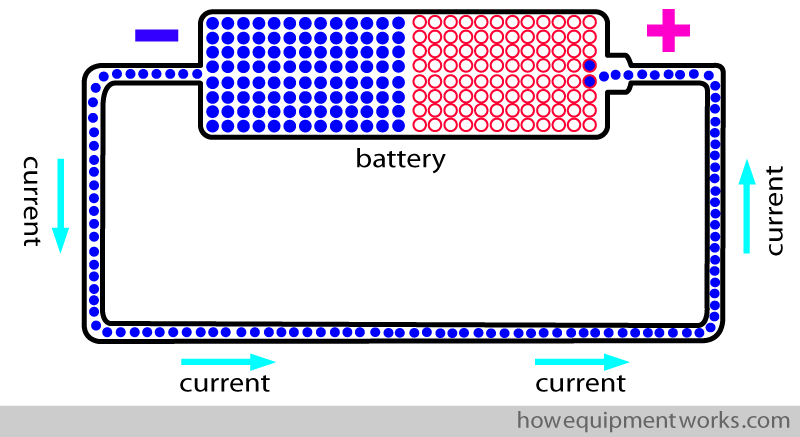
To understand how a capacitor is charged, let us first recall some basics about electricity. You will remember that electrons flow only when there is a potential difference across the wire that carries them. Shown below is a battery, which as you know, is something that provides a potential difference. Here the potential difference provided by the battery is making the electrons (current) flow in the wire.
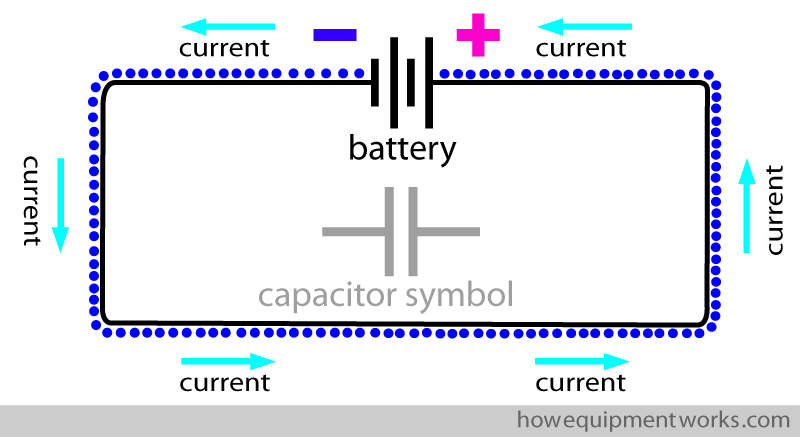
It is quite messy to draw a battery looking like the one above. So instead, I will use the international symbol that represents a battery. Please note that the battery symbol looks somewhat similar to the capacitor symbol, which I have shown in grey for you to compare.
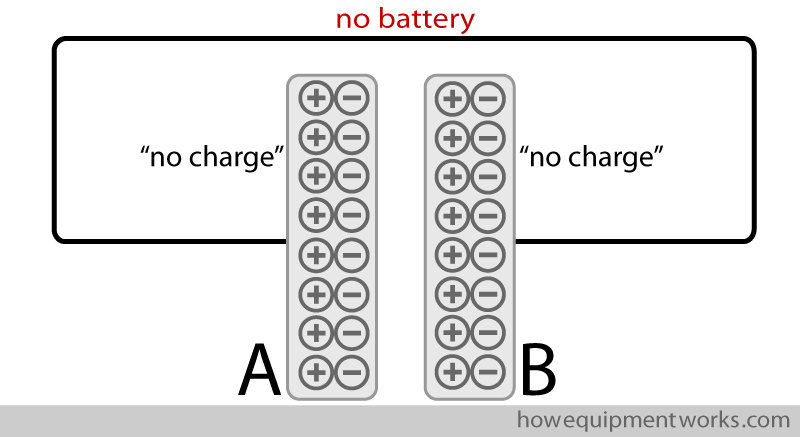
We will soon connect our capacitor to a battery to see what happens. However, before that, let us see what happens when we connect the capacitor to a wire that has no potential difference (i.e. there is no battery). As shown below, both plates of the capacitor have no extra charges. In other words, both plates have “no charge”.
Now let us connect the capacitor to a battery. The battery creates a potential difference across the capacitor. As I will explain to you soon, interesting things will happen on both plates of the capacitor.
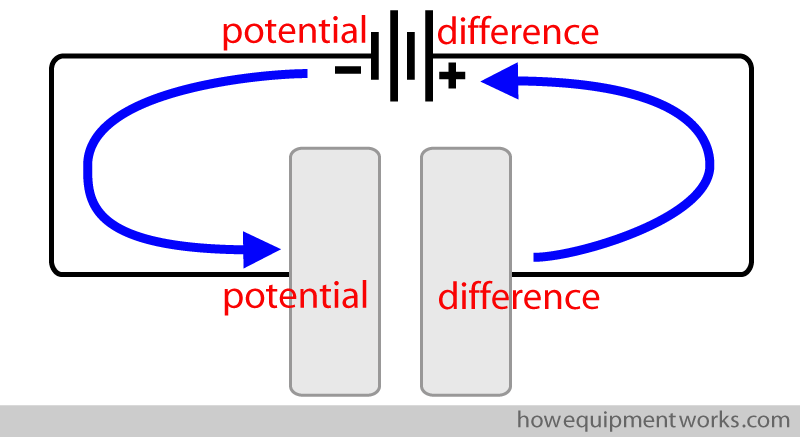
To make things easy to explain, I have labelled the plates of the capacitor as “A” and “B”. Let us first see what happens at plate B. Because of the potential difference, the negative charges (electrons) in plate B are attracted to the battery. These electrons (which are not very loyal to their partners !) leave their positive charges and go to the battery. You will recall that the positive charges, being lazy, don’t run after electrons that leave them.
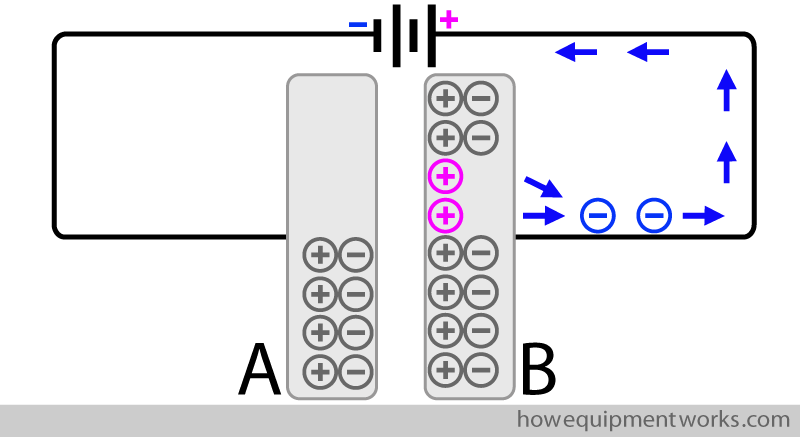
As you can see below, because electrons have left plate B, there are now free positive charges in this plate. Therefore we can say that plate B is “positively charged”.
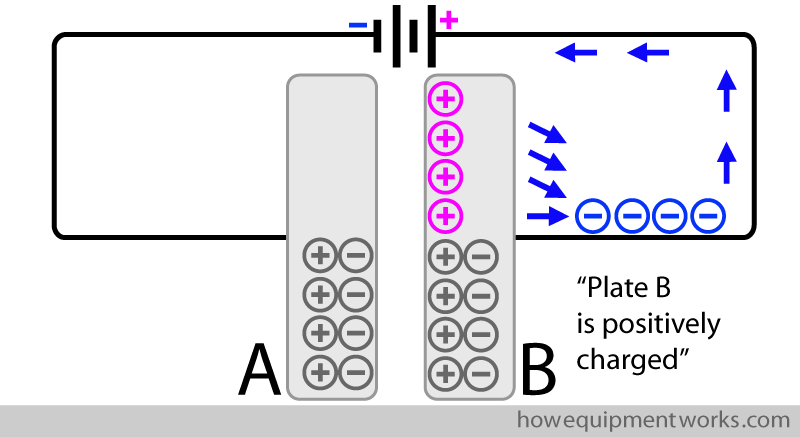
Now let us see what happens in the other plate (i.e. plate A). The electrons in the battery are “attracted” to the positive charges on plate B. These electrons therefore go from the battery towards plate A, “hoping” to meet the free positive charges on plate B.
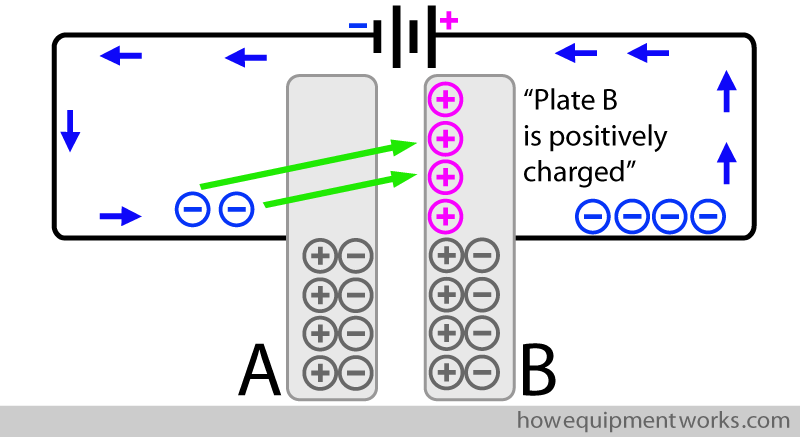
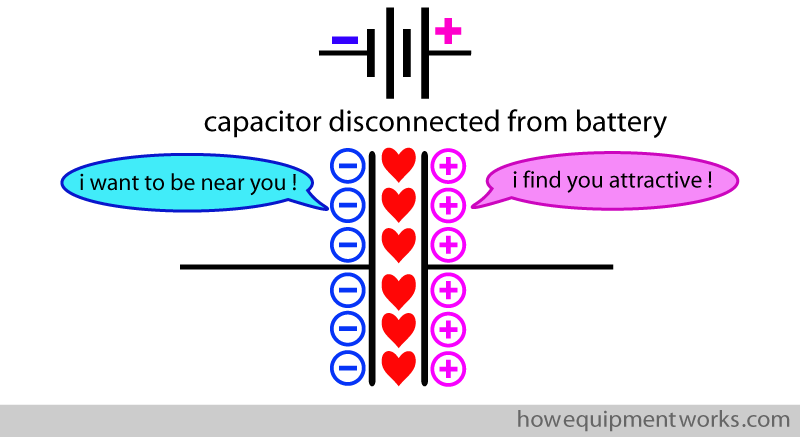
However, the electrons from the battery cannot cross from plate A to plate B as there is a gap between the two plates. So while the electrons in plate A are attracted by the positive charges in plate B (attraction shown as hearts in the diagram below), they can only “admire” them from across the gap. This attraction between the charges is only possible because the plates in real life, unlike what is shown in my drawings, are placed very close to each other.
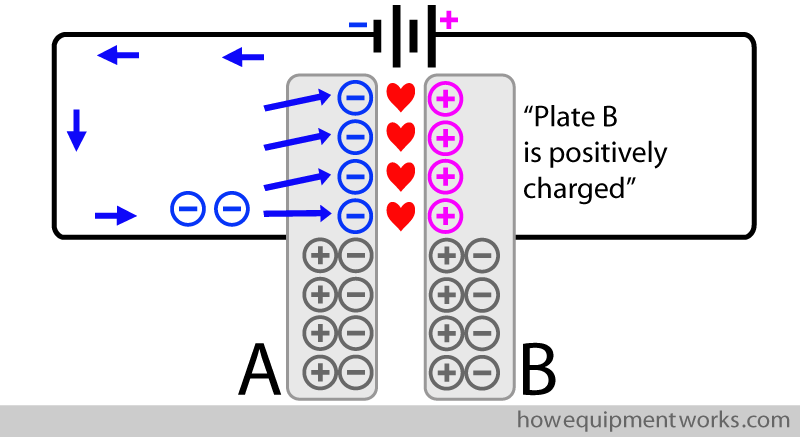
You can see that now there are free negative charges (electrons) that have been collected in plate A because they cannot cross the gap between the plates. We therefore can say that plate A is “negatively charged”.
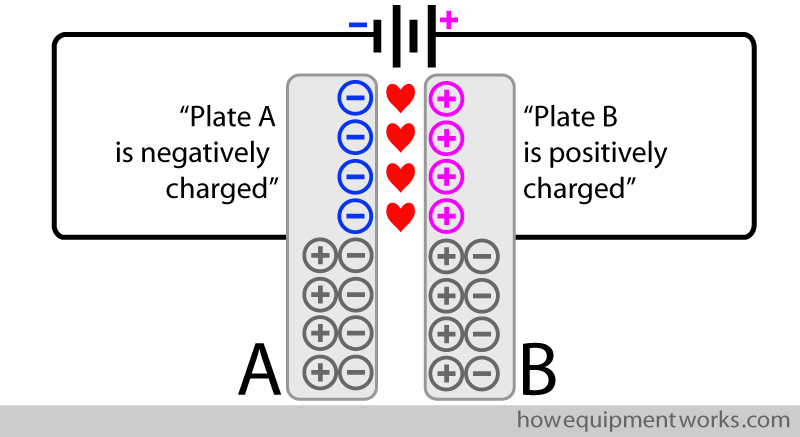
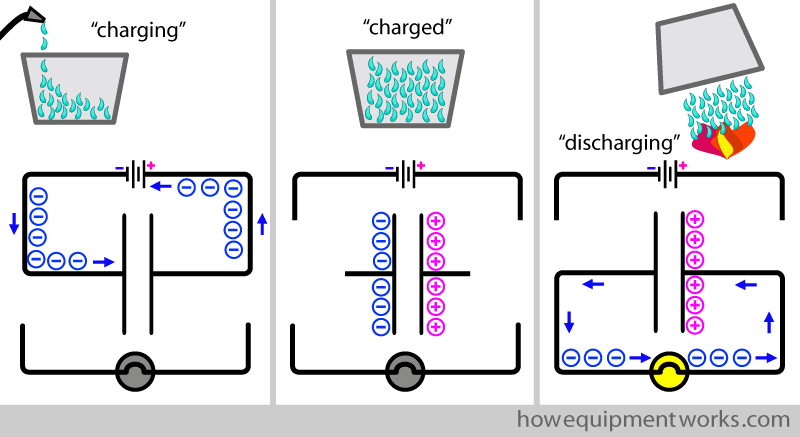
In summary, when a potential difference is applied across a capacitor, excess positive charges will form on one plate and excess negative charges will collect on the other plate. This process of making one plate positively charged and making the other plate negatively charged is called “charging the capacitor”. After a while, the capacitor has quite a lot of positive charges on one plate and negative charges (electrons) on the other plate. It is the electrical equivalent of filling the water bucket with water when you were attempting to put that fire out.
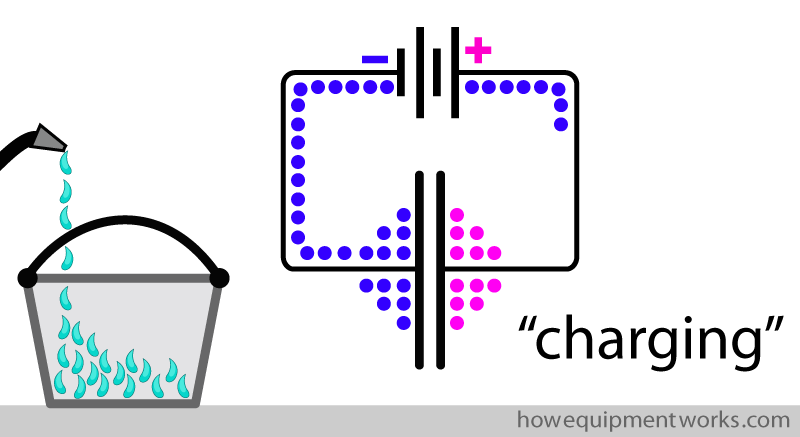
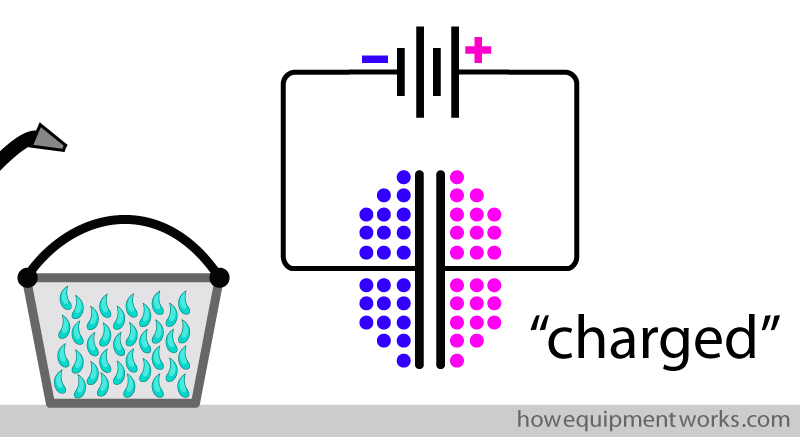
After a while, the capacitor cannot collect any more charges. We can now say that the capacitor is “charged”.
You have seen how a capacitor “collects” the current that flows into it. Now let us see how a capacitor “stores” the charges that it has collected. Let us disconnect our capacitor from the battery and see what happens. When we do this, the collected charges do not just fall out of the capacitor!
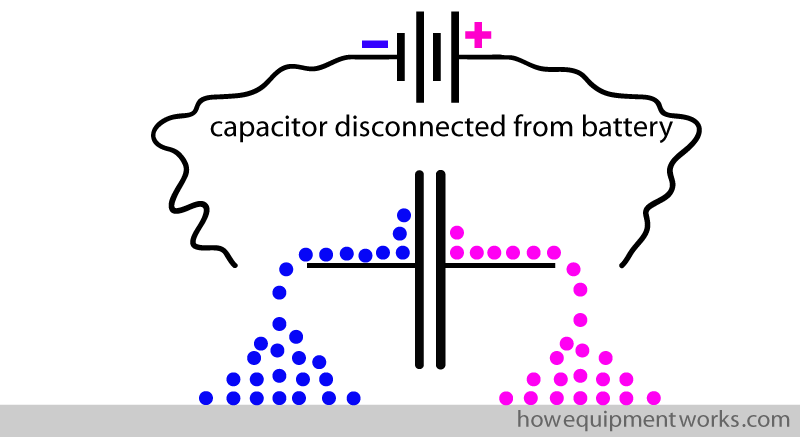
Instead, the charges just remain there. So what holds them in place?
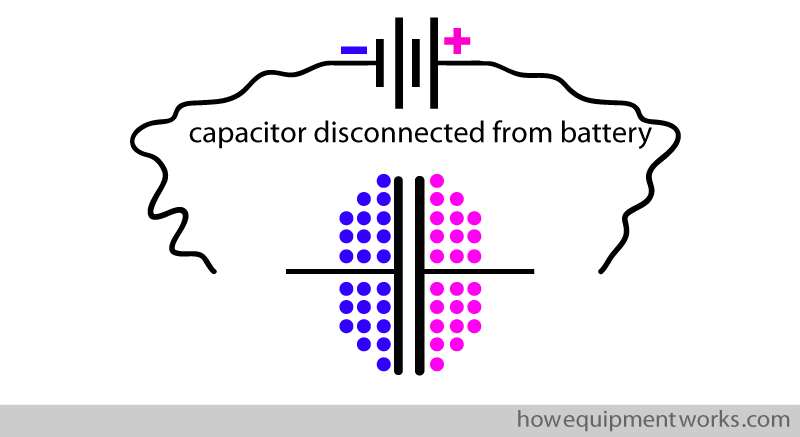
You will remember the free negative and positive charges are attracted to each other. So even though the capacitor is disconnected, this attraction across the gap between the plates keeps the charges in place. This is how the capacitor is able to “store” charges.
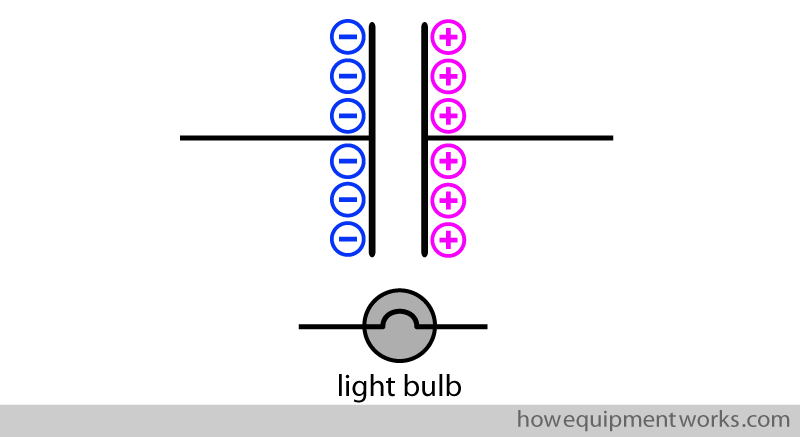
So far we have seen how a capacitor “stores” charge. I will now explain how we can “use” the stored charge. Shown below is a charged capacitor and a light bulb next to it. At the moment the light bulb is not connected to the capacitor. As it is not connected to anything, the light bulb does not light up.
Let us connect the light bulb to the charged capacitor and see what happens. When we connect the light bulb to the capacitor, we now provide an easy pathway (shown in green) for the charges to meet each other.
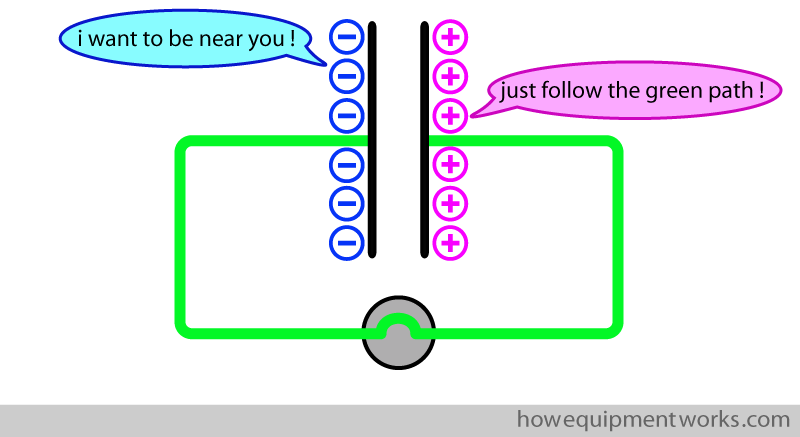
The electrons (negative charges) rush through the wires and bulb to meet the positive charges. The movement of electrons (i.e. current) through the bulb makes it light up. The process whereby the capacitor gives up its charges and makes a current flow can be called “discharging the capacitor”. When the negative charges meet the positive charges, they form couples (shown in grey).
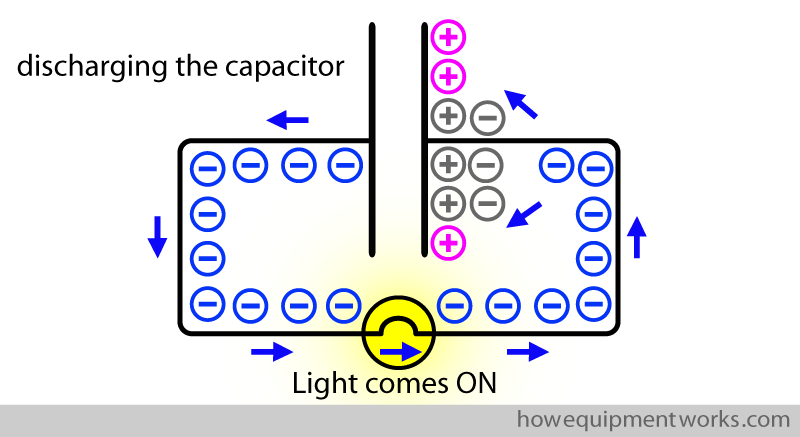
Capacitors can very quickly discharge the charges they store. This property of capacitors makes them very useful for defibrillators, where a large amount of electrons (current) needs to be sent through the heart quickly. It is like rapidly emptying the bucket to put out the fire.
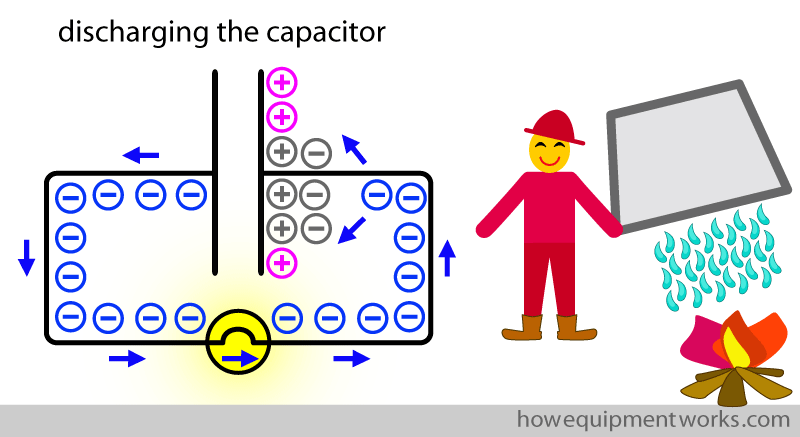
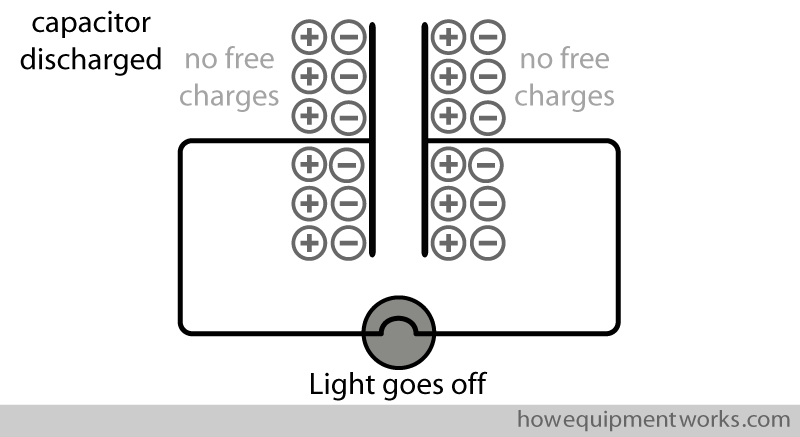
Eventually, all the free negative and positive charges meet up to form couples. There are no more “free” negative charges left to move. i.e. the current stops flowing and the bulb no longer lights up. The capacitor is now said to be “discharged”.
So you have seen how a capacitor (like the water bucket you used to put the fire out) can be used to collect electrons from a low-flow current, store them as a charge, and then discharge them rapidly. The capacitor in a defibrillator is used in this way and we will soon discuss these steps in more detail.

Do you work in the anaesthetic team? If you do, please visit the free website below, which has anaesthesia-related fun and safety material. Click the button below to visit.

The “ability” of a capacitor to store charge is called “capacitance”. For a given potential difference, a capacitor with a “high capacitance” will store a high amount of charge whereas a capacitor with a “low capacitance” will store a low amount of charge. Because defibrillators need a very large charge to be stored, the capacitors used in defibrillators need to have a high capacitance. One way to increase the capacitance of a capacitor is to use plates with a large surface area. Shown below are two capacitors connected to the same potential difference. The capacitor on your right has plates with a larger surface area and therefore it has a higher capacitance.
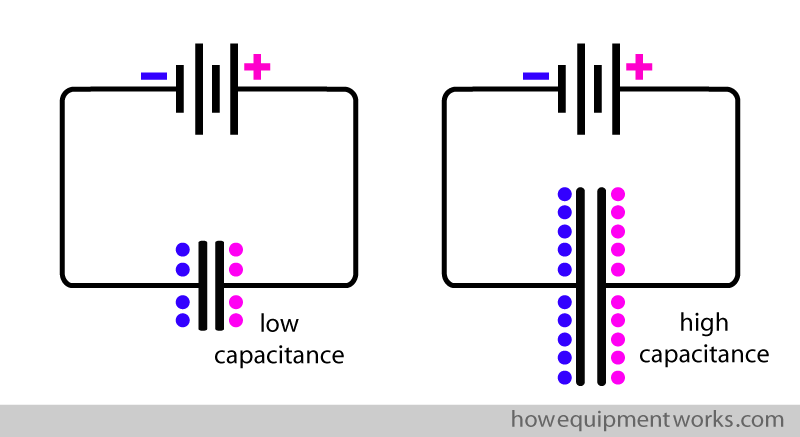
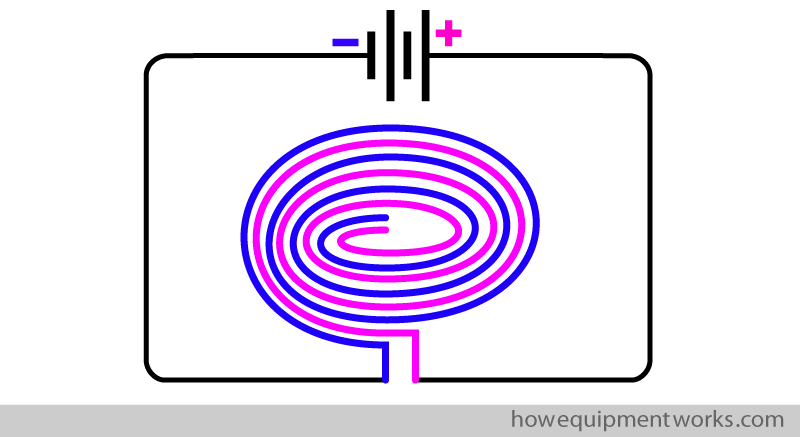
However, a capacitor with such large plates would not fit into a defibrillator. The clever engineers however have found a solution. They “roll” the capacitor into a cylindrical shape! In this way, the capacitor can have a high capacitance (because the plates have a large surface area) and still be made relatively small.
How I first learnt about capacitors!
Let me now take you to a slightly different topic, i.e. that of my childhood! When I was a child, I used to often go to local junkyards and collect various discarded electrical things to try and “repair” them.
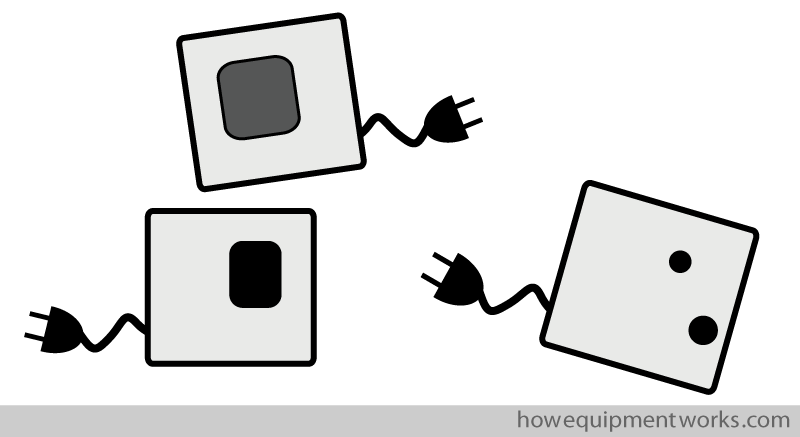
Of course, I had no real knowledge of how to repair things. And alarmingly, I used to think that since the broken electrical items were not plugged into anything, they must be “safe” to work with. In reality, many of the electronic items that I used to pick up had capacitors in them, that were occasionally fully charged. So even though they were not plugged in, I would occasionally get rather big shocks when my little fingers met capacitors!
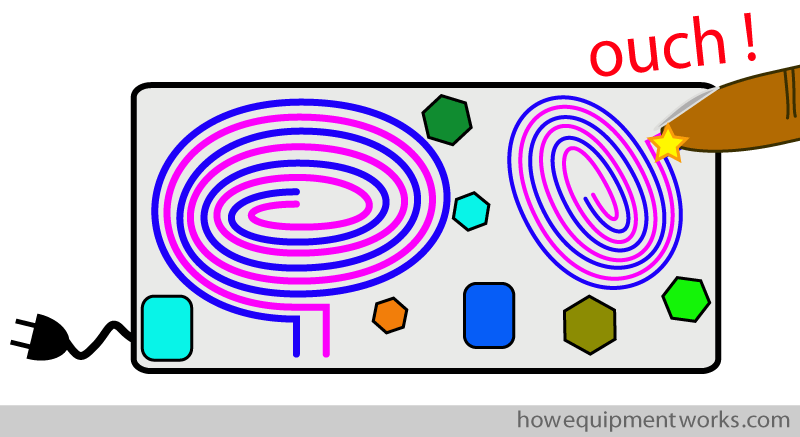
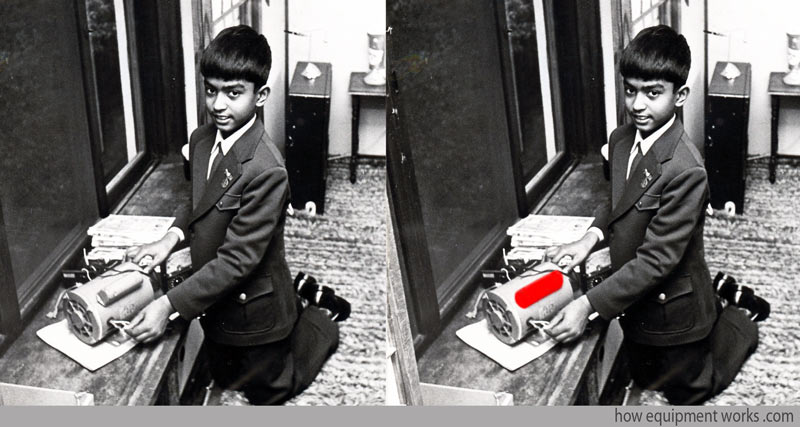
I don’t have many pictures of my childhood, but I did manage to find this one. It shows me playing with a powerful electrical motor. I now realise, looking at the picture, that the motor had a large capacitor (highlighted in red) attached to it! I suppose I should consider myself to be lucky to be alive. My parents of course did not understand what I was up to!
Defibrillator circuit
Charging the capacitor
We will now, step by step, learn about the various parts of the defibrillator circuitry. As mentioned before, the capacitor plays an important part in defibrillators, as it is able to be charged using a low flow current and then is able to discharge a brief but high flow current to the heart. Let us start our discussion on the defibrillator circuitry by describing the system that charges the capacitor. When we want to use the defibrillator to defibrillate some unfortunate person, the first thing we need to do is to “charge” the capacitor. This is done by the “capacitor charging system” in the defibrillator.
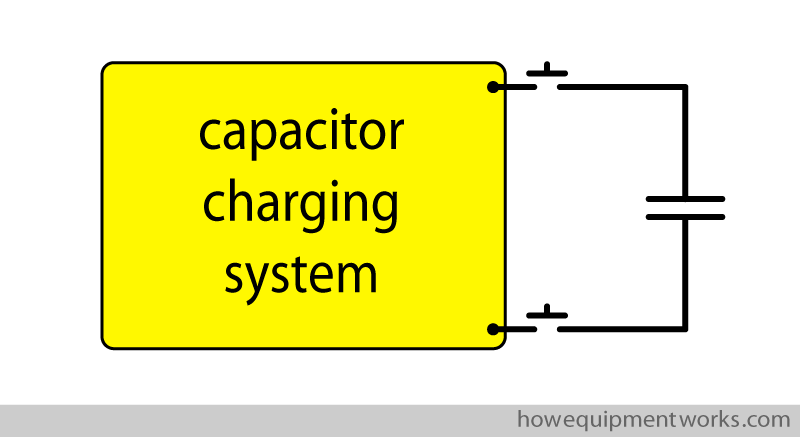
The actual workings of the charging system are somewhat complex and I do not think it is necessary for you to know it in too much detail. The charging system involves a variety of voltages and it also deals with direct current (DC) and alternating current (DC). Depending on your requirements, you may think it wise to just skim over the next section, ignoring the bits you do not understand.

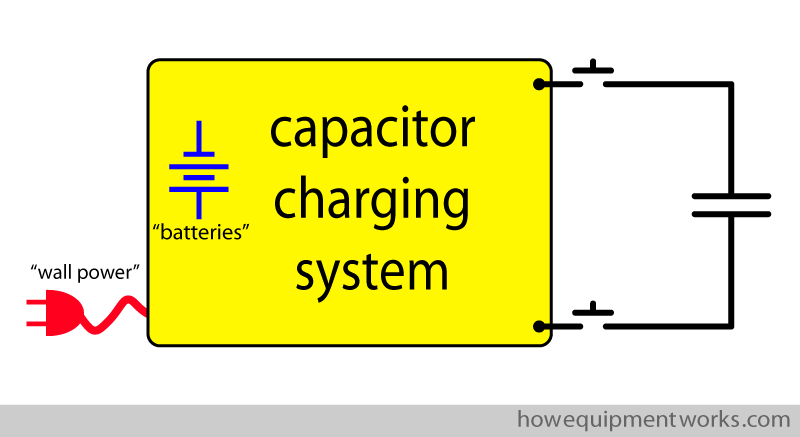
The charging system needs a source of current to charge the capacitor. This can be from batteries or from the wall power socket in your hospital.
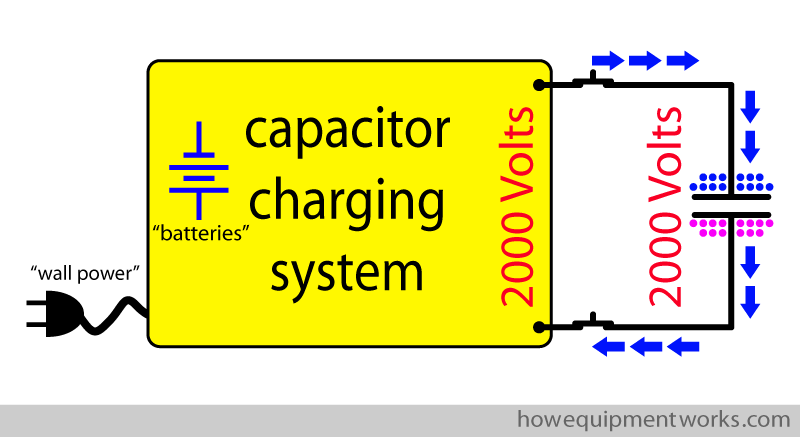
To have a charge large enough for defibrillation, the capacitor needs to be charged using a very high voltage (e.g. 2000 Volts).
The main component of the charging system is the “step-up transformer” (which was discussed in the electricity basics section of this website). The step-up transformer is able to raise (“step up”) the voltage that comes into it.
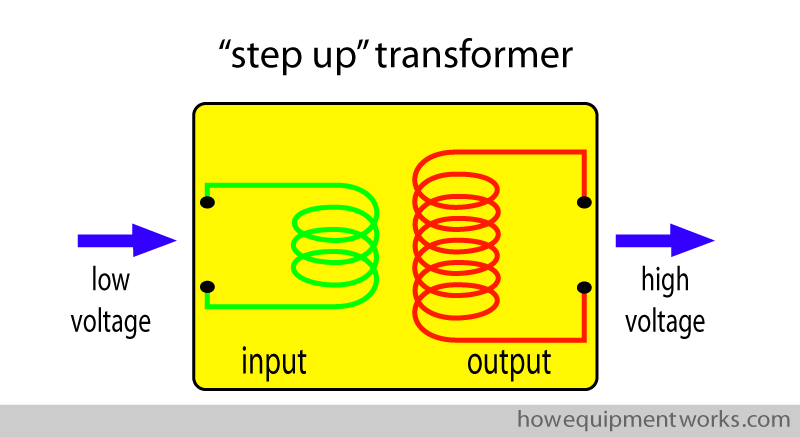
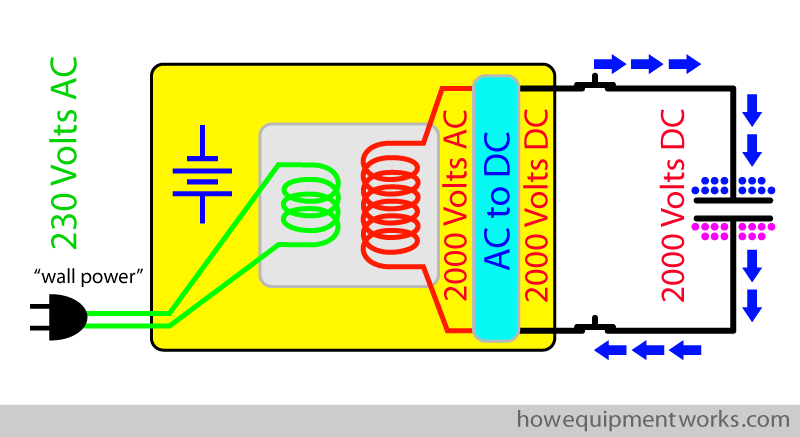
The step-up transformer in the charging system takes in current from either the batteries or the wall power source. For example, it is able to raise the supply voltage from the wall power source (e.g. AC 230 Volts) to AC 2000 Volts. However, capacitors can only be charged with a DC current, whereas step-up transformers put out current in the form of AC current. So there is a device that converts the AC current from the transformer to DC current to charge the capacitor. Please note that all these voltages and circuits that I describe are merely examples that I am using to explain things. Please do not use them to design “real-life” defibrillators!
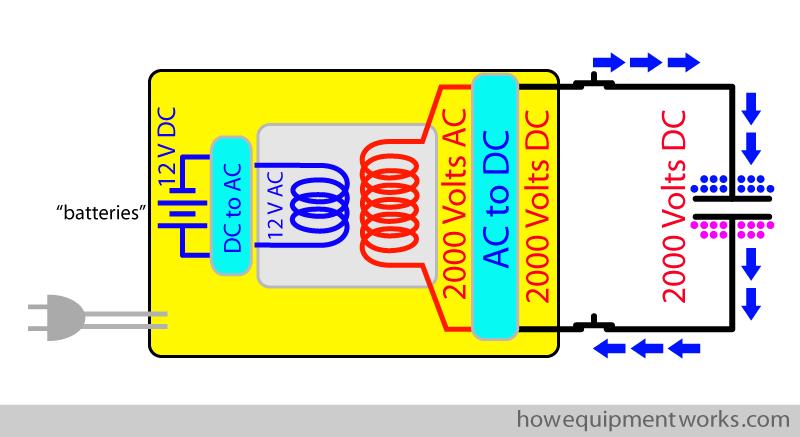
Defibrillators often need to be carried to the patient (i.e. need to be portable) so they often use batteries as a source of power. The step-up transformer is able to raise the battery voltage to charge the capacitor (e.g. from 12 V to 2000 V). However, step-up transformers need the input current to be in the form of AC current whereas batteries provide current in the form of DC current. Therefore, a special device converts the DC current from the batteries to AC before the current goes into the transformer. You will be happy to know that there are no more conversions!
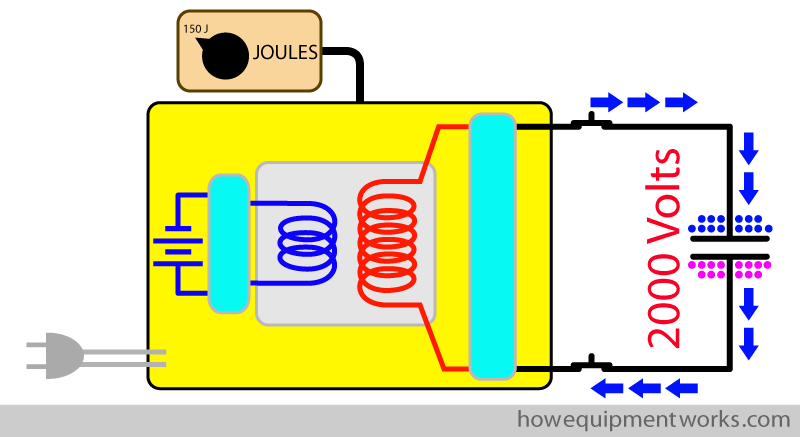
The operator of the defibrillator chooses the settings on the defibrillator. The settings on currently used defibrillators do not mention things like “amount of charge” or “current” to be given to the patient. Instead, the measurement unit used in defibrillators is the “Joule”, which is a measure of “energy”. The operator chooses the energy level, in Joules, to be given to the patient.
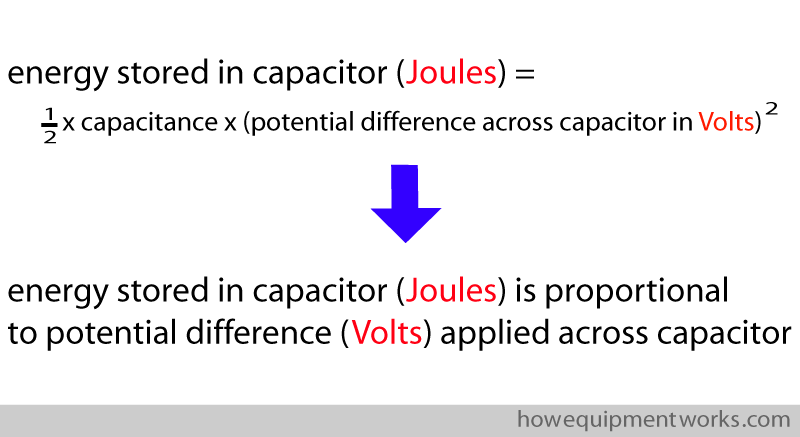
The energy, in Joules, stored in a capacitor is given by the following equation. The mathematics is a bit complicated so I have not explained the derivation of the formula. In the formula, “capacitance” is a measure of the ability of the capacitor to store a charge. For our discussion here, we will ignore it. From this equation, you can see that the energy stored by a capacitor is proportional to the voltage (potential difference) across the capacitor. The higher the voltage across the capacitor, the higher will be the charge stored in the capacitor.
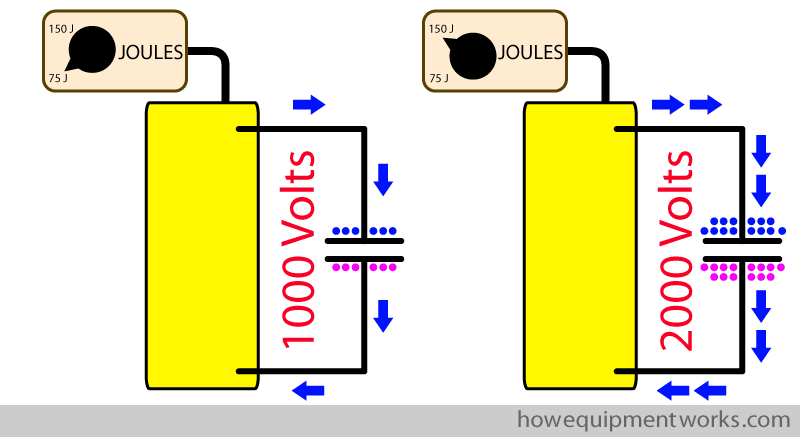
To charge the capacitor, the charging system will apply a potential difference (Volts) across the capacitor. The potential difference applied to the capacitor will be adjusted to match the energy (Joules) selected to be delivered to the patient. The higher the energy to be delivered to the patient, the higher will be the potential difference applied to the capacitor to charge it.
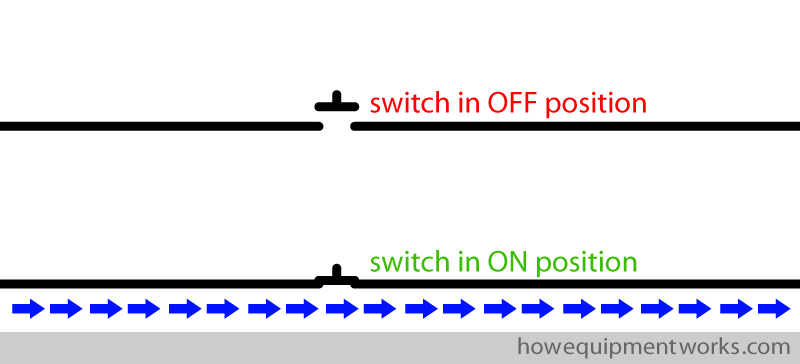
The defibrillator circuit, including the section concerning the charging of the capacitor, makes use of electrical switches. In real life, the user doesn’t directly touch these switches with their hands as the voltages involved are very high and the switches need to operate rapidly. Instead, the switches are controlled by sophisticated computers. I.e. the user controls the computer, which in turn controls the various switches. I will use the following symbols to show switches in my diagrams.
In my explanation of the defibrillation circuit, I will be using six electrical switches as shown in the diagram below. For now, we need to only worry about the charging part of the circuit (shown in green box).
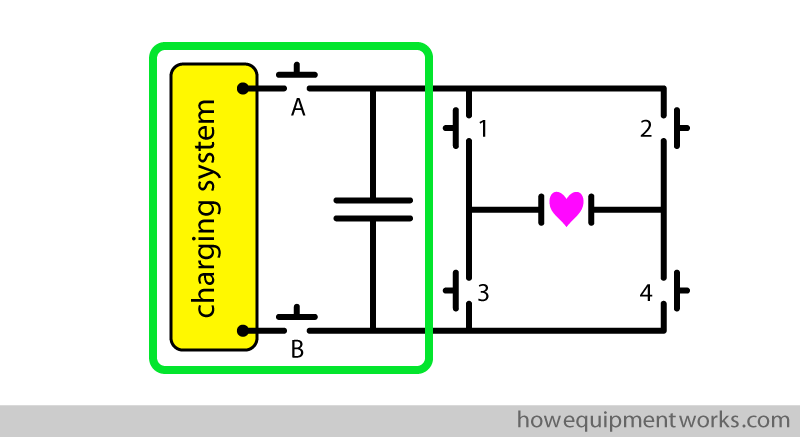
The charging system is connected to the capacitor via two charging switches (A and B). When the capacitor is not being charged, both these switches are in the “OFF” position.
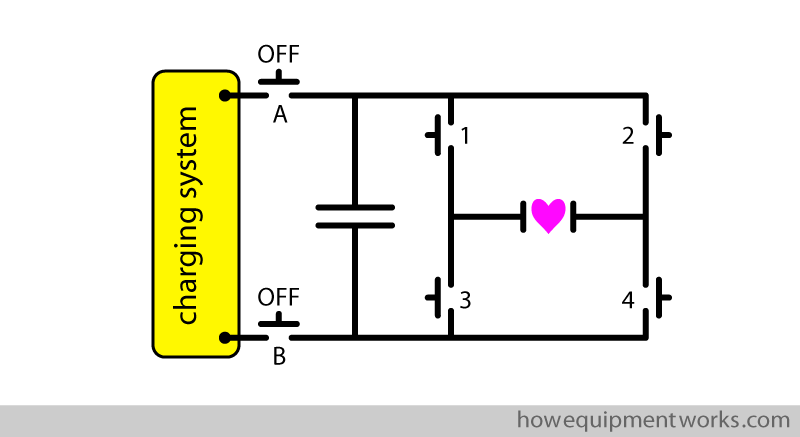
To charge the capacitor, charging switches A and B are put into the “ON” position and the charging system applies a high voltage across the capacitor. As discussed before, the magnitude of the voltage applied is based on the energy level selected by the operator. The higher the energy level selected, the higher will be the voltage needed to be applied across the capacitor.
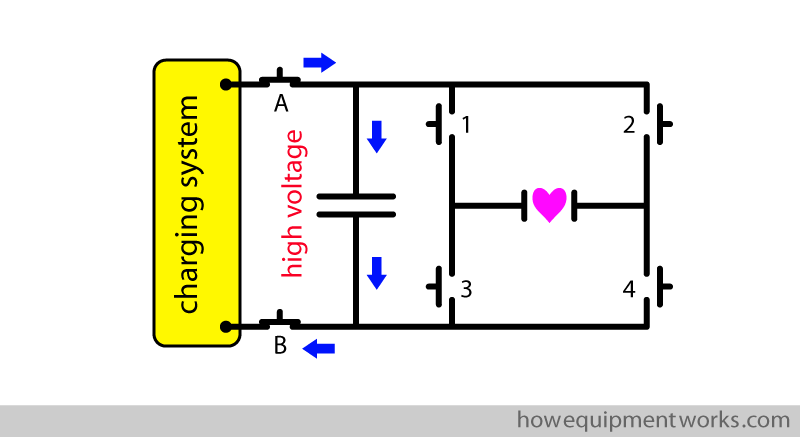
Current from the charging system flows into the capacitor and the capacitor starts to get excess positive charges in one plate and excess negative charges in the other plate. The charging system monitors the charging process.
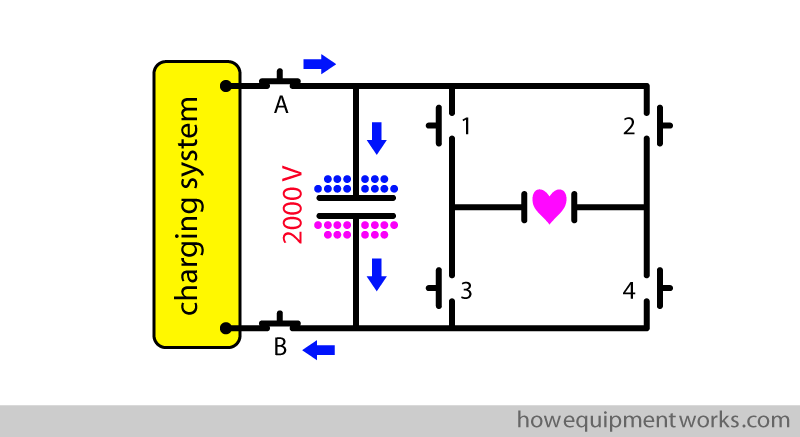
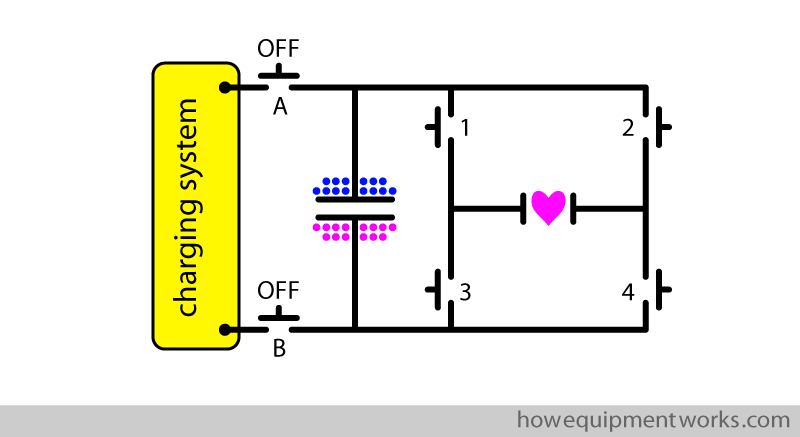
Once the capacitor has adequate charge appropriate for the needed defibrillation energy, the charging switches (A and B) are put to the “OFF” position to stop further charging. The charging process is now complete and at this point, medical personnel will often say something like “defibrillator charged”. It is a warning to everyone that soon the discharge will happen.
Please click the “Next” button below to read the final part about how defibrillators work. Thank you.