Note: This is part 2 of the discussion of electrical safety. If you have not read part 1, please click here to go to part 1.
Concept of Earth (Ground)
We will soon discuss the concept of ‘electrical earth’. However, for a moment, look at the picture below of our planet Earth.

Didn’t see our planet in the above photograph? This amazing photograph shows our planet Earth taken from a huge distance away ( 6,000,000,000 kilometres or 3,700,000,000 miles away !). This photo is a good reminder of the fact that we are so small in the Universe …..

Now let us get back to Earth.
“Earth”, in the context of electricity, is a concept that confuses a lot of people. Unfortunately, it is something you need to understand if you are to understand how electric shocks may happen. Don’t worry, I will clear everything for you.
The main problem I think is that there are many different parts of an electric circuit that refer to the word “earth”. This confuses everyone when one wants to explain things. For example, it is quite difficult to understand this sentence.
“The current goes via the earth wire to earth and then travels in earth and then returns to the neutral wire through an earth wire. “

Let us start clearing up some of the confusion. The first thing is that not all countries use the same name. Some countries, such as the USA use the word “ground” to mean “earth”. So if you are from such a country, please remember that when we say “earth”, we mean “ground” in your country.

Describing Earth:
As mentioned before, the word earth gets used in many places. To avoid confusion, I propose that we use much more descriptive sentences when talking about Earth. We will start by describing “Mother Earth”.
Mother Earth:
One often refers to our planet Earth as “Mother Earth “ since it cares for us like a mother cares for her children. For our discussion, Mother Earth is the surface you are standing on.

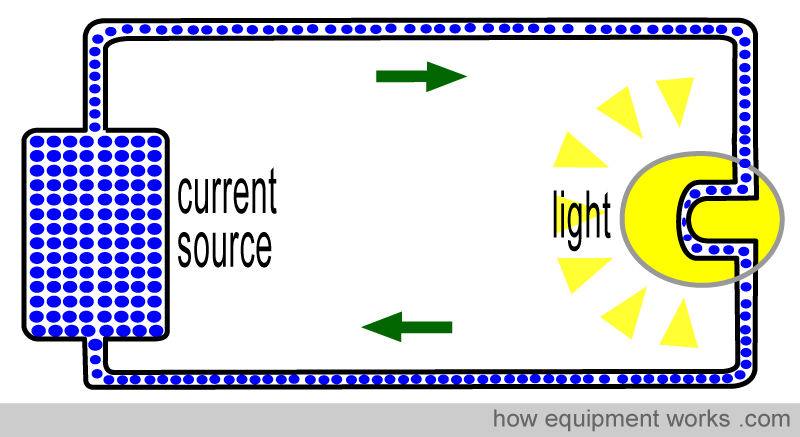
From an electrical point of view, one can think of Mother Earth as a huge wire capable of carrying current. Let me explain. Below is an electrical circuit that makes a light bulb light up. From the source, current travels in a wire to the light bulb. From the light bulb, the current returns to the source through another wire.
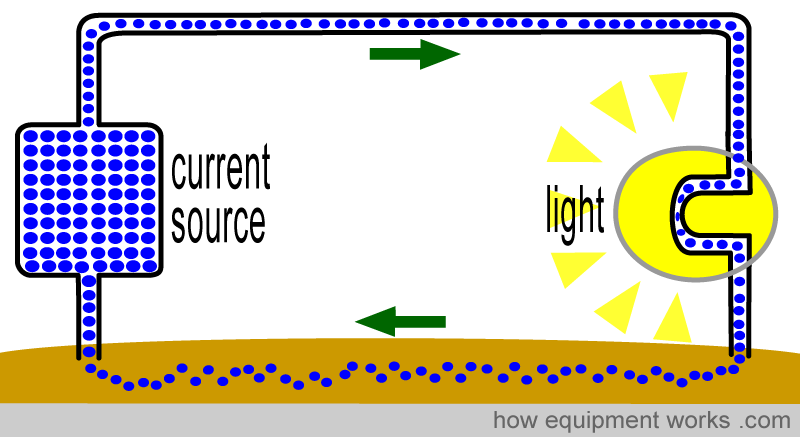
“Mother Earth “ can carry electricity just like a wire can carry electricity. In the circuit below, the wiring arrangement has been altered to allow current to flow through Mother Earth.
The current goes to the light bulb through a wire. However, the current returns to the source through Mother Earth. Note how “Mother Earth” is behaving like a wire.
The relevance of the fact that Mother Earth can carry an electric current will become clear when we discuss how shocks can occur.
Basics of Electricity Supply and Neutral Wire
To understand the next sections, we have to have a basic understanding of how electricity is supplied to our homes and hospitals. Do you remember our electric kettle?
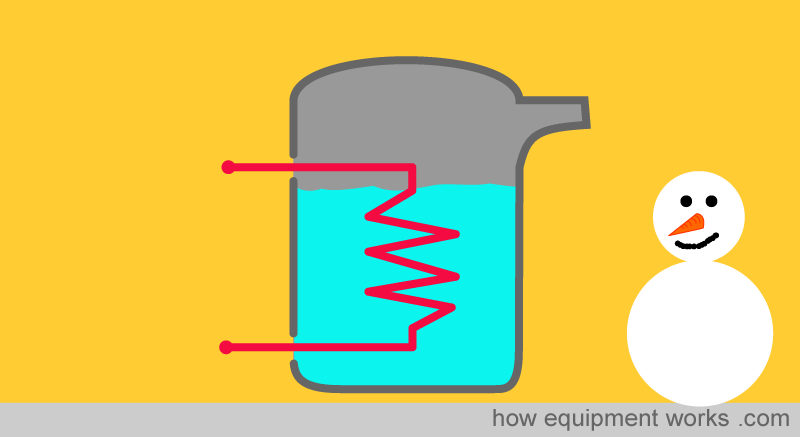
Well, for the kettle to work, it needs an electricity supply. As we saw in the section on basic electricity on this website, house and hospital current is supplied in the form of AC. You will recall that such current changes direction repeatedly.
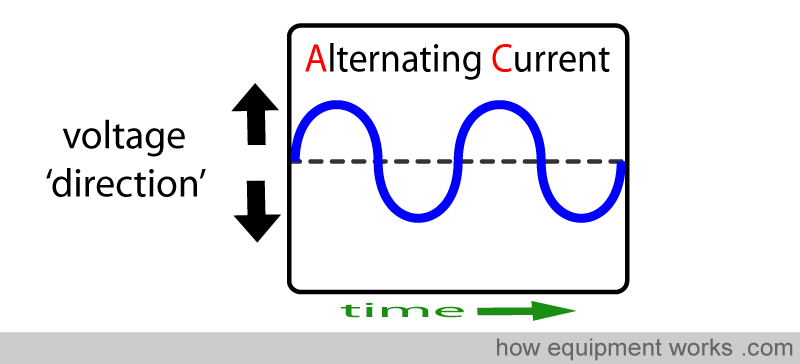
Our electric kettle, like a lot of equipment, needs two current carrying wires to feed it with current. Since it is Alternating Current (AC), the current will be shown as the yellow bidirectional arrows.
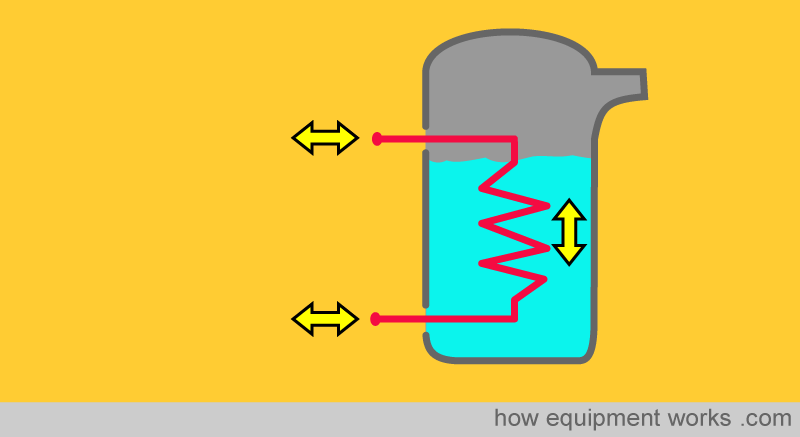
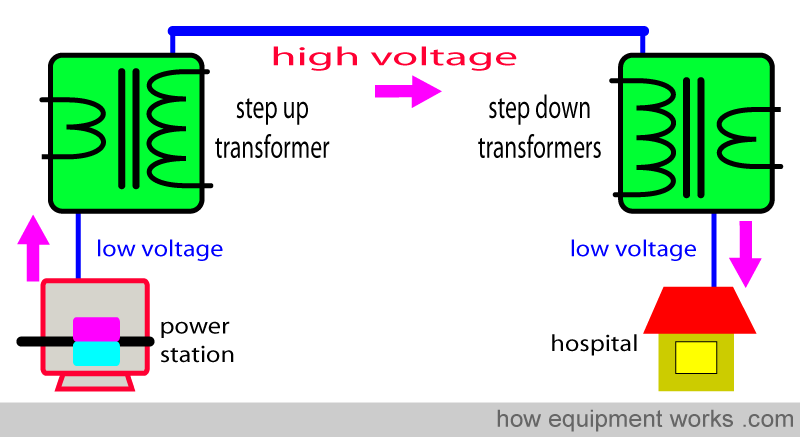
In the section on electricity basics, you learnt that the power company, for reasons of efficiency, sends electricity at a high voltage. Near your hospital, it is reduced to a safer voltage by a transformer.
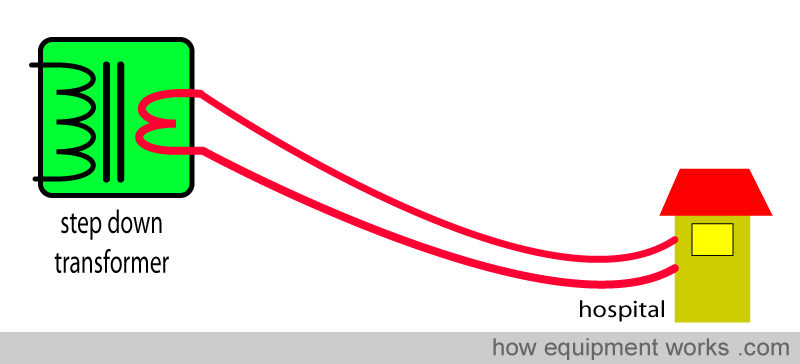
From the step-down transformer, current-carrying wires enter the hospital.
Which ultimately reaches your kettle.
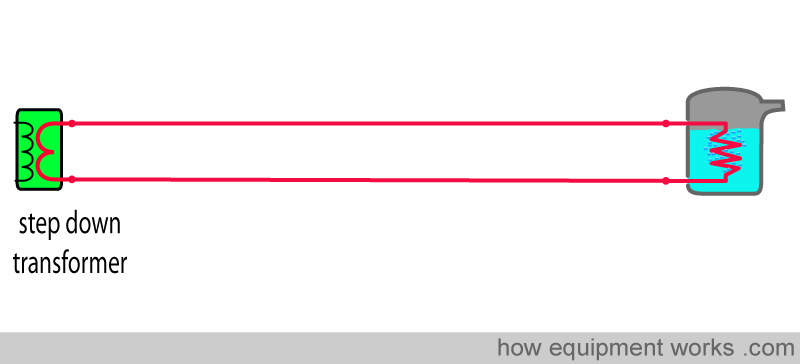
From now on, to keep things simple you will see this simplified kettle ( no more fancy bubbles !).
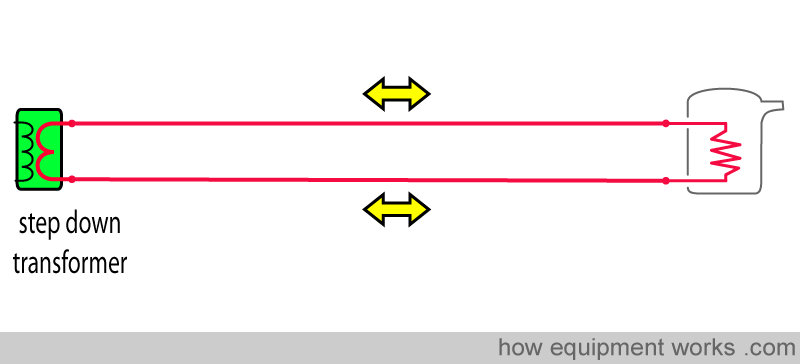
Now we are ready to discuss what I call the “wire from neutral to Mother Earth”. Let us welcome back our beloved Mother Earth into our discussion (please ignore the crazy guy).

Now here is Mother Earth along with the step-down transformer, current-carrying wires and our kettle.
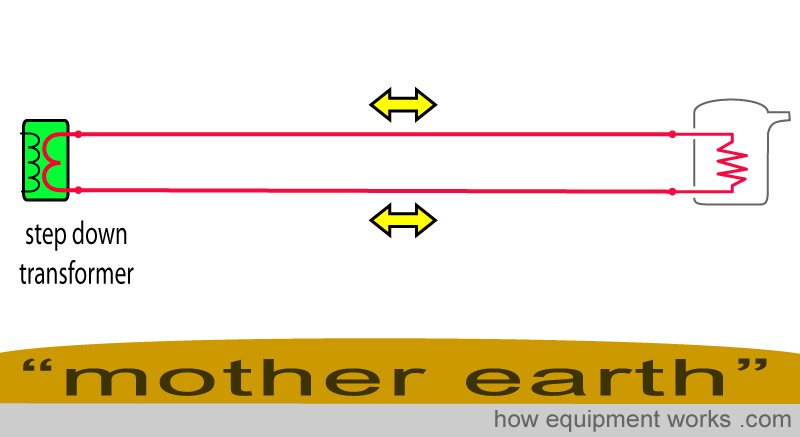
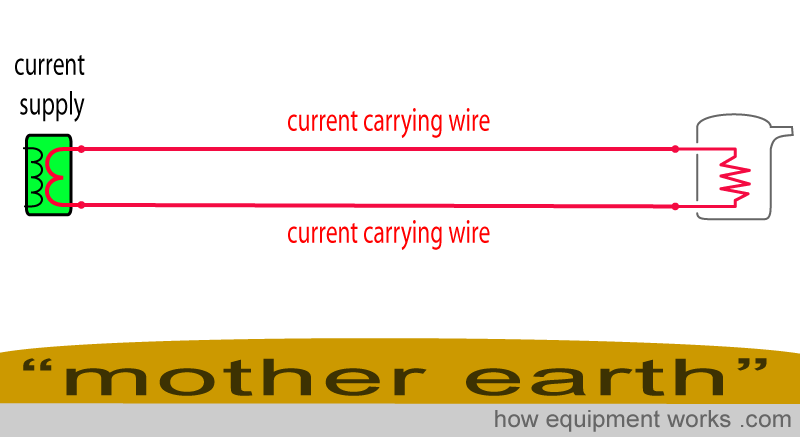
As you have seen so far, there are two wires that supply the electricity to the kettle and so far I have been calling them “current carrying wires”. However, as I will explain later, these two wires will get their own names.
We now find that the electricity supply engineers do something interesting. One of the current-carrying wires is also connected to Mother Earth using a wire (pink arrow).
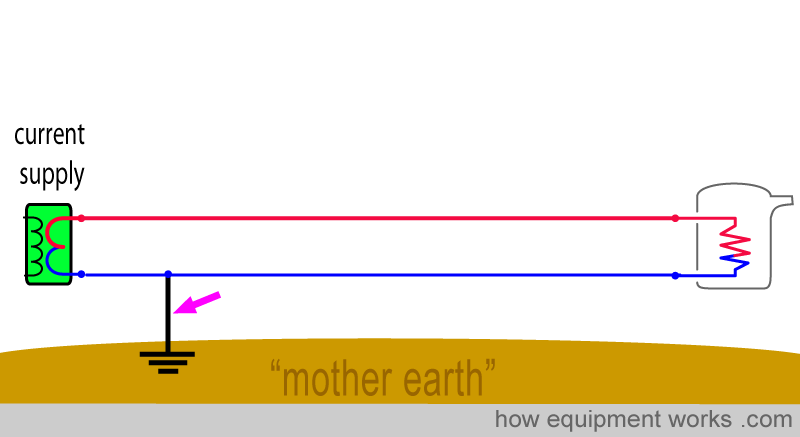
Once this mysterious thing is done, the two current-carrying wires are given their own names. The wire that has a connection to Mother Earth is called the “neutral wire”.
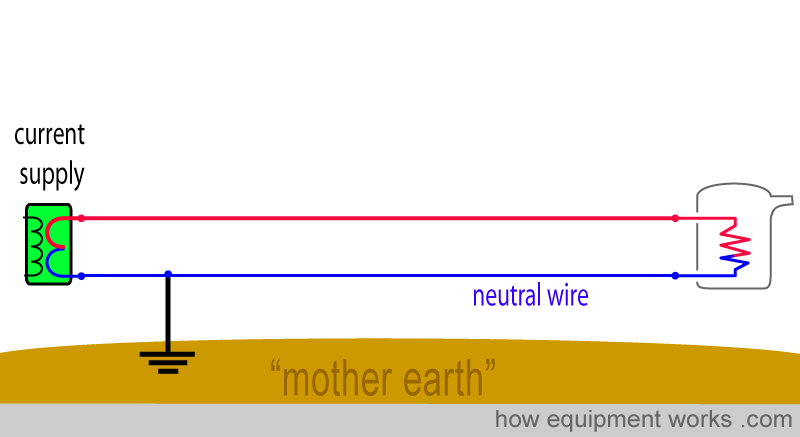
The “other” current-carrying wire, that has no connection to Mother Earth, is called the “live wire”.
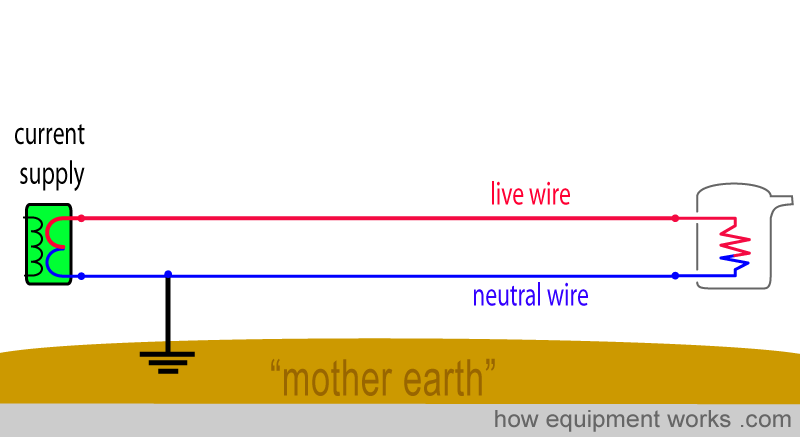
And I will call the wire that connects the neutral wire to Mother Earth…… as ….. “wire from neutral to Mother Earth”!
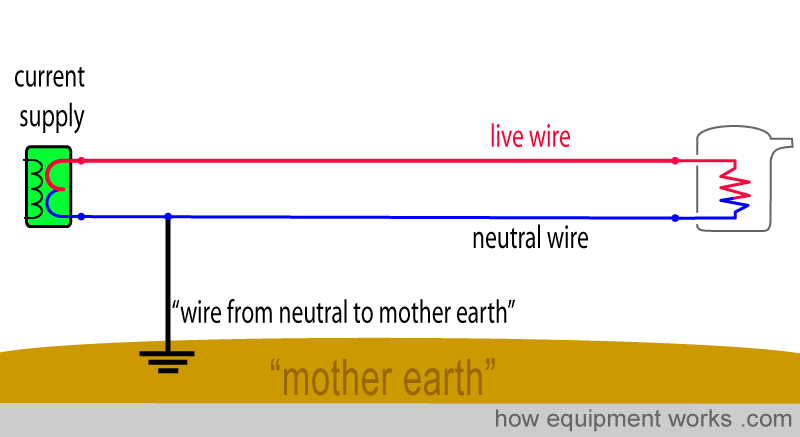
Now the big question is: Why do the electrical engineers connect the neutral wire to Mother Earth?
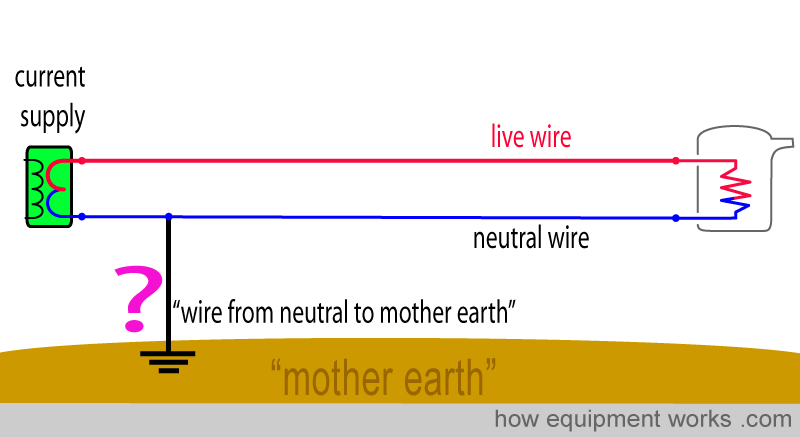
There are highly technical reasons for having the wire from neutral to Mother Earth, the details of which we shouldn’t probably worry too much about. However, one reason for having this arrangement is that the wire from ‘neutral to Mother Earth’ protects us from lightning strikes and I will explain this to you briefly.

The electrical supply system (electrical grid) is mostly outside and exposed to the sky. Therefore, it is quite vulnerable to lightning strikes.
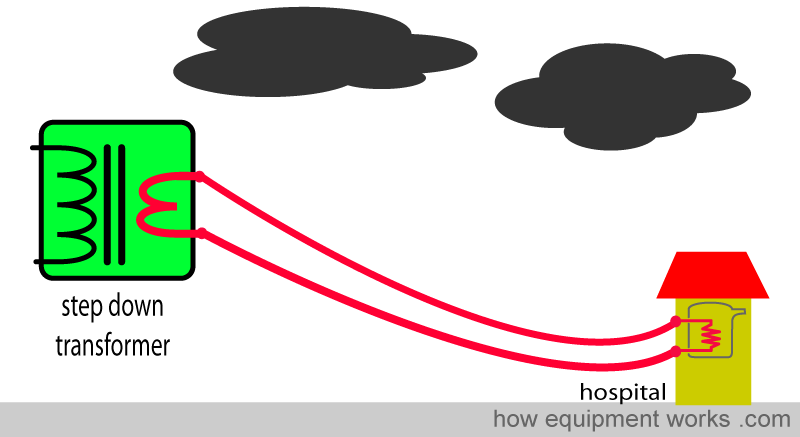
Let us imagine that lightning hits part of the electrical supply.
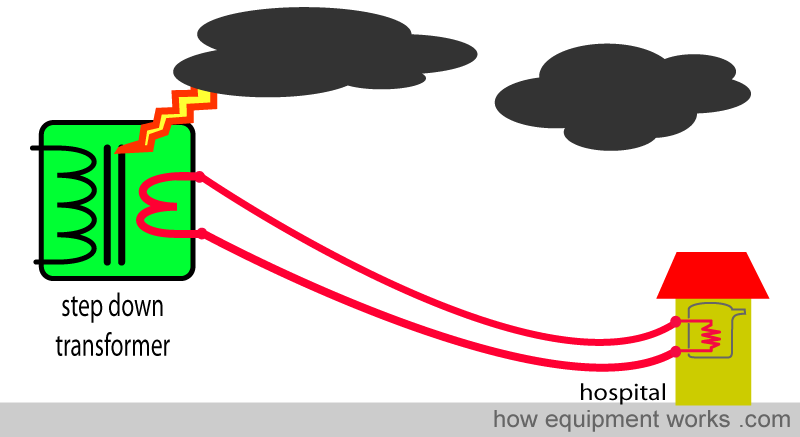
This lightning can result in very high currents that could travel through the wires into your hospital, causing major destruction.
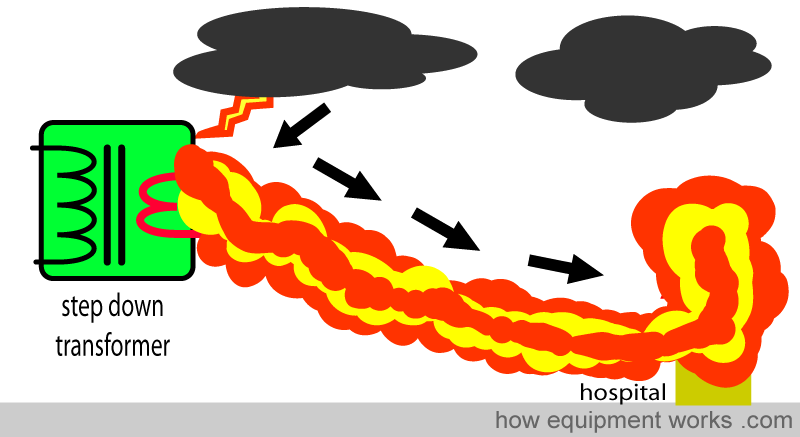
However, thanks to the ‘wire from neutral to Mother Earth’, there is some protection against this. The dangerous current from the lightning strike goes through the neutral wire (see arrows) to the “wire from neutral to Mother Earth”. Then from the wire from neutral to Mother Earth, the current finally goes into Mother Earth. In this way, the lightning current safely goes to Mother Earth instead of going to your home or hospital and causing damage.
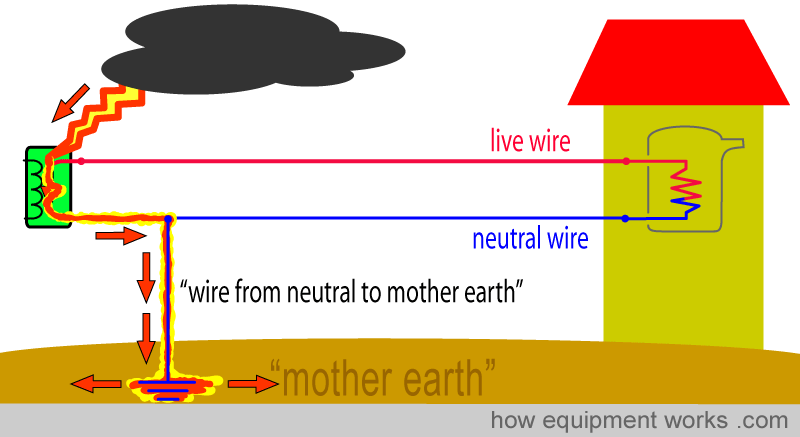
So you see, the neutral to Mother Earth wire is pretty important!

Do you work in the anaesthetic team? If you do, please visit the free website below, which has anaesthesia-related fun and safety material. Click the button below to visit.

Basic electric shock pathway
We are now ready to see the pathway the current takes during an electric shock. This will help you to understand how electric shocks happen, and more importantly, it will also help you to understand the various methods by which we can be protected from shocks.
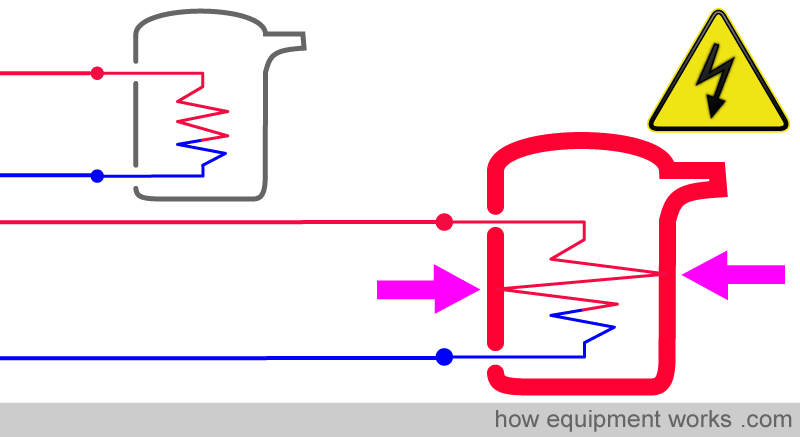
Let us bring back our electric kettle. For our discussion, we are going to create a fault. The heating wire is made to touch the metal case of the kettle (pink arrows). This makes the whole metal kettle have electricity. If one touched this kettle, one would get an electric shock.
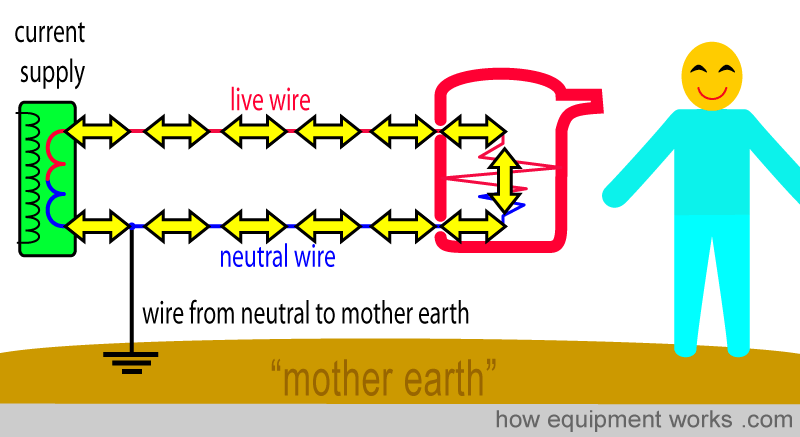
Anyway, right now, our friendly man (shown below) is not touching the faulty kettle and is therefore happy (he won’t be happy for very long). You will recall from a concept that we discussed before, that electric current always wants to return to its home (source). In the diagram below, the current (AC) is shown as yellow arrows. In the image below, the current path is going from the source to the live wire and then to the kettle. From the kettle, the current path returns to the source through the neutral wire. Remember, the current always wants to return home to its source.
Now finally our man can have his electric shock! Let me talk you through the path the current takes when the faulty electric kettle gives him a shock.
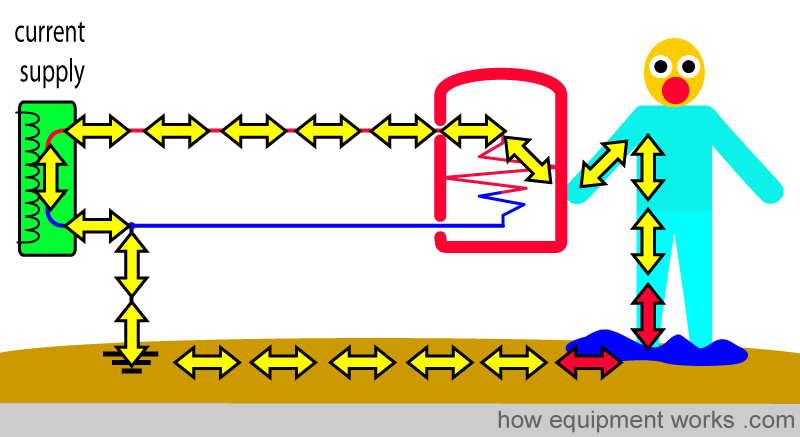
The current starts at the supply part of the power company. This could be a step-down transformer located at a distance from the hospital (1). The current then goes through the live wire (2) and eventually reaches the heating wire of the kettle (3). The kettle has a fault and the heating wire touches the metal wall of the kettle (4) which then becomes full of current. The man touches the metal wall and the current passes into him and travels in his body (5) to his foot. From his foot, the current travels into Mother Earth (6). You will recall from an earlier discussion that Mother Earth can carry electric current like a wire and therefore she carries the electric current from the man’s foot to the “wire from neutral to Mother Earth” (7). The “wire from neutral to mother earth ” carries the current from mother earth to the neutral wire (8). The neutral wire finally carries the current back home to the step-down transformer of the current supply company (1). This sounds like a long description, but in reality, it is fairly straightforward to understand when you see it in a diagrammatic form as shown below.
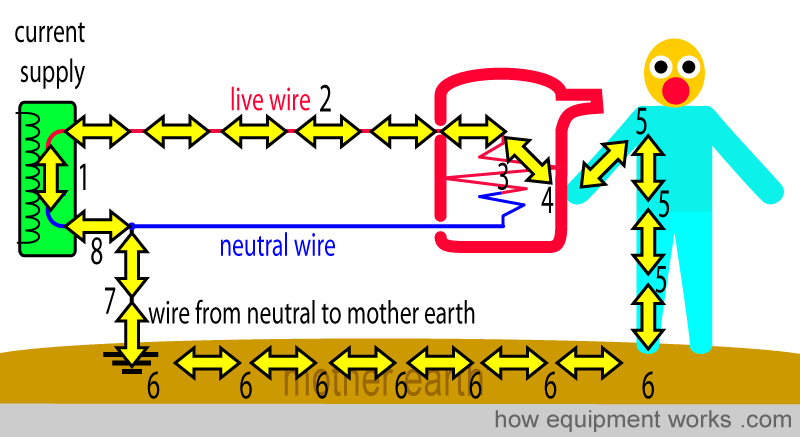
Now that you know the basic shock pathway, we can soon discuss some safety aspects.
Insulation
We learnt earlier that resistance is a measure of how easy it is for current to flow through something.
Something with a low resistance will let a lot of current flow whereas something with a high resistance will allow only a little current to flow.
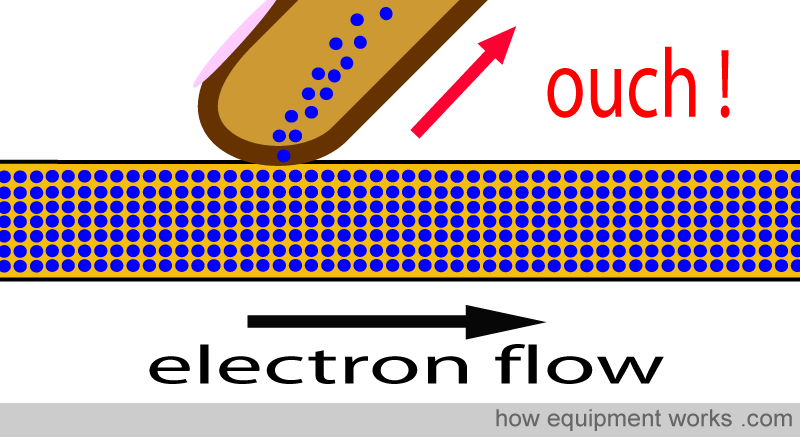
‘Conductors’ are materials that ‘conduct’ current easily. You will recall that current is the flow of electrons. In good conductors, the electrons are free to move easily leading to easy current flow. Metals are good conductors and are found in wires that carry electricity. Conductors have a LOW resistance to current flow.
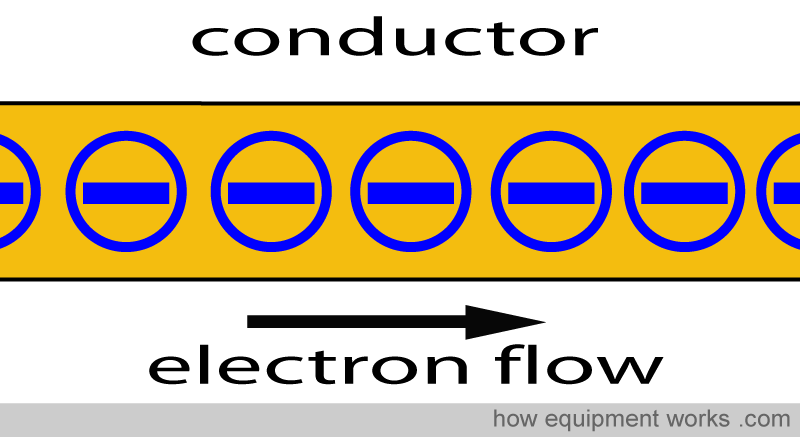
The opposite of a good conductor is an ‘insulator’. Insulators are materials that are very poor at carrying an electric current. Unlike in conductors, in insulators, the electrons are tightly bound and cannot move easily. Because the electrons cannot move, the insulator does not easily carry current. Insulators have a HIGH resistance to current flow.
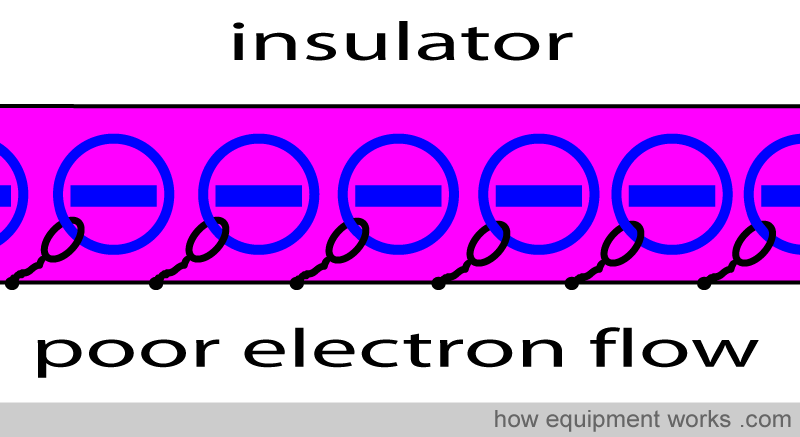
One common application of insulation is to make electric wires safe to use at hospitals and at home. If we simply had metal electrical conducting wires, whenever we touched them we would get a nasty shock.
A common solution to the problem is to cover conductors with a layer of insulation. Most wires are insulated in this way. There is a metal conducting portion (red arrows) that has a low resistance to current flow. This is covered by a layer of insulation that has a high resistance to current flow (pink).
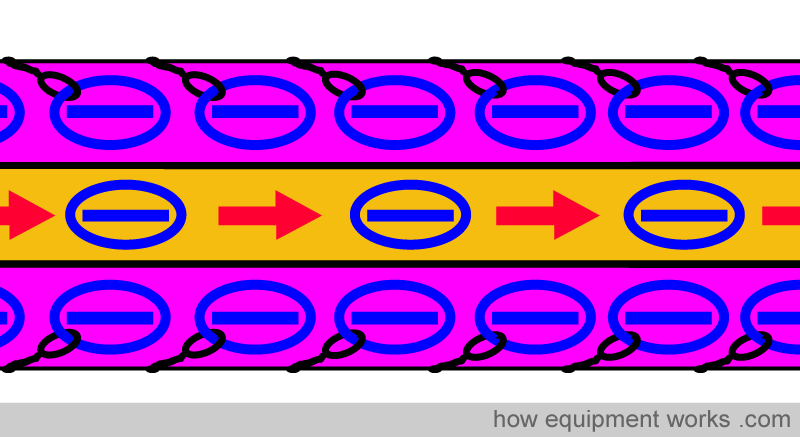
This insulation makes the wire safe to touch.

However, one must regularly inspect such wire insulation for damage. For example, in operating rooms, it is not uncommon for a piece of heavy equipment to be rolled over a wire on the floor.
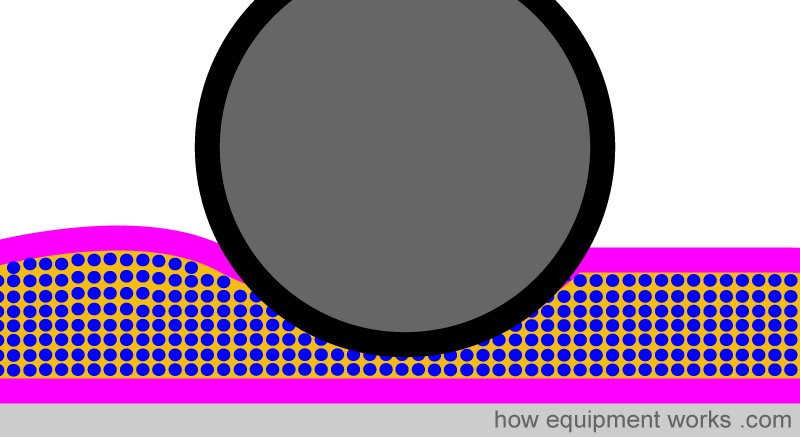
The wheels of such equipment can easily damage the insulation of wires and remove a portion of the insulation.
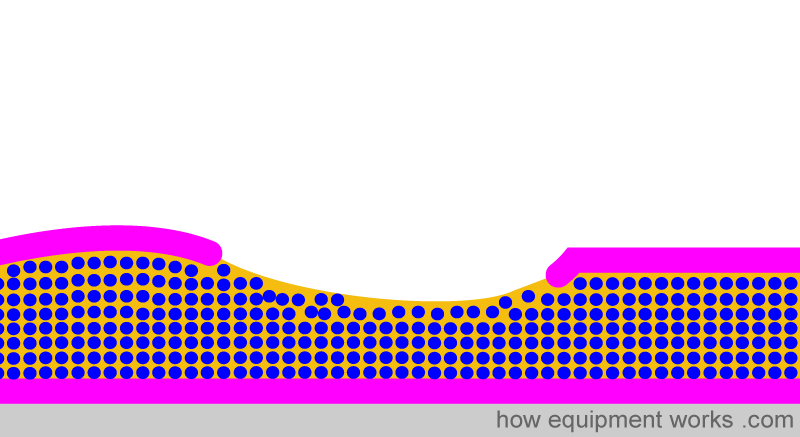
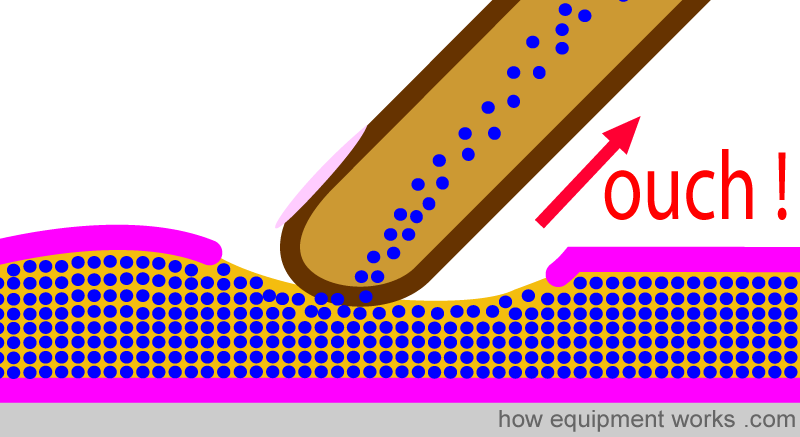
It is now not safe to touch the wire. Since part of the insulation is missing, there is a chance that if you touch this wire, your finger may contact the conductor and get an electric shock. Therefore, always inspect wires that are lying around for damage, taking care not to shock yourself.
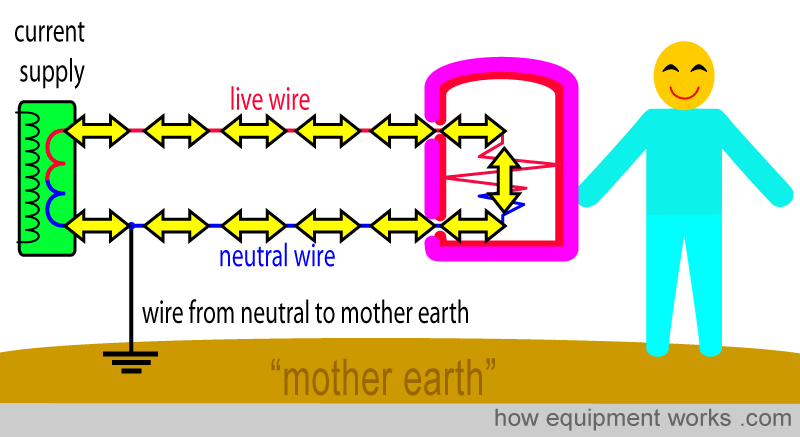
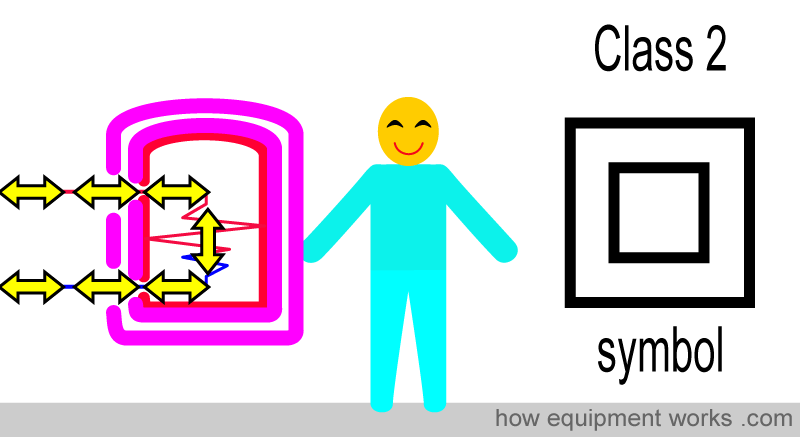
It is possible, as a safety feature, to insulate the surfaces of equipment. When done correctly, all the parts that conduct electricity are covered by a layer of insulation (pink layer). This way, such equipment is safe to touch because the insulation has a high resistance to current flow, and therefore will not cause a shock.
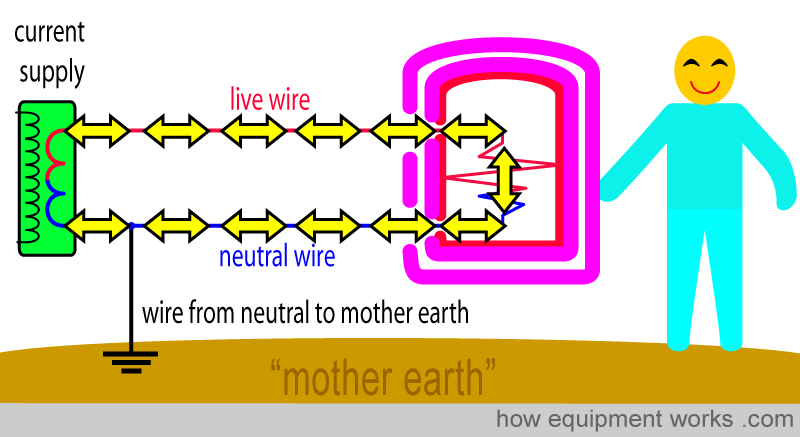
In practice, if equipment relies on insulation for safety, it is protected by at least two layers of insulation (double pink layer). This is called “double insulation”.
If you look at your equipment, they will often have labels indicating all sorts of things. Depending on local regulations, the symbol below (two square outlines), indicates that the equipment is double insulated. There are various ways of classifying the protection afforded by electrical equipment. Double insulation protected equipment may also be called “Class 2”.
Earlier, we learnt how fluids can lower resistance and worsen shock.
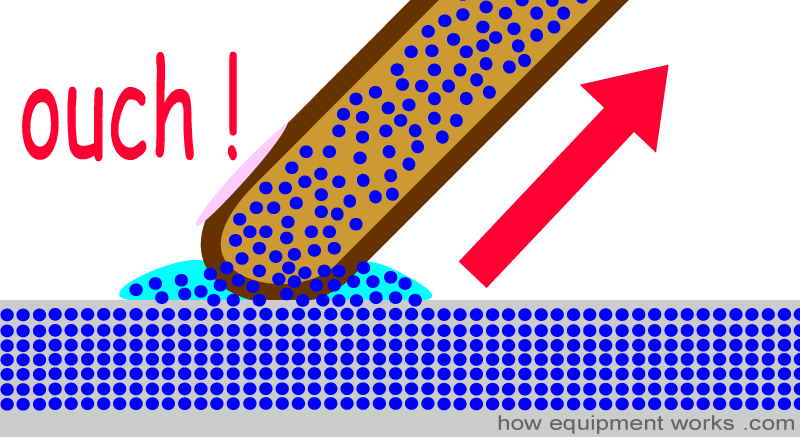
In a similar way, if you are standing on a pool of fluid such as saline, the effect of shock will be much worse. The fluid will lower the resistance between your foot and Mother Earth, making more current flow, and giving you a bigger shock.
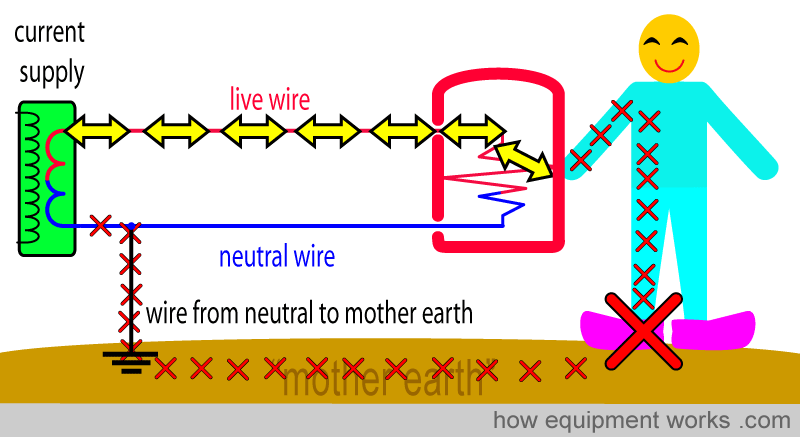
We can however do the opposite of this and increase safety. We can increase the resistance by wearing appropriate work shoes that have a high resistance. Such shoes will act as an insulator.
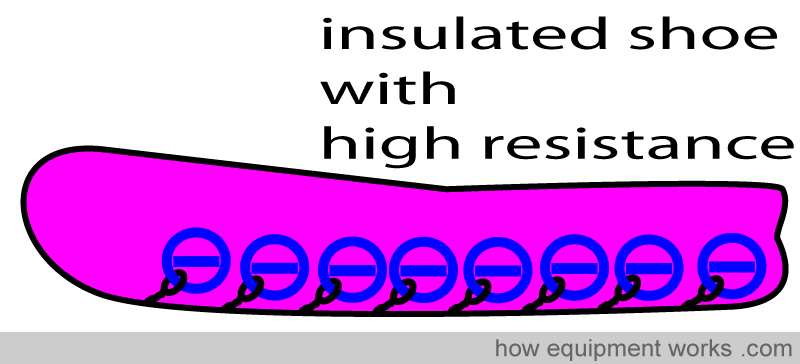
You know that electrical current doesn’t flow through if it can’t get back home through a return pathway. The insulated shoes prevent a return path (small red crosses) from forming and therefore the man doesn’t have a big shock.
Please wear shoes approved by your hospital. These will have safety features such as having the correct amount of electric insulation and protection from falling sharp objects etc.
Please click the “Next” button below to read part 3 about electrical safety. Thank you.