Note: This is part 2 of the discussion of electricity basics. If you have not read part 1, please click here to go to part 1.
Relationship between potential difference and current.
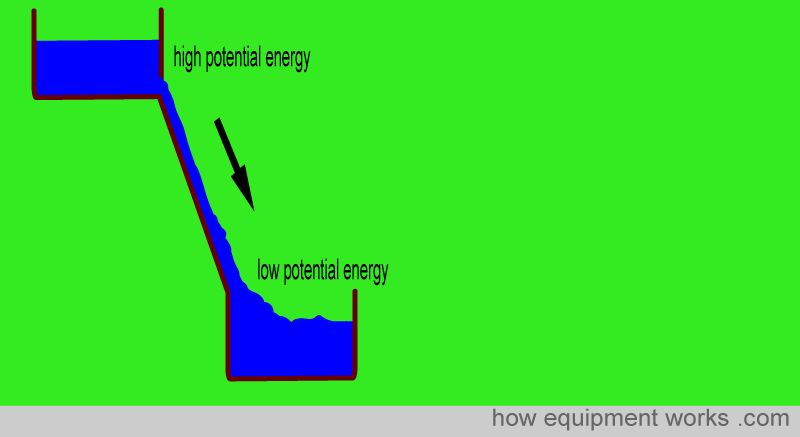
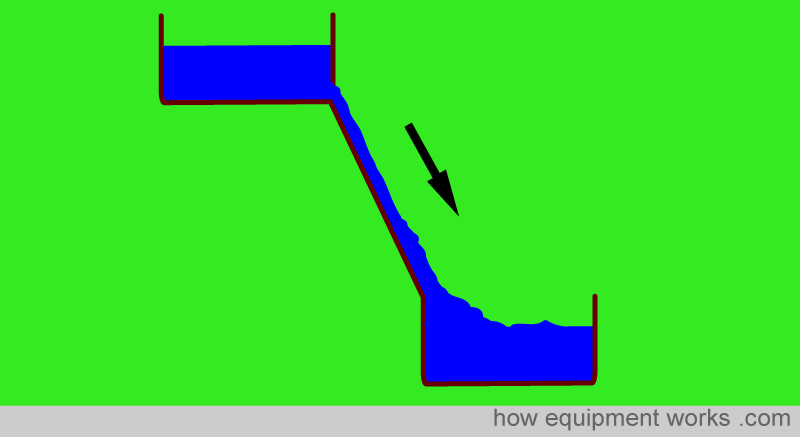
Now let us return to potential differences and current. Recall that current is the flow of electrons. Potential difference is what makes electrons, and therefore, current flow. In our waterfall example, we said that the potential difference was like the difference in height of the higher and lower tank, and the difference made the water flow.
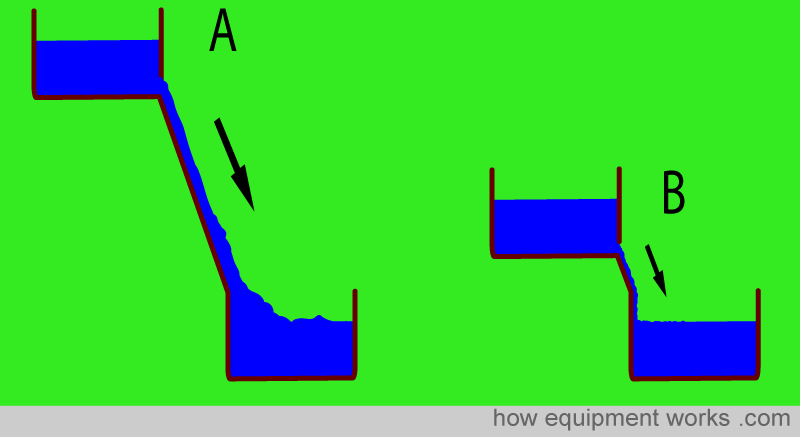
Take the two waterfalls below. Waterfall A has a large difference in height whereas waterfall B has small difference in height. Waterfall A has a higher energy difference than Waterfall B and therefore the flow rate in Waterfall A is much faster than Waterfall B. In other words, water flow rate is proportional to the energy difference.
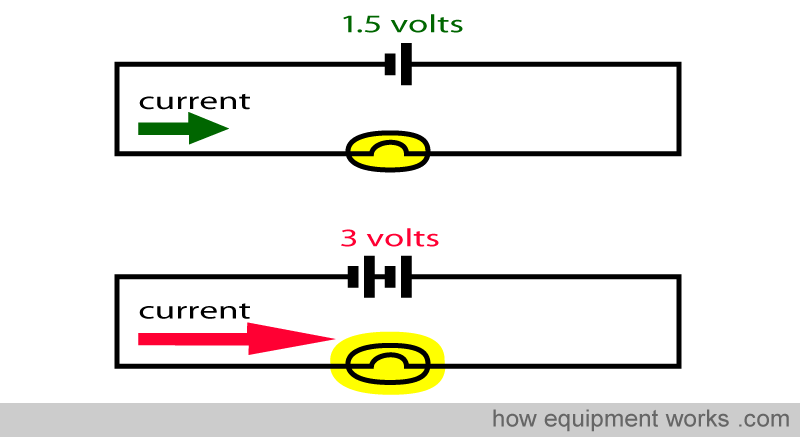
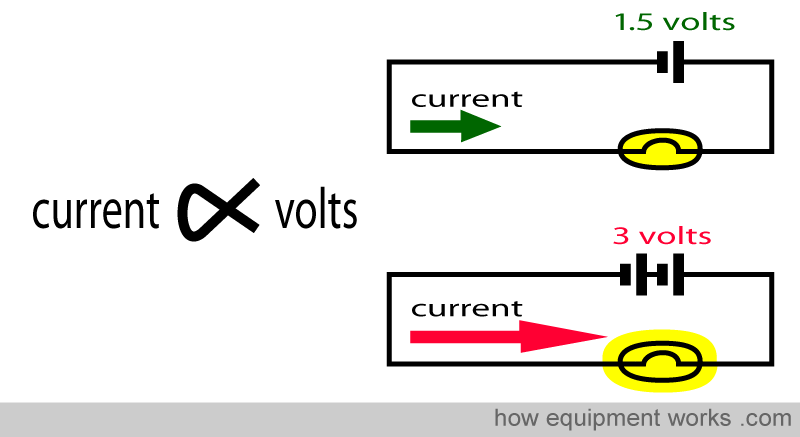
This is the same in electrical circuits. If you increase the potential difference, more electrons will flow. Take the example below. In the top circuit, the potential difference is 1.5 volts and this results in a certain current flow. In the bottom circuit, the potential difference is doubled to 3 volts. This doubles the current flow, making the bulb light up brighter.
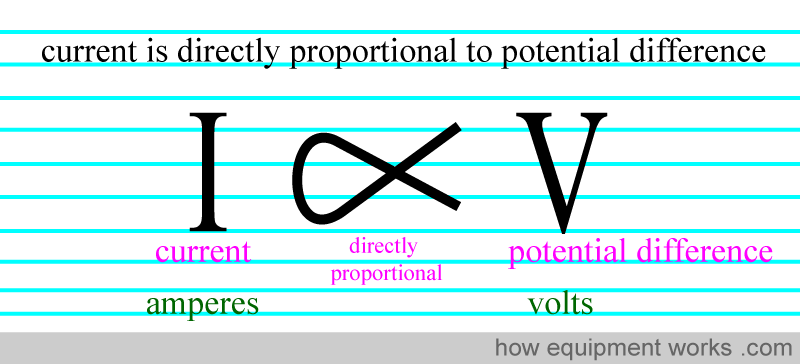
There is a famous electrical law called “Ohms Law “. While Ohm’s Law will be explained in a bit more detail later, what we have already discussed forms “PART “ of this law.
I.e. Part of Ohms Law states that “for a given wire (conductor), current flow is directly proportional to the potential difference across it. “
Sources of Potential Difference
There are many sources of potential difference.
Single-use batteries :
So far in our discussions, we have used batteries as our source of potential difference. We will discuss batteries first and then other sources of potential difference.
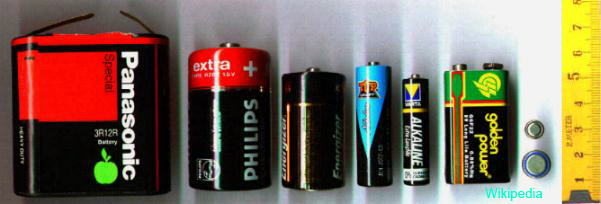
Batteries are used frequently at home to power small items such as clocks. In hospital, laryngoscope bulbs are typically powered by batteries. Batteries come in all sorts of shapes and sizes.
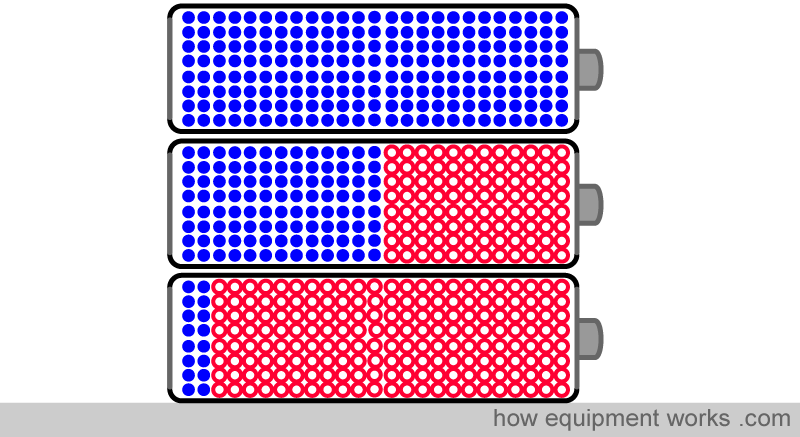
In batteries, a chemical reaction generates the potential difference. Once the chemical reaction has “finished”, the battery no longer generates a useful potential difference and the battery is thrown away.
Rechargeable batteries :
These batteries have chemical reactions that are “reversible”. If you apply a potential difference and current to a rechargeable battery, chemical reactions in the battery “store” this energy. When energy is required, further chemical reactions are able to release the previously stored energy. These batteries can be recharged many times and are economical in the long term. Rechargeable batteries are very frequently used in household products such as mobile phones and laptops. They are also very frequently used in many hospital devices such as syringe pumps, portable monitors, defibrillators, motorised operating tables etc. It is extremely important to keep devices using rechargeable batteries “charged”. If you don’t keep things correctly charged (e.g. forgetting to plug the device into a wall power outlet) the batteries may run out early and unexpectedly shut down a piece of critical equipment, such as a syringe pump during a patient transfer.

Electrical Generator:
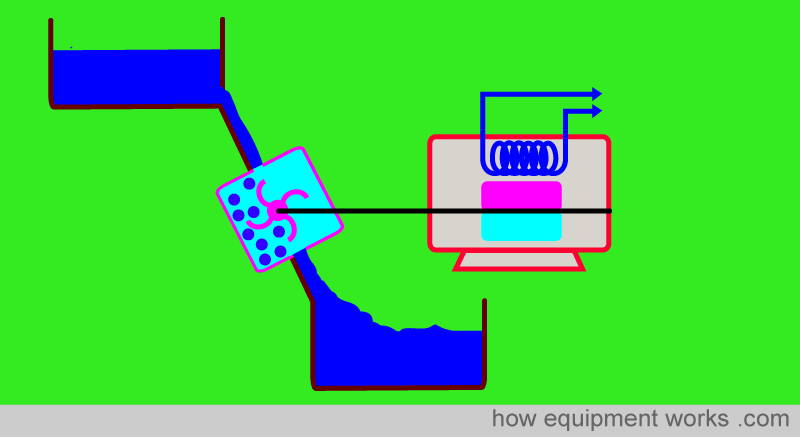
Power to our homes and hospital comes from huge electrical generators. These are devices that convert rotating motion to electricity.
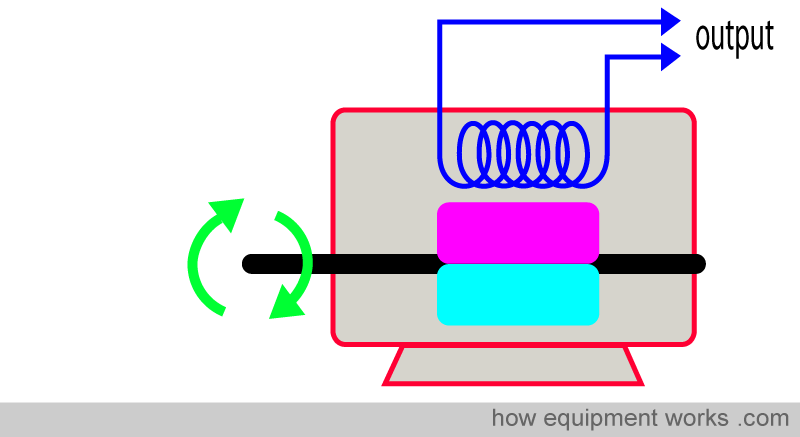
There are many different ways you can provide the rotating motion to the generator. For example, water in a dam can be used to turn the generator (hydroelectric power).
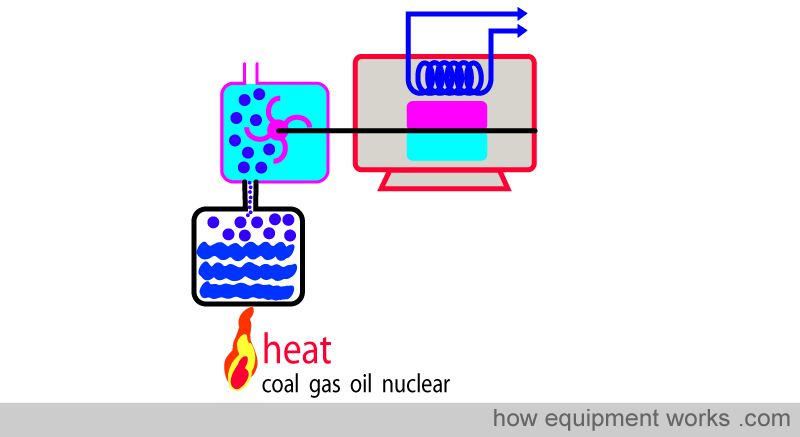
Many power stations use steam to turn the generator. The steam is made by heating water, which can be done by energy sources such as oil, gas, coal, or nuclear power.
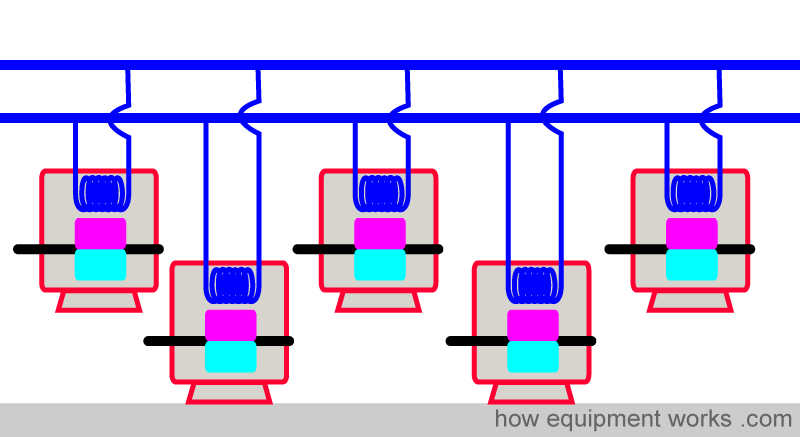
Many power stations are connected to each other by a network of wires called the “electrical grid “. The grid allows the system to share resources and provide backup power if one power station fails. The grid distributes power to hospitals, homes and other consumers.
The grid is carefully controlled to meet the electricity demands of the consumers. For example, grid engineers study television programs closely because they know that when popular television programs end (e.g. after an important sporting event), millions of people get up and heat water in electric kettles for coffee or tea. Grid engineers plan for this and rapidly activate special power stations that can boost electricity supply to the grid quickly to meet this demand. For example, during the Royal Wedding in the United Kingdom, the electricity demand increased by 2,400,000 watts which is the equivalent of nearly one million kettles being turned on at the same time.

Emergency Generator:
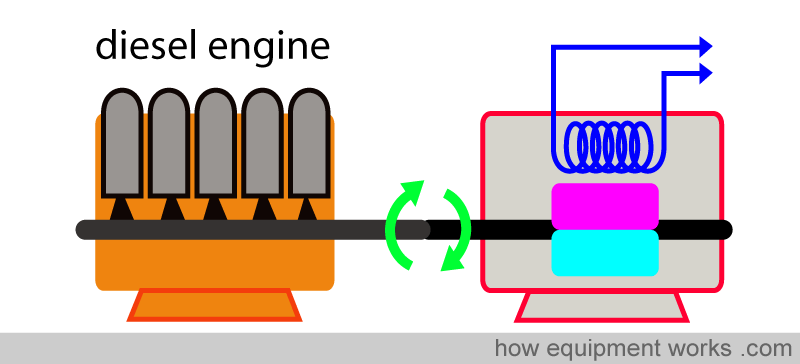
Like everyone else, hospitals also get their electrical supply from the electrical grid. If the grid fails to deliver power, critical patient support equipment such as monitors, ventilators, anaesthetic machines, etc. may stop functioning. For this reason, hospitals have their own emergency power supplies. For brief periods of power failure, huge rechargeable batteries are able to supply the necessary power. For longer periods, the hospital will have a generator which is usually turned by a diesel oil engine. This generator comes on automatically when a power failure is detected.

Do you work in the anaesthetic team? If you do, please visit the free website below, which has anaesthesia-related fun and safety material. Click the button below to visit.

Concept of Resistance
In the world of electricity, there are three friends that are always present together and affect each other. We have already discussed two of them, i.e. current (amperes) and potential difference (volts). Now let us discuss the third friend, called resistance,

In a circuit, electrical resistance is something that “resists “ the flow of electrons (i.e. resists the flow of current). Let us go back to our waterfall example. However, we now replace the waterfall with a pipe that connects the two tanks. The water flows in pipe from the higher tank to the lower tank due the difference in potential energy.
Let us now look at two such arrangements. In both, the water tank height is the same. I. e, both systems have the same potential energy. However, arrangement ‘A’ has a narrow pipe and arrangement ‘B’ has a wide pipe.
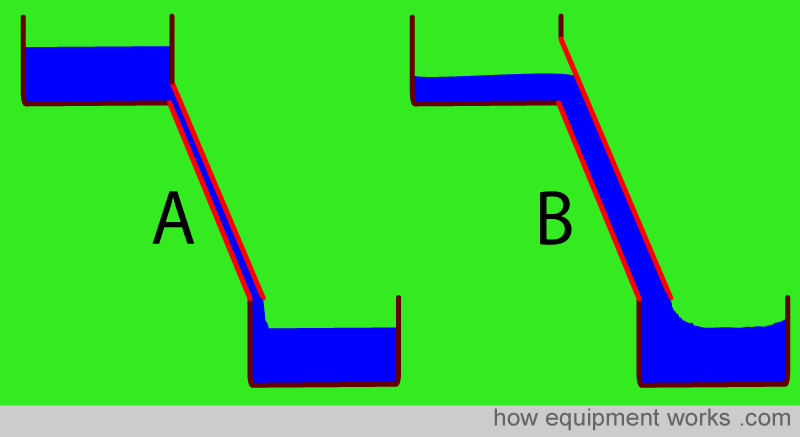
The flow rate of water in pipe A is slower than the flow rate of water in pipe B. This is because pipe A, being narrower has a higher resistance to water flow than the wider pipe B.
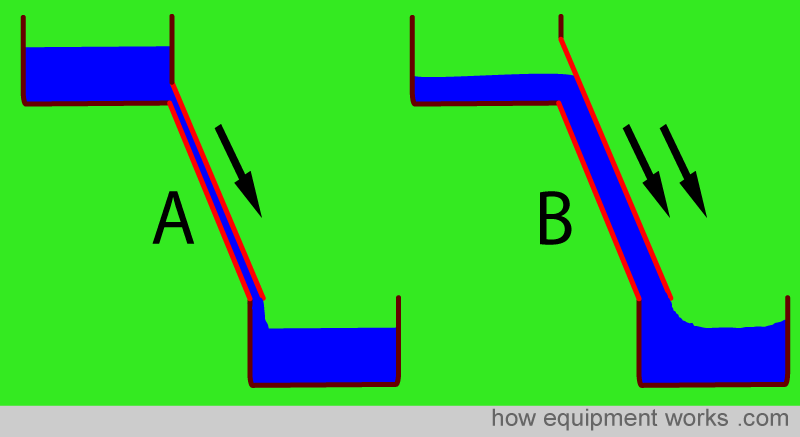
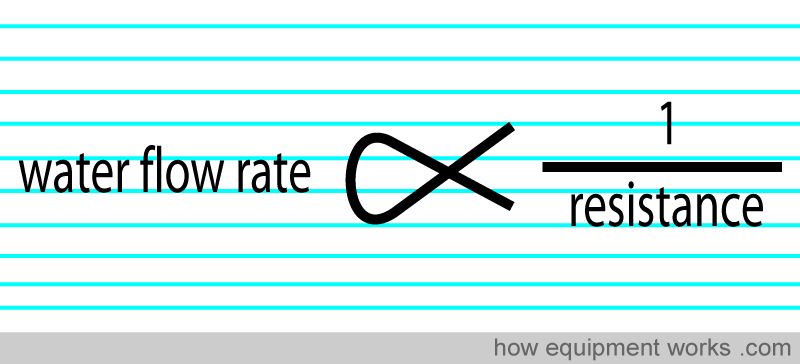
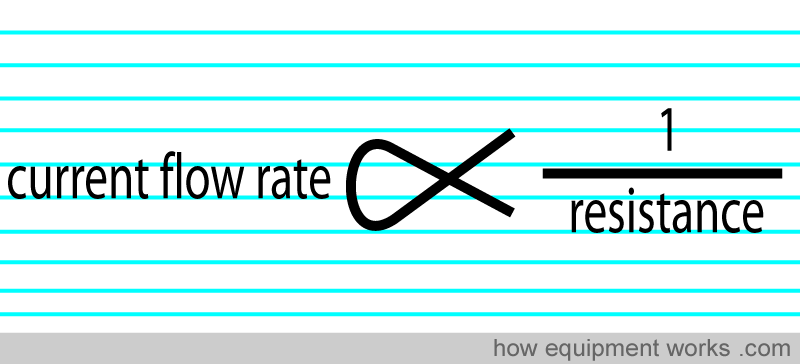
So in the above example, flow rate and resistance have an “opposite” relationship. When one increases, the other decreases. In more technical language, we can say that the flow rate is inversely proportional to resistance.
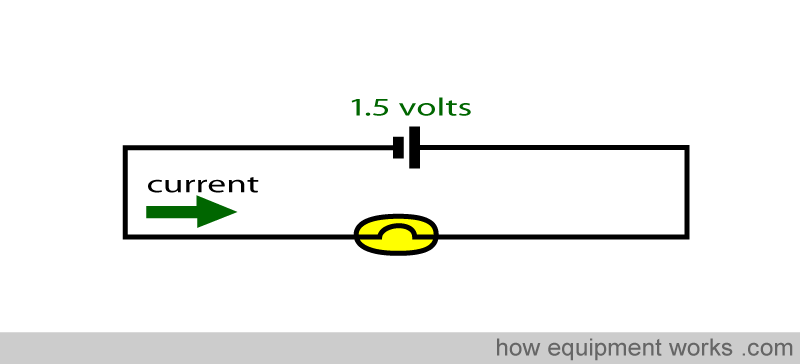
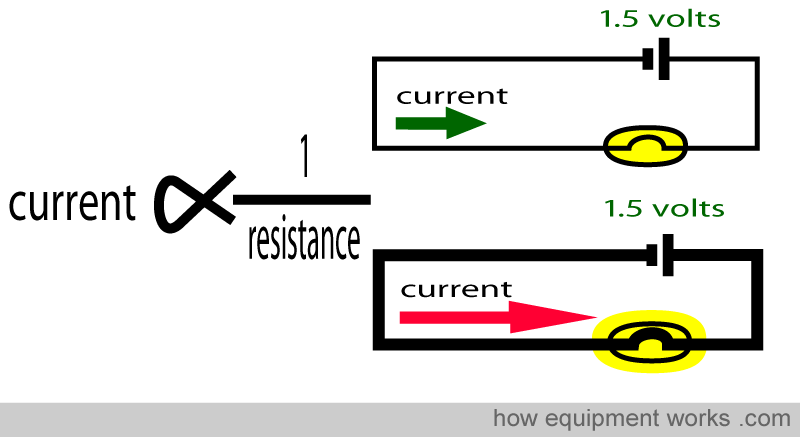
Electricity is similar. Let us take a wire and light bulb connected to a potential difference of 1.5 volts. This potential difference makes current flow in the wires and light bulb.
Suppose we now make two similar electrical circuits with batteries, wires, and light bulbs. In both circuits, we keep the potential difference the same. (1.5 volts). However, in one circuit we use thin wires with a high resistance and in the other, we use thick wires with a low resistance. It will be seen that more current flows (brighter bulb) in the low-resistance thick wires than the thin high resistance wires.
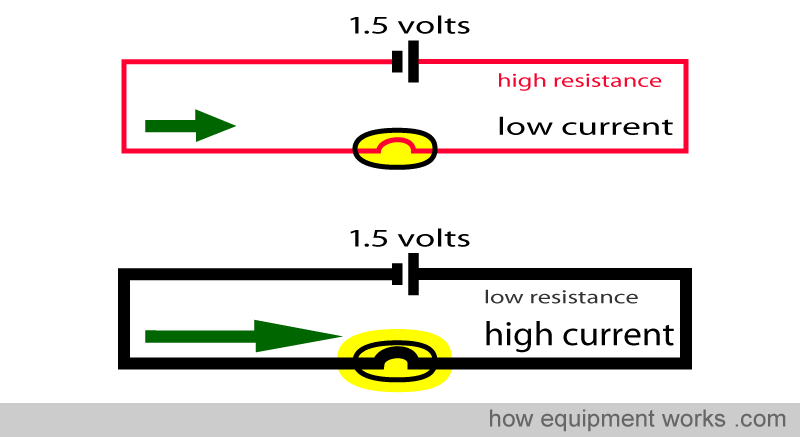
So, high resistance results in a low current flow, and conversely, low resistance results in a high current flow. We can put this into an equation where the current flow is inversely proportional to the resistance of the wire it is travelling in.
Ohm’s Law
A while ago we saw part of Ohms Law which stated that the current flow across a wire is directly proportional to the potential difference across that wire.
And more recently we learnt that current flow is inversely proportional to resistance.
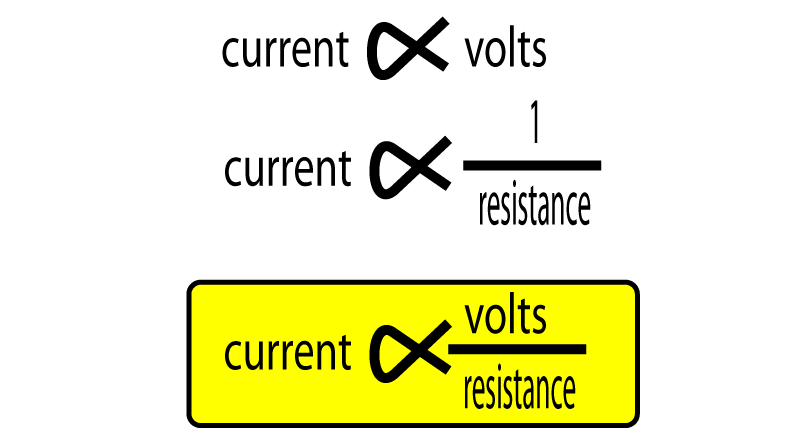
Now you are ready for the “full “ Ohms Law! Let us combine the two relationships you just learnt.
Ohm’s Law states that:
Current flow through a conductor (wire) between two points is directly proportional to the potential difference across the two points, and inversely proportional to the resistance between them. The Ohms Law can be shown by the equation in the yellow box.
So you can see that the three friends, volt (potential difference), resistance and current are best of friends. And just like friends, if you get two together, they will talk about the third friend.
Similarly, by rearranging the Ohms Law equation, if you know two of the values, you can find out what the third one is.
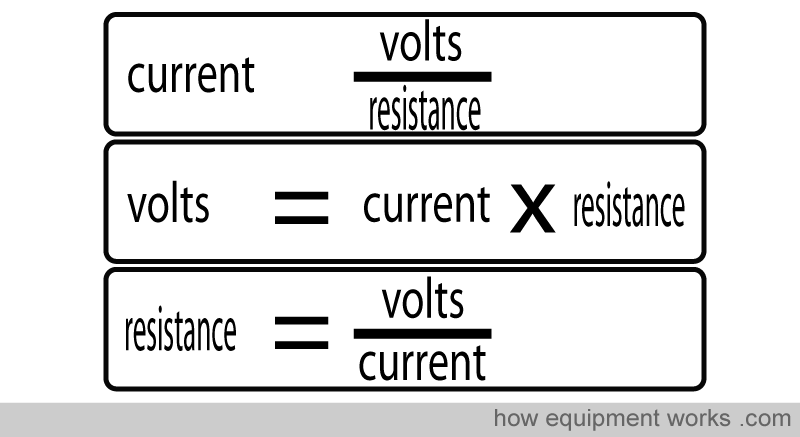
It is time to use the international abbreviations in the equations. Note that the international abbreviation of Current is not ” C “. Instead , it is ” I ” (capital i ). This bizarre abbreviation has to do with history, where current used to be represented in the French language.
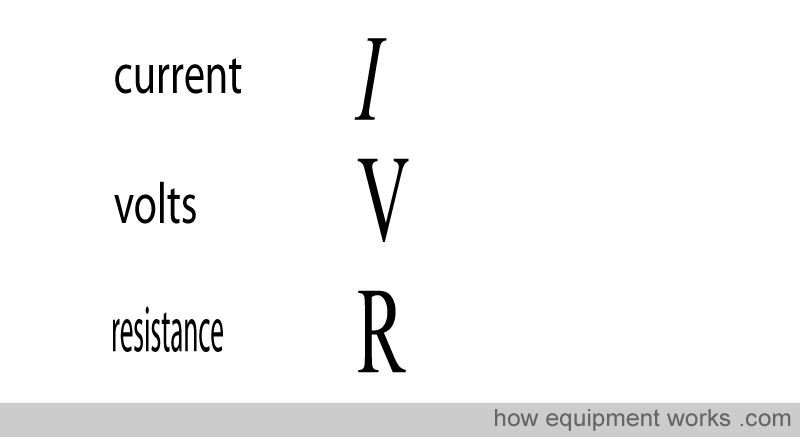
Now here are the equations we saw before, using the abbreviations.
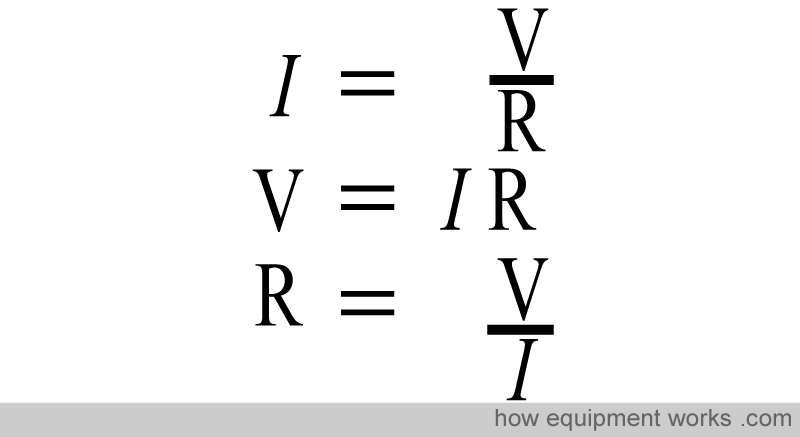
You don’t need to memorize all the above three equations. Just remember one, and you can work out the rest when needed.
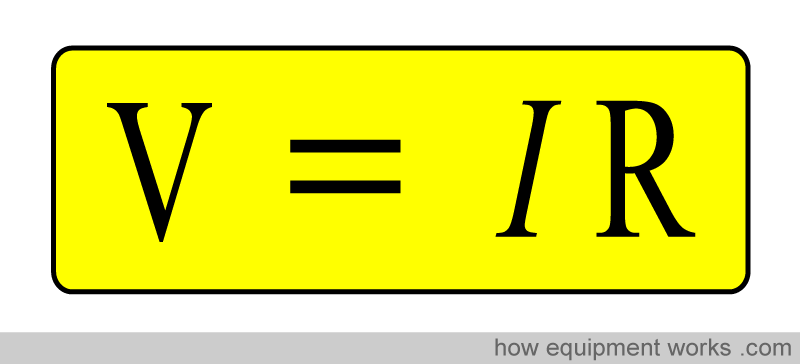
Ohms Law is a very important law in the world of electricity. It was discovered by Mr. Ohm.
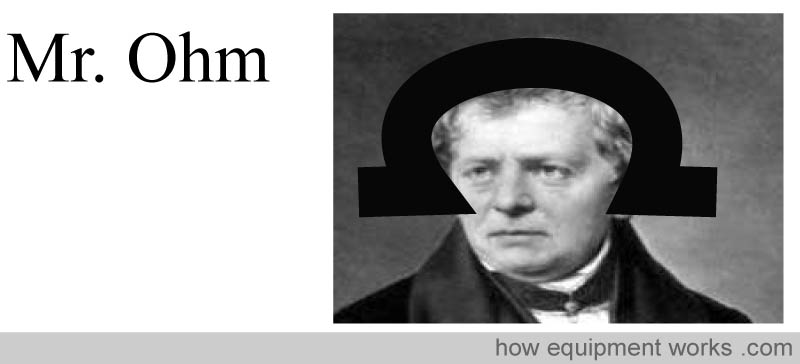
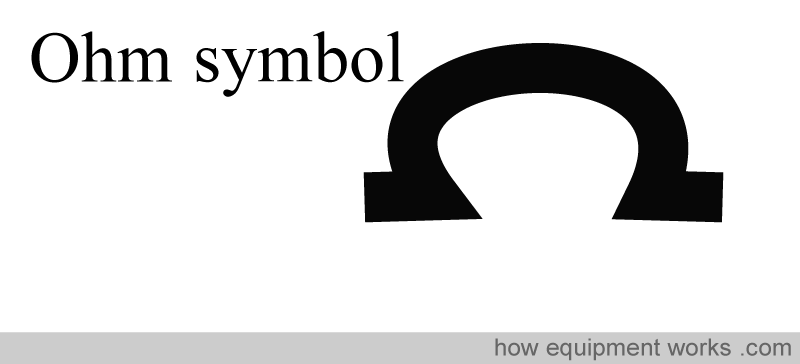
The unit of resistance is named after him. The unit of resistance is called “Ohm” and its symbol is shown below.
Let us take an example of Ohm’s Law in clinical practice.
Let us imagine that you have attached electrocardiogram (ECG) leads to your patient. You then plug the ECG lead plug to its socket in the monitor.
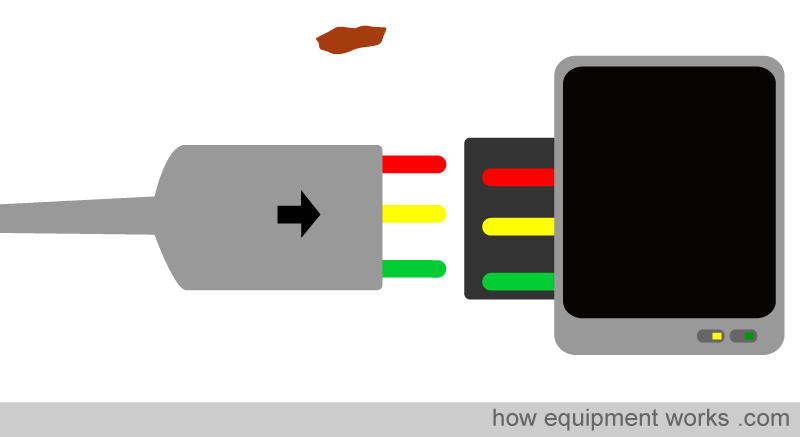
Unfortunately, as you are doing this, a piece of dirt gets into the plug. This makes the yellow wire have a poor contact with its counterpart, increasing its resistance.
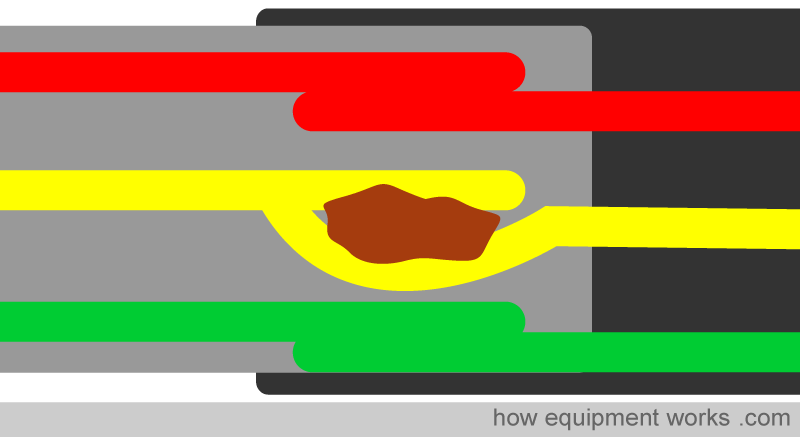
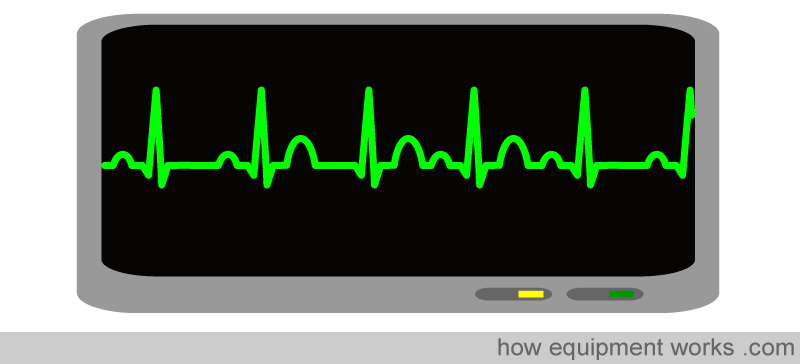
According to Ohms Law, the high resistance affects the voltage and current in the wire, disturbing the ECG tracing.
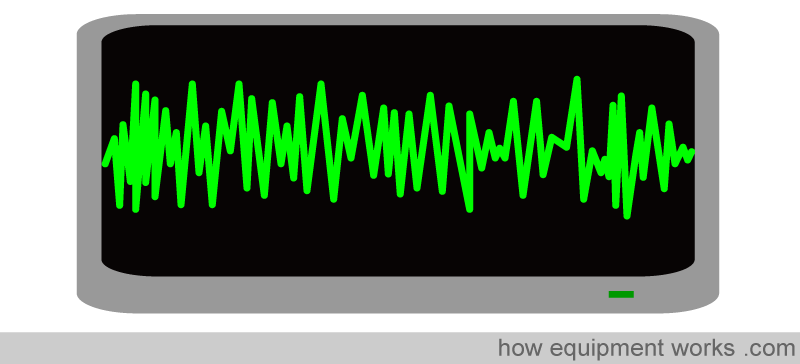
The plug is unplugged and the dirt removed. Now the contact is good and the resistance is now low.
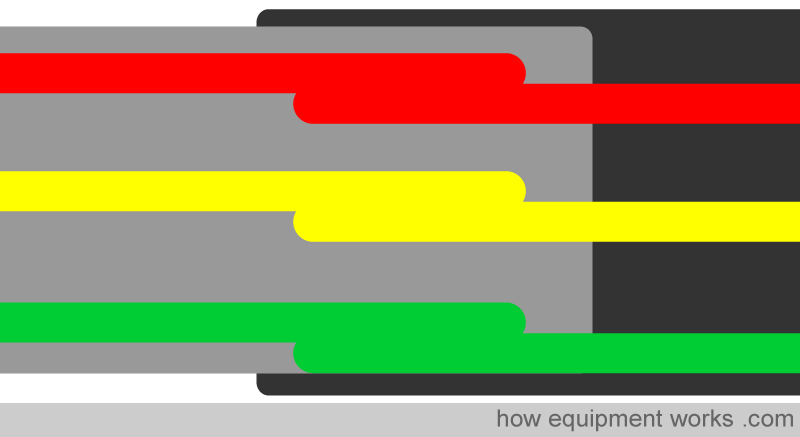
Low resistance makes the current flow easily and you get a much better ECG tracing.
Please click the “Next” button below to read the final part about electricity basics. Thank you.