Note: This is part 3 of the discussion of electricity basics. If you have not read part 1, please click here to go to part 1.
DC and AC current
You will recall that current is the flow of electrons.
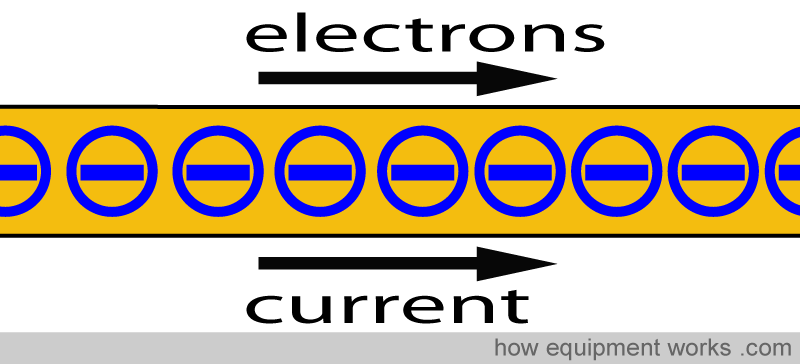
The electrons (i.e. current) flows from the “negative” pole to the “positive” pole. Current therefore has a “direction” of flow.
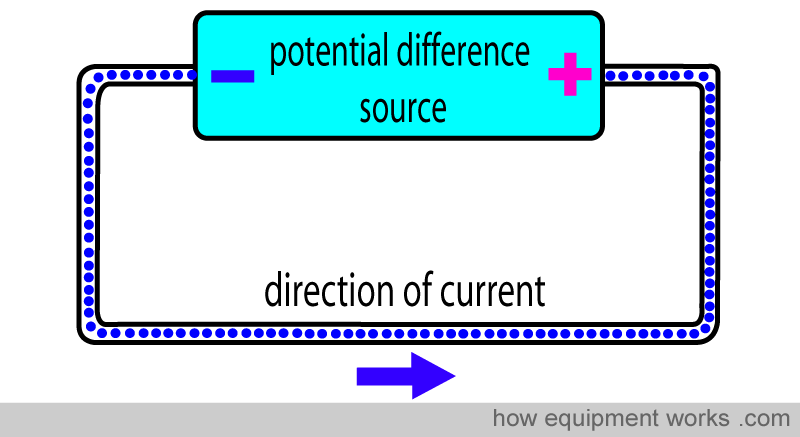
The direction of the current will change if the negative and positive poles of the source are exchanged.
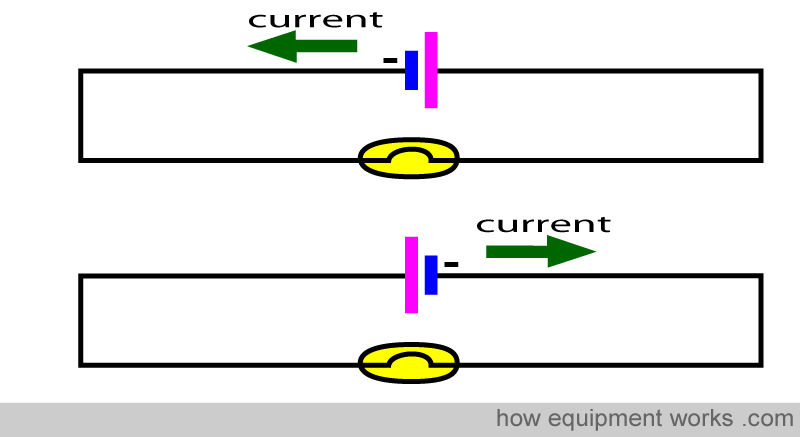
There are two main types of current flow: “Direct Current (DC) and Alternating Current (AC).
Basically, in DC, the “direction” of current flow remains constant over time, whereas, in AC, the direction of flow of current keeps alternating from one direction to the other. Let me try and make things clearer for you.
To make the diagrams a little less crowded, I have simplifying them a bit. The potential difference source is represented with a minus and plus sign. The green arrow will show the direction of current. Remember, the current always flows from negative to positive.
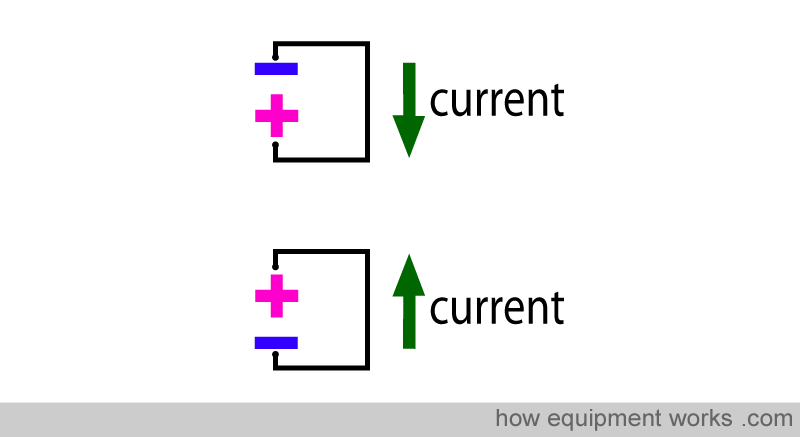
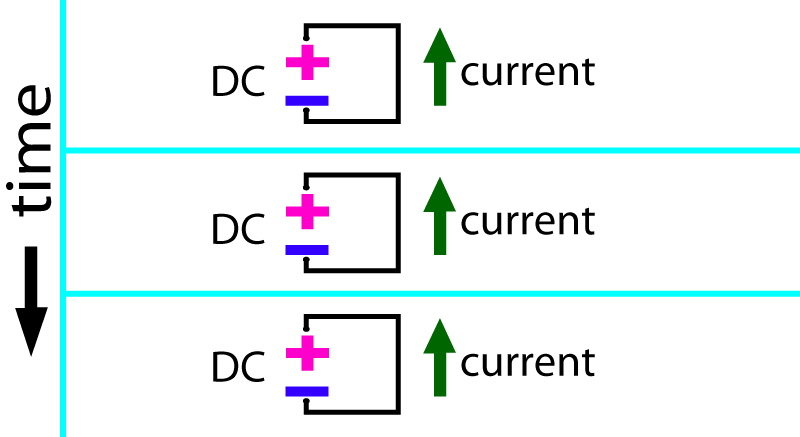
I will now describe to you the difference between DC and AC. Let us start with DC. Below is a series of images showing a circuit with a DC power source. The repeated images show you what happens over a time period. You will notice that over time, the current has NOT changed direction (the green arrow remains in the same direction). This is the fundamental property of DC: the current does not change direction.

I am the author of this medical equipment website, and I hope you are enjoying it. As a side interest, I am fascinated by the psychology of happiness. I have made a website that explains a concept called “Happy Thinking”, which is about finding happiness by changing negative ways of thinking. You are welcome to visit the free website at the link below to learn about Happy Thinking. The ideas in it could help you become happier!

AC is quite weird when compared to DC current. In AC, the negative pole and positive pole of the source exchange themselves repeatedly.
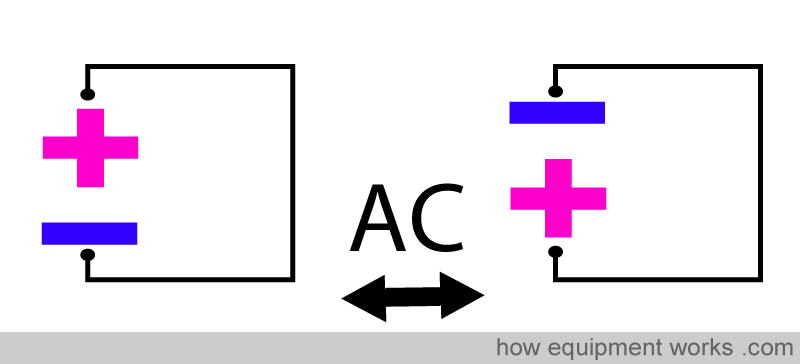
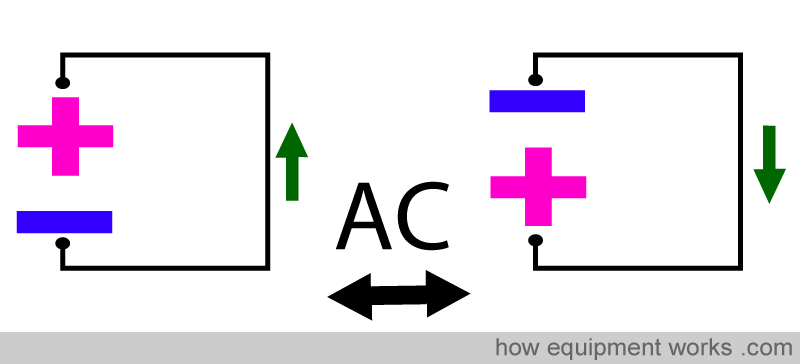
Since the current travels from negative to positive, this means that the current also changes direction repeatedly.
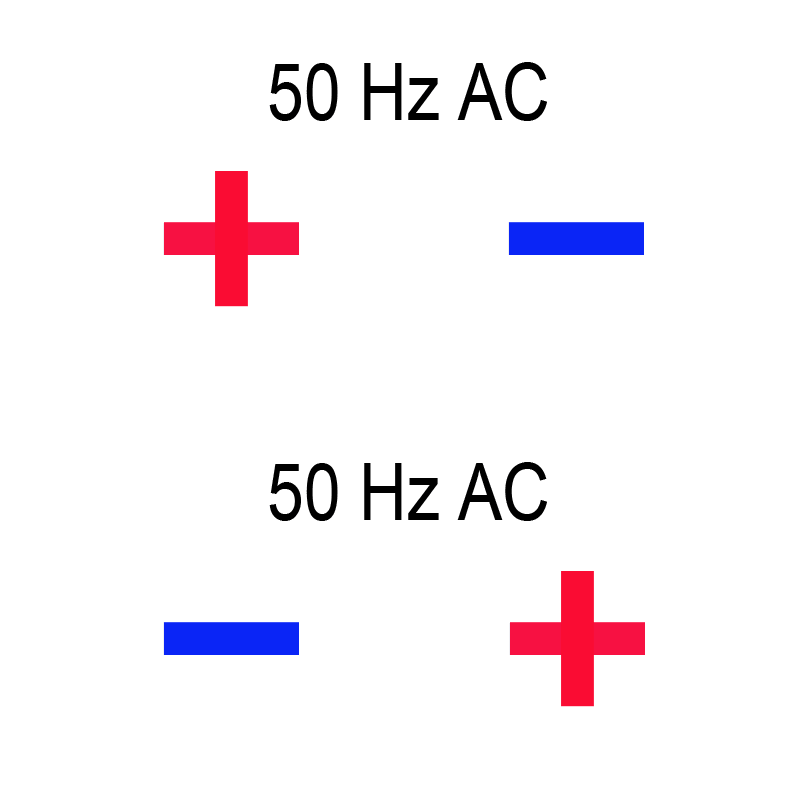
The series of images below show AC over time. The positive pole and negative pole keep alternating. In response to this, the direction of the current also keeps changing repeatedly.
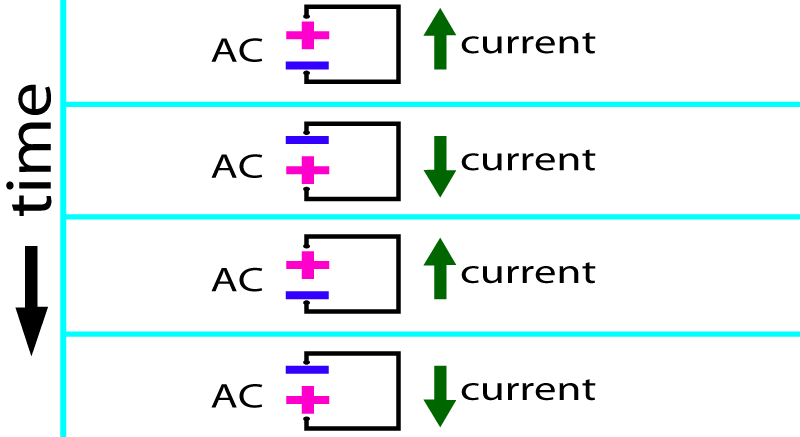
This repeated alternating of current direction happens quite fast. In many countries, it happens 50 or 60 times a second (i.e. frequency of 50 Hz or 60 Hz). For example, in the USA, it happens 60 times a second (60 Hz) and in the United Kingdom, India and Sri Lanka, it happens at 50 Hz. The animation below may help you to appreciate how rapid this is. The negative and positive poles alternate 50 times per second. If you suffer from photosensitive epilepsy, please skip this animation.
You may wonder why someone would produce a weird current in the form of AC. There are good engineering reasons why we have AC, and this will be discussed later on. For now, we will continue our discussion about the way AC behaves.
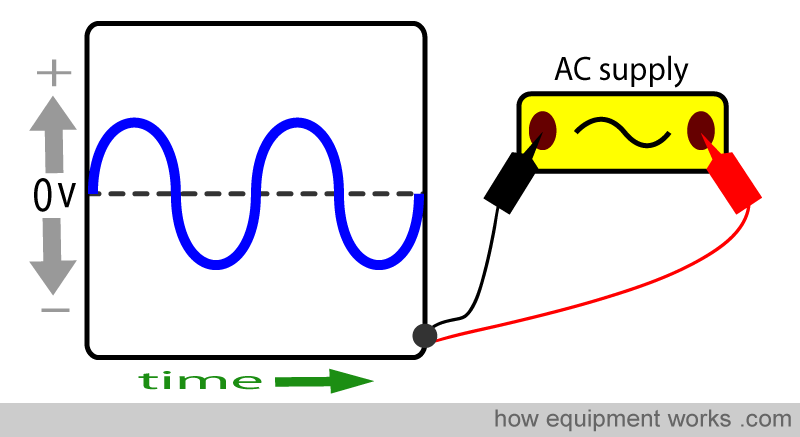
Before proceeding further, let me introduce you to a scientific instrument called an ‘oscilloscope’. An oscilloscope has a screen that shows voltage changes over a time. The vertical axis represents voltage and the horizontal axis represents time. This helps us to visualise how current behaves over time, and will be very useful when we continue our discussion on AC and DC.
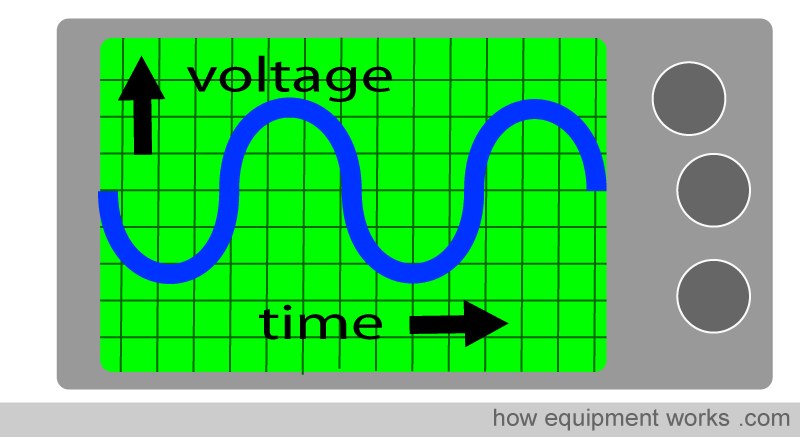
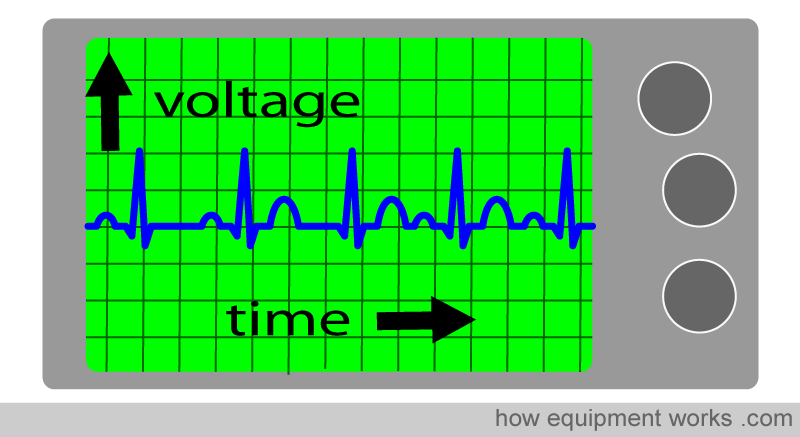
If an “oscilloscope” sounds complicated, don’t worry because I am sure you have used one everyday in your professional life. An ECG (EKG) monitor is a type of oscilloscope. It measures the potential difference of the heart over time. Looks familiar ?
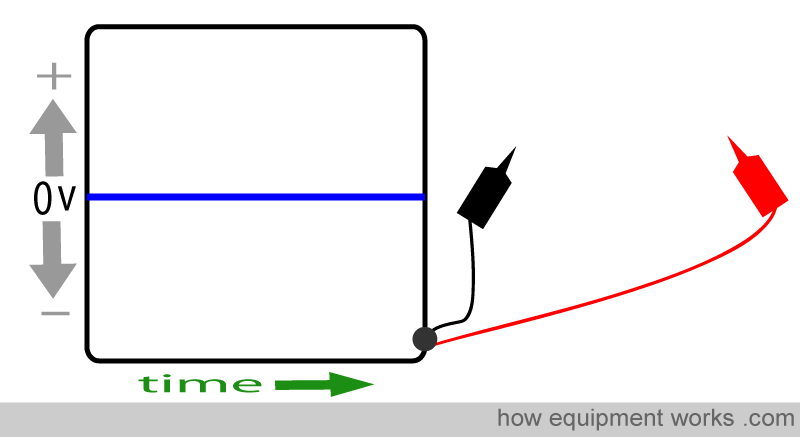
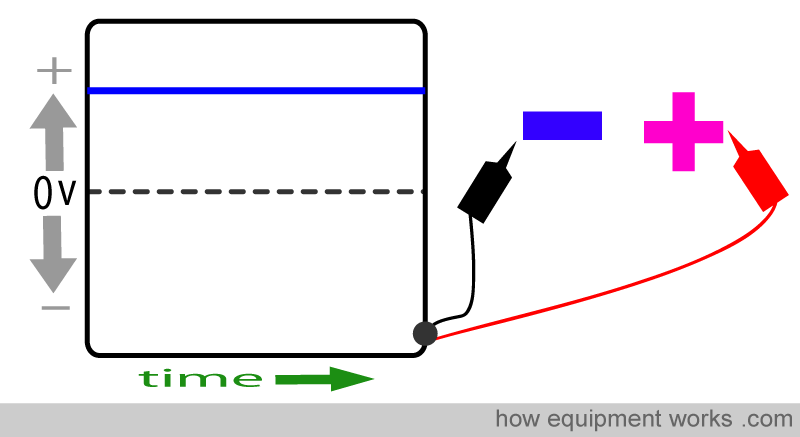
Below is a simplified oscilloscope. Right now, nothing is connected to the oscilloscope probes (black and red probes) and therefore the the tracing (blue line) remains on the baseline.
Let us connect the oscilloscope to a DC source. The oscilloscope shows a straight line reading (blue line) above the baseline (broken line).
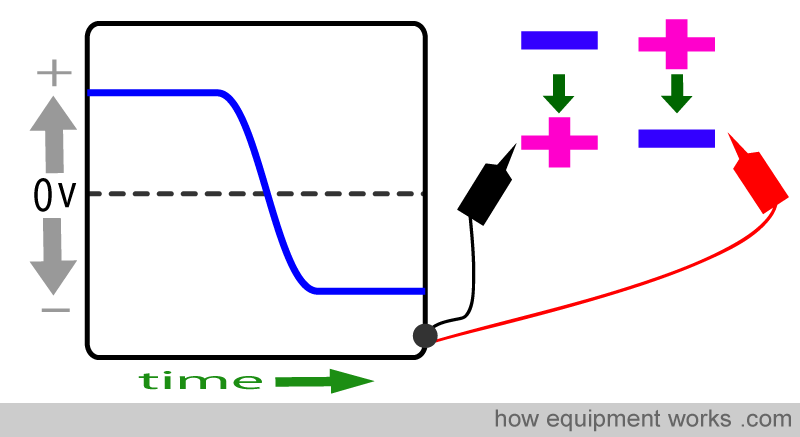
Oscilloscopes show the change in the direction of current flow by the trace crossing the baseline. Let us reverse the plus and minus poles of the source (i.e. we change polarity). You will see that the trace crosses the baseline from the top to the bottom.
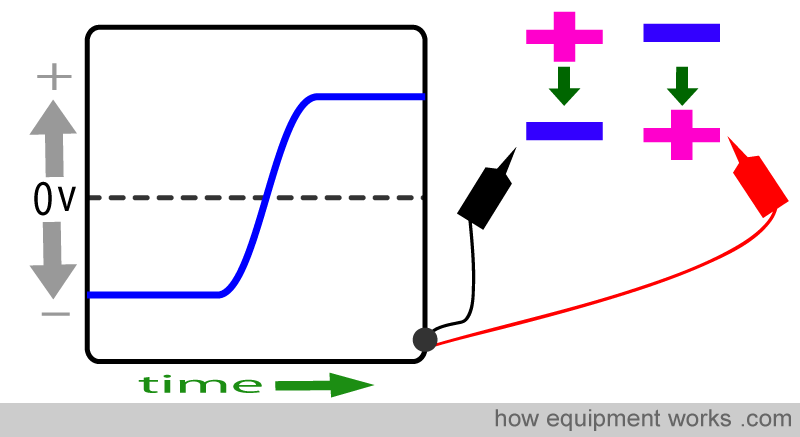
Let us change the polarity again, so it is back to how it was before. Again you will that the oscilloscope shows this change by making the tracing cross the baseline, in this case from the bottom to the top.
Now let us examine DC and AC current using an oscilloscope.
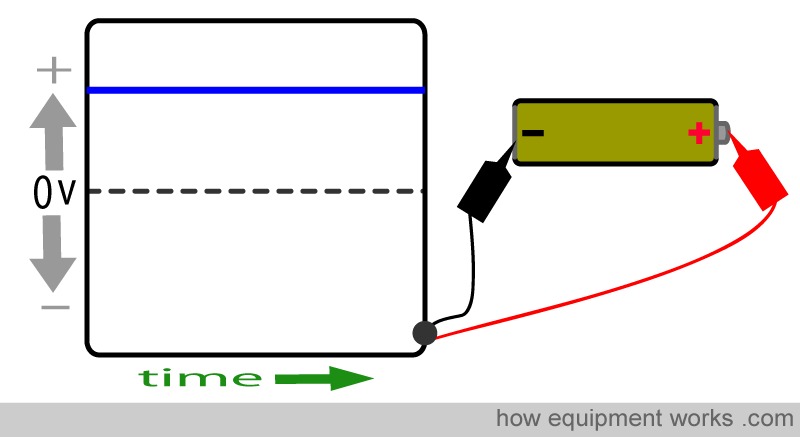
We first connect it to a DC source such as a battery. You will get a steady tracing above the baseline. Since with DC, the direction of current flow does not change, the tracing does not cross the baseline.
Now let us examine AC with the oscilloscope. You know that, unlike DC, the polarity of AC keeps changing, so you would expect to see something like this.
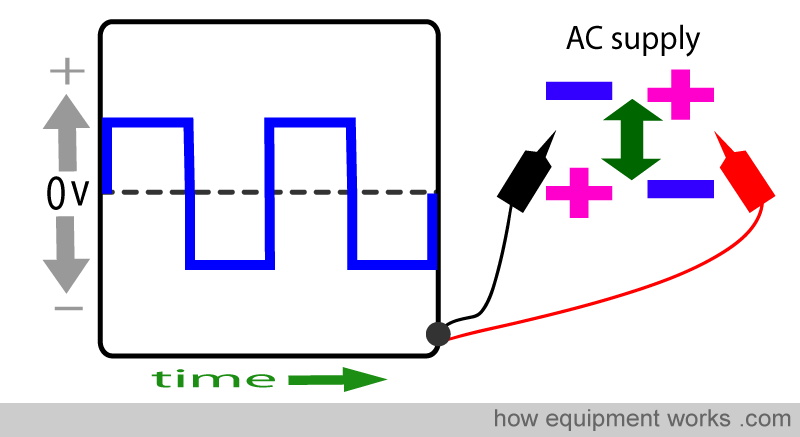
However, the above square waveform is NOT what you see. Instead, you will see a waveform that has much more graceful curves, as shown on the oscilloscope on the right below.
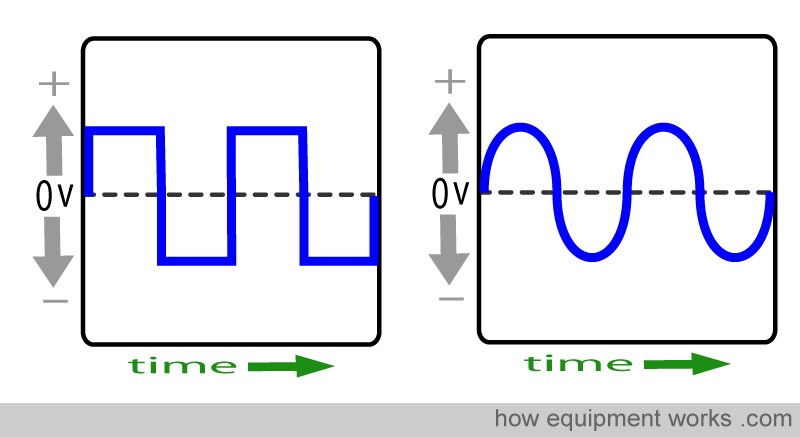
The reason why you see the graceful curves instead of the sudden square changes is because the polarity in AC does NOT change suddenly as shown below.
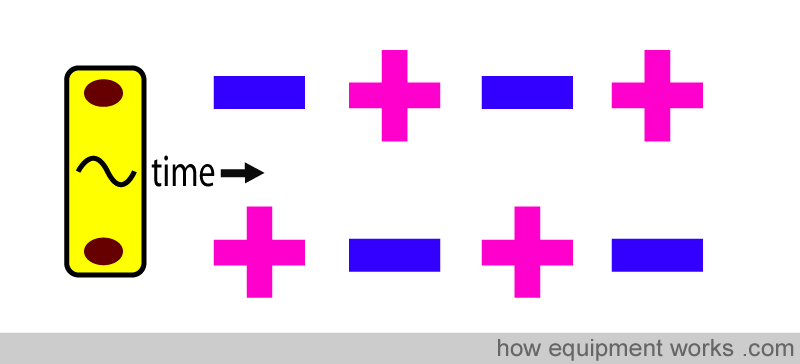
Instead, the change in AC happens “gently”. The potential first starts to decrease and eventually becomes zero. Then the polarity gets reversed and potential difference starts to rise till it reaches the maximum. The changes in polarity continue in this fashion.
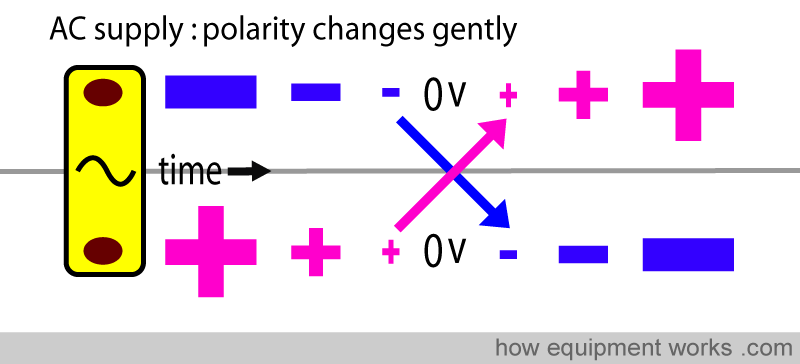
This gentle change in polarity ( as shown in the “polarity dance”) below accounts for the nice curvy AC oscilloscope tracing.

You are now ready to see how the ‘curvy waveform’ oscilloscope tracing of AC is formed. (This is the waveform that you often see in textbooks)
I will now show you how the “gentle” transition shown below becomes the curvy waveform seen with AC.
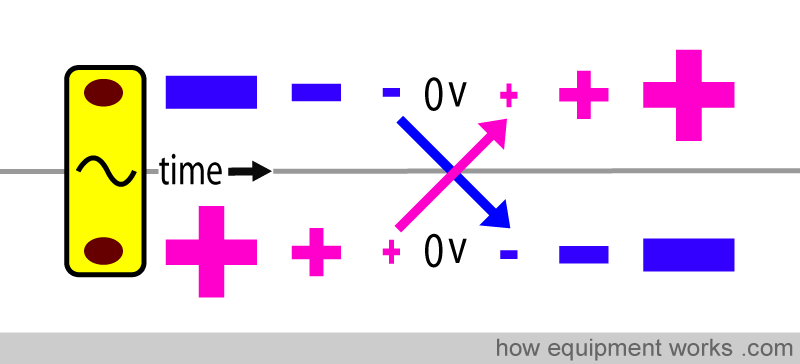
The above transition will be shown in a step-by-step manner. As each step is shown, you will see the AC waveform in the oscilloscope.
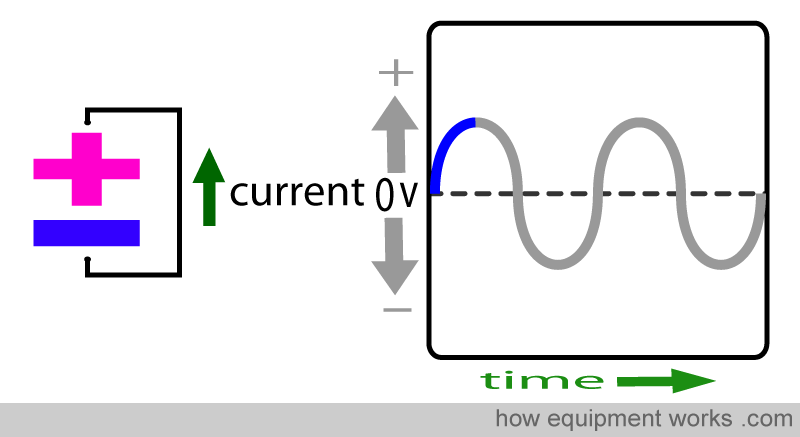
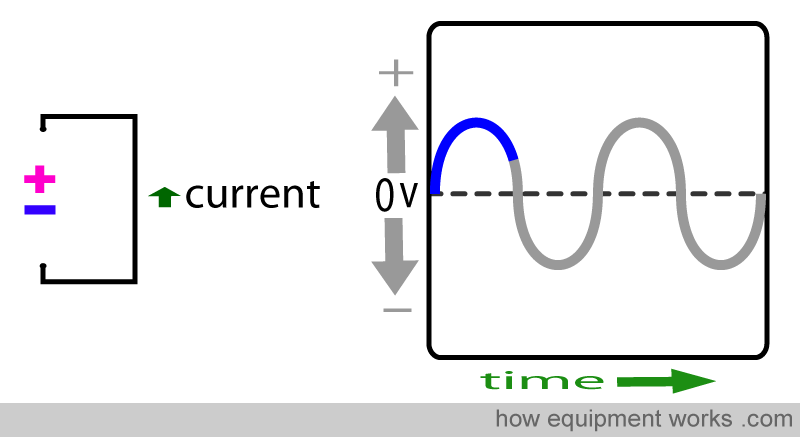
Note that AC has periods where there is no current flow.
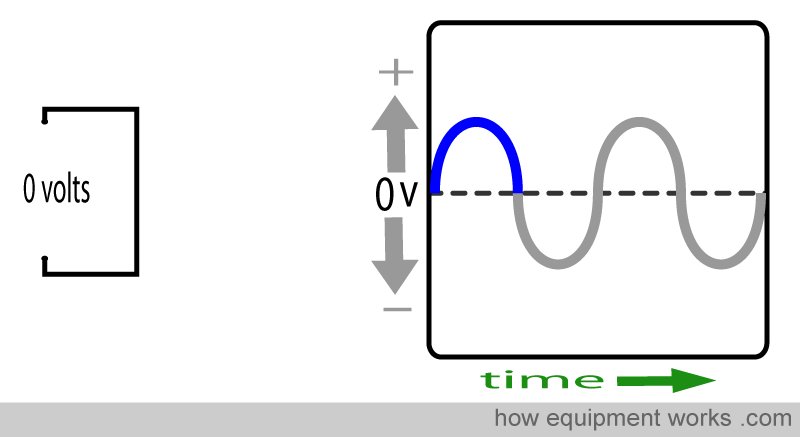
The change of polarity causes the tracing to cross the baseline.
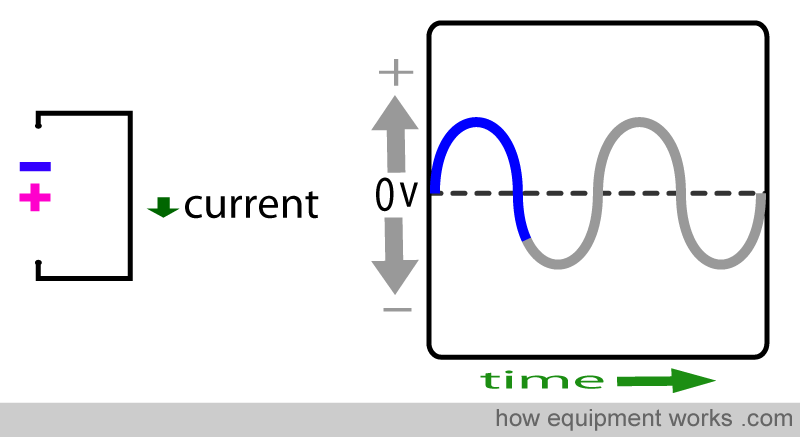
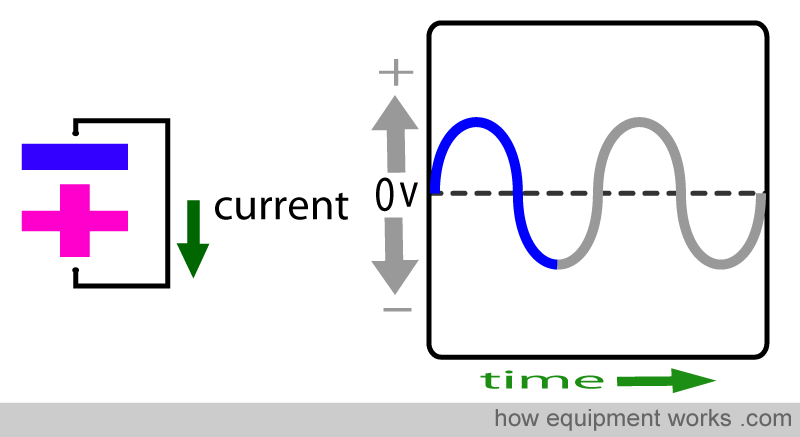
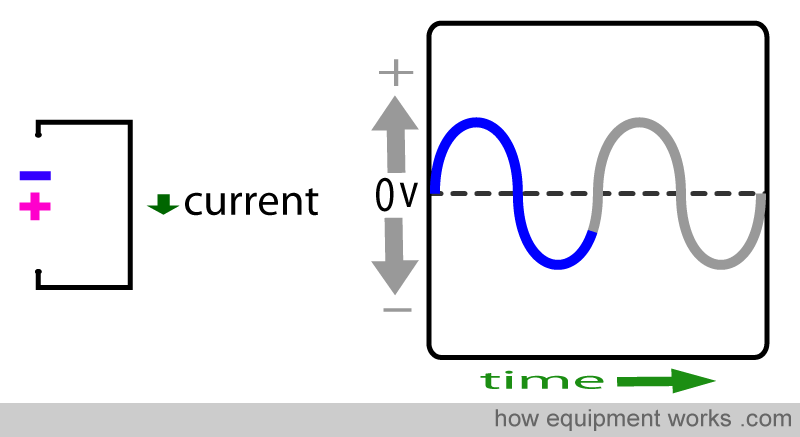
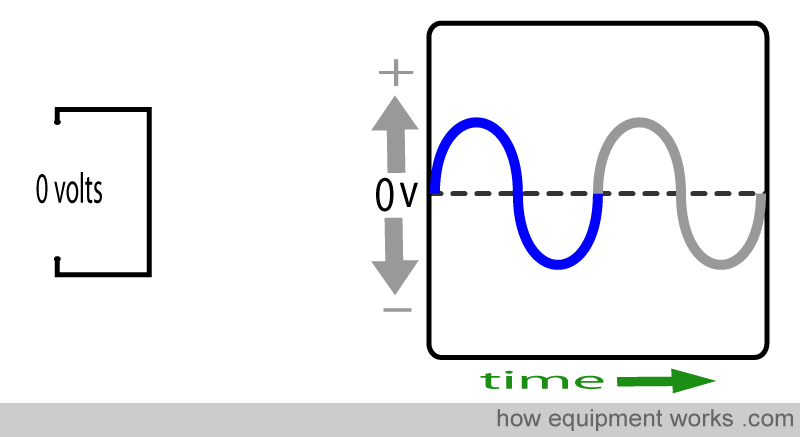
And the cycle repeats itself.
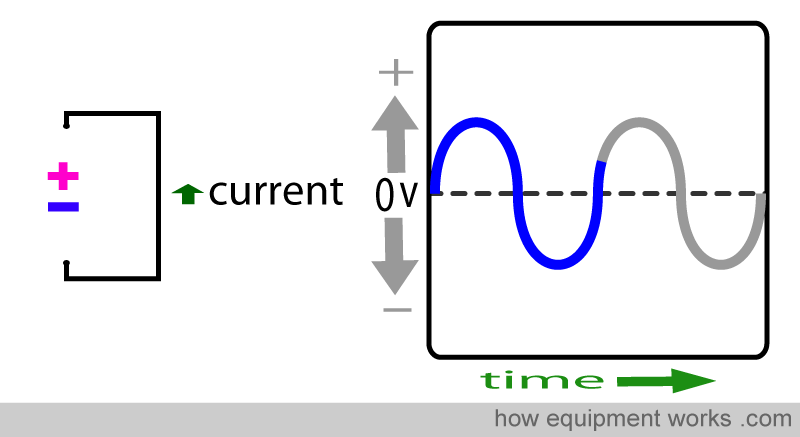
You would have noticed that AC has periods where there is zero potential difference. During these times the current flow is zero.
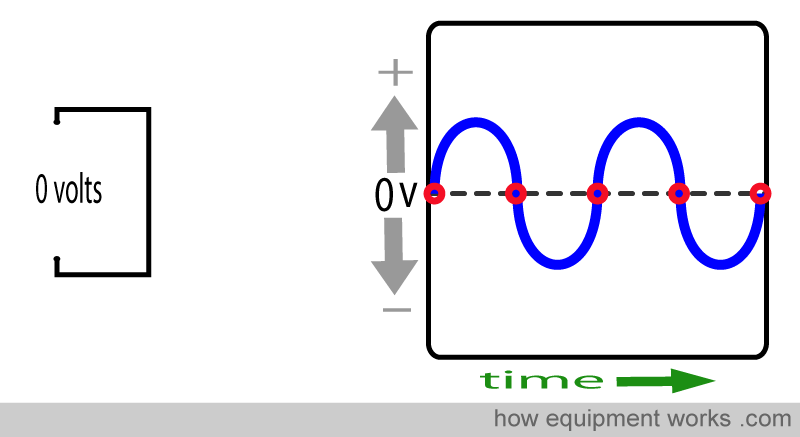
Normally one does not notice these zero periods because they happen so fast. However, sometimes you can see these off periods in fluorescent lights (tube lights). The off periods may make the light flicker (faster than what is shown below, the computer animation is not fast enough).

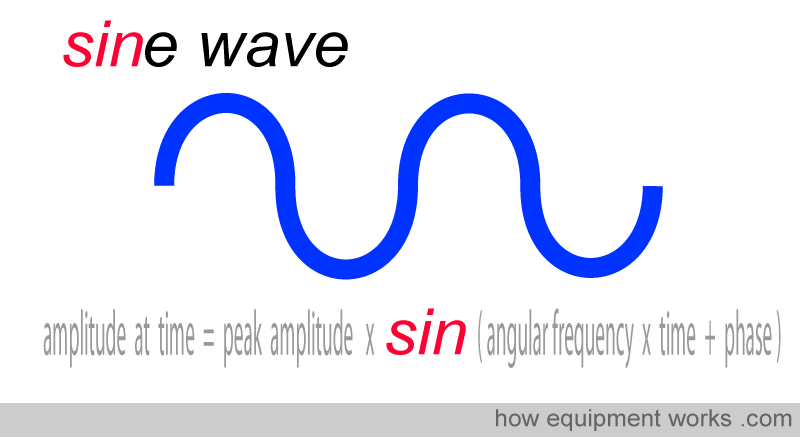
In physics, the curved waveform of AC can be described as being a “sine wave”. The mathematics of such a wave are described by a “sin” function in the complicated equation shown below, which I hope you will not memorize.
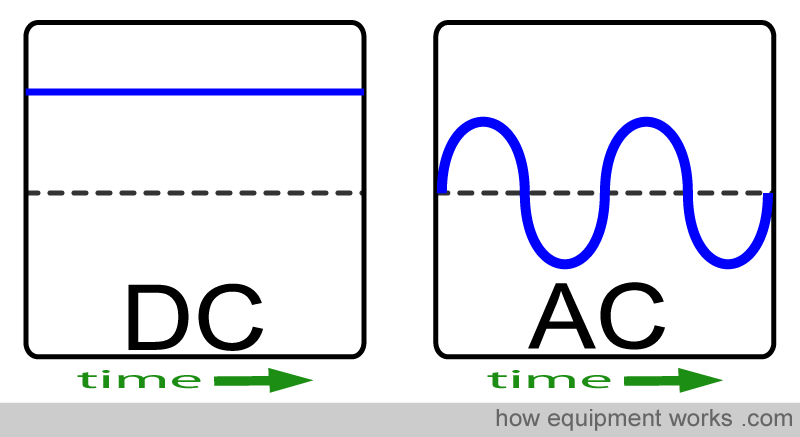
Just to recap, the image below shows a DC waveform and an AC waveform together for comparison.
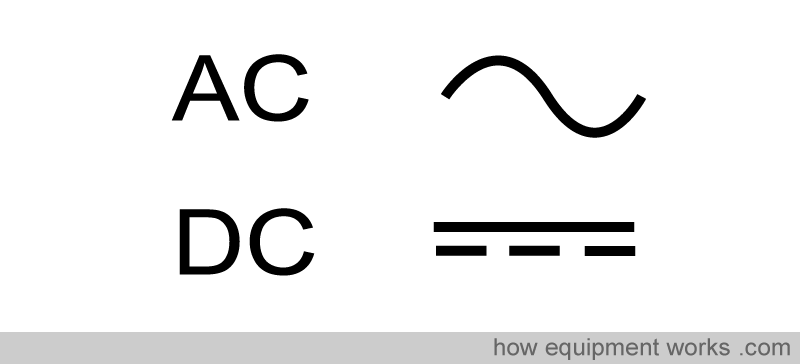
Below are commonly used symbols to represent AC and DC power supplies.
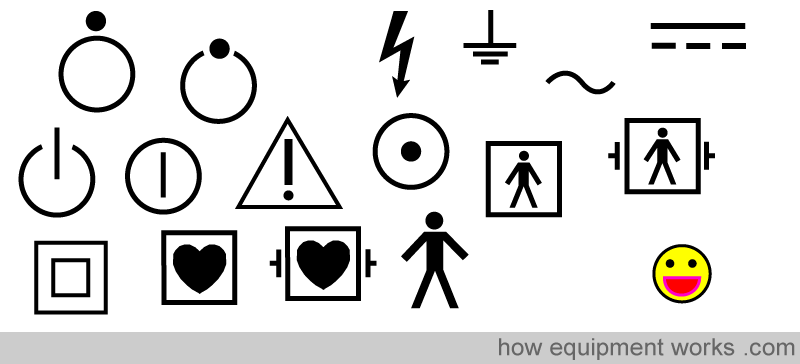
If you look around you will discover that your world is full of symbols. When you are bored have a look around your operating room and you will find plenty of hidden symbols. Typically they will be found on electrical equipment. Look where monitoring leads and power leads connect.
Why are our homes and hospitals supplied with AC and not DC?
The electrical current that comes out of the wall sockets in homes and hospitals is mostly AC. AC looks more complicated than DC, so why do they use AC to power our hospitals and homes?
To explain why AC and not DC are supplied to your hospital and home, you need to understand how a device called a “transformer” works. A transformer “transforms” voltage to a higher voltage or a lower voltage. If it transforms the input voltage to a higher output voltage, it is called a “step-up” transformer.
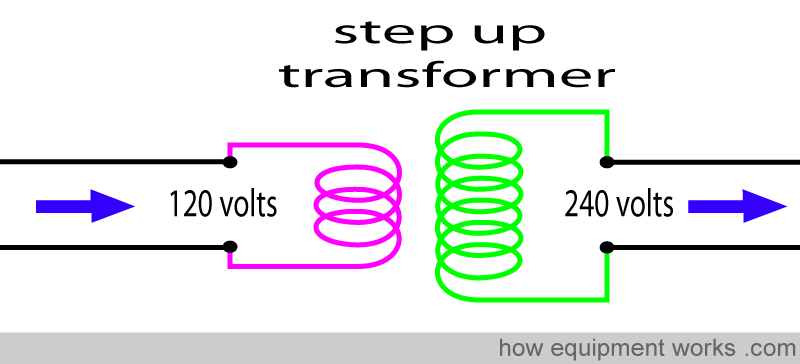
If it transforms the input voltage to a lower output voltage, it is called a “step-down” transformer.
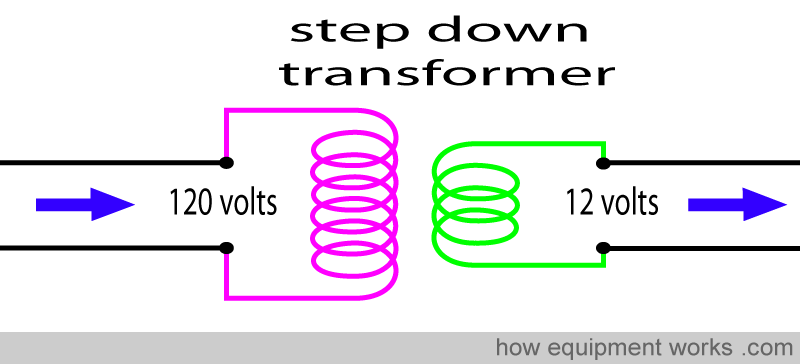
Let us see how a transformer works. The transformer uses two very important properties in the world of electricity.
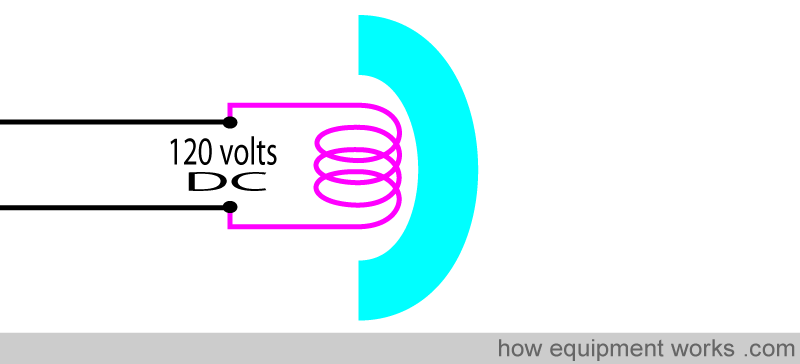
The first phenomenon used in transformers is that when a wire carries an electric current, it generates a magnetic field.
In the example below, the wire (coil) is carrying direct current (DC). The magnetic field is shown as a blue arc.
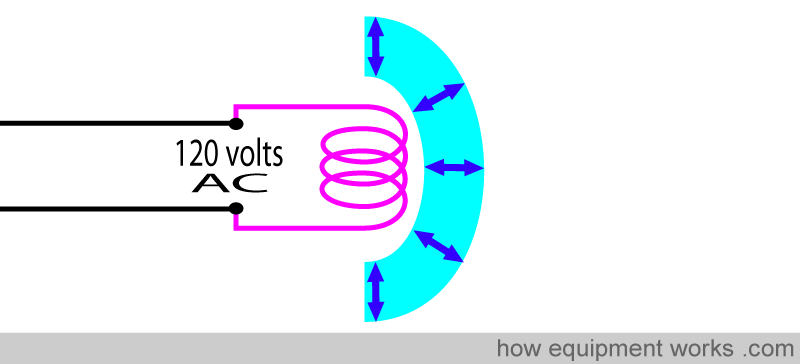
Below, we demonstrate a wire coil carrying alternating current (AC). It is important to note that, since the current is changing direction, it produces a “changing” magnetic field (shown by the blue arc with arrows). I.e. In DC the field is non-changing, whereas in AC the field is changing all the time.
Now let us discuss the second electrical phenomenon that makes transformers work. It is called “electromagnetic induction” and let us take a coil of wire to demonstrate it.
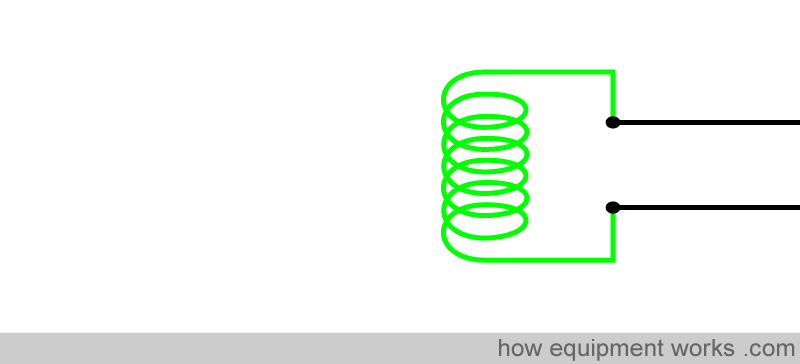
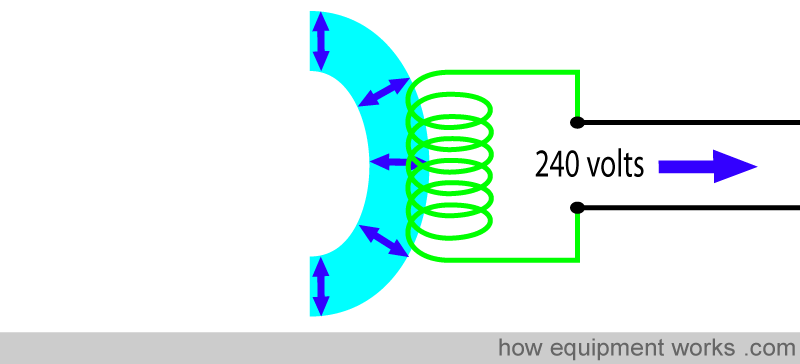
Electromagnetic induction refers to a phenomenon where if a wire (or coil of wire as in our example) is exposed to a CHANGING magnetic field, a current will be induced in the wire. In the example below, the changing (i.e. repeatedly increasing and decreasing) magnetic field is represented with the blue arc with arrows.
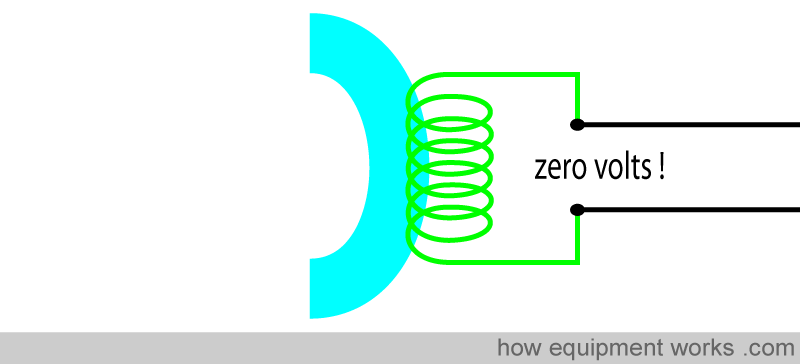
It is important that the magnetic field is changing. A non-changing magnetic field (as shown below) will NOT induce a current in the coil.
Now we can explain how the transformer works. The input AC goes into the primary coil (pink). This produces a changing magnetic field (blue arc with arrows). The changing magnetic field induces a current in the secondary coil (green) and in this way, electric energy is transferred from the primary coil to the secondary coil.
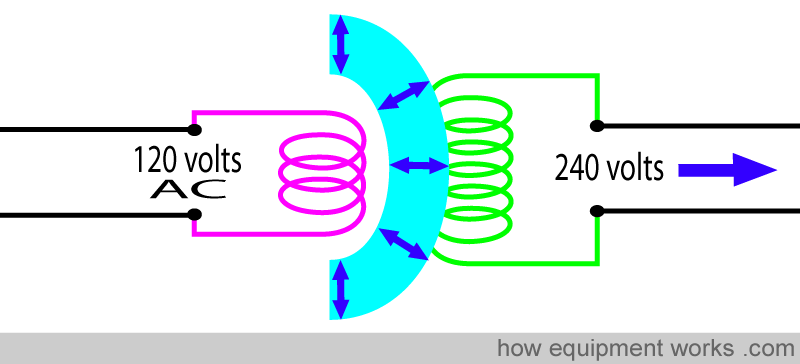
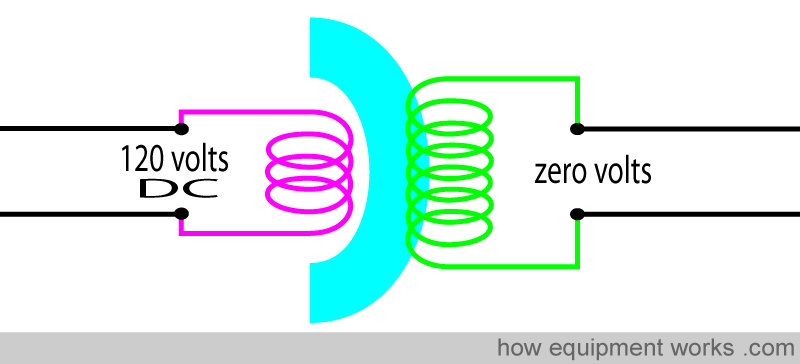
At this point you can see that a transformer works only with AC, because it needs a changing magnetic field to transfer energy across it. If you used DC, the transformer would not work. The magnetic field would be non changing and thus would not transfer energy across to the secondary coil.
Whether the transformer behaves as a step up or a step down transformer depends on the ratio of the loops in the primary coil and secondary coil. In a step up transformer, the secondary coil has more turns than the primary coil. Similarly, in a step down transformer, the secondary coil has less turns than the primary coil.
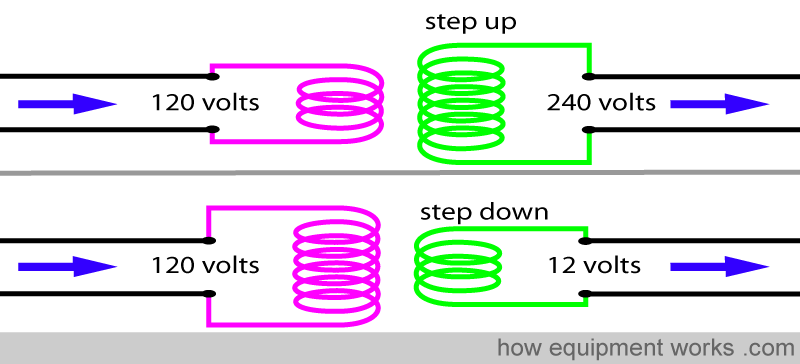
Now we understand that transformers can transform the voltage up or down. We also understand that we need AC for transformers to work. Now the question is, why are transformers so important?
It has got to do with the transmission of electricity. Earlier on, we discussed how electricity is generated at the power station.
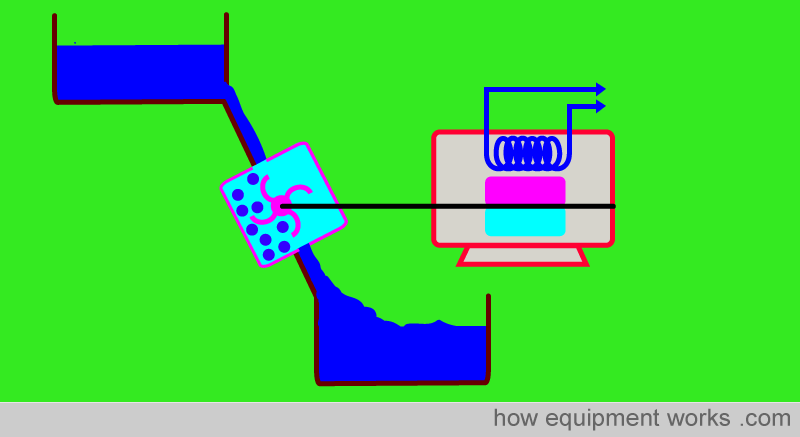
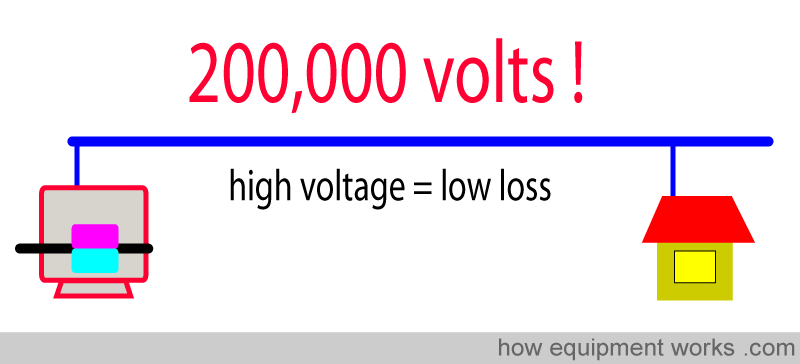
This power station may be many hundred miles / kilometers from your home or hospital and this means that the electricity has to travel very far before reaching you. One big headache for the power company is that when electricity travels in wires, it loses energy. If this happens over huge distances, there will be nothing left when the wire reaches you.
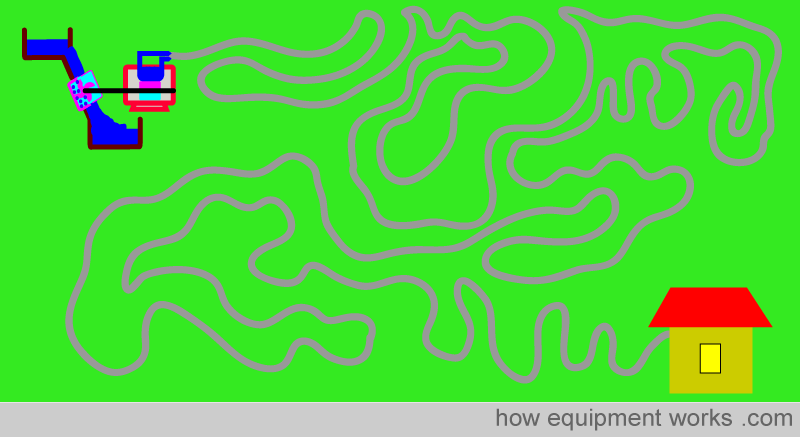
There is a physics principle that wires carrying a low voltage have higher losses than wires carrying a high voltage. (The explanation for this is beyond the scope of this website.)
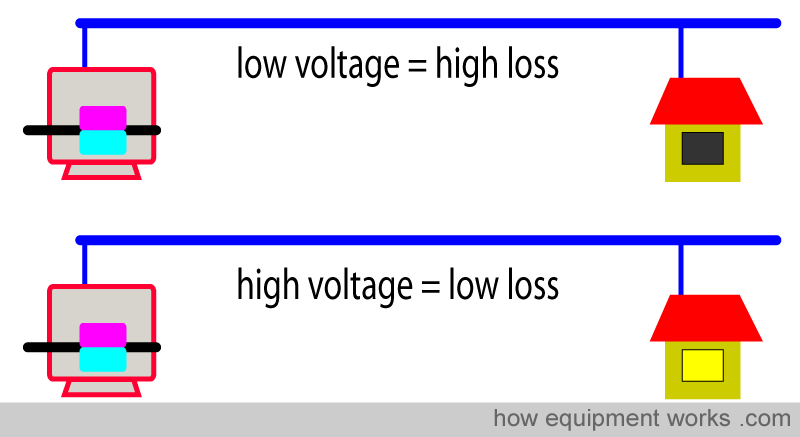
Therefore, to minimise losses, the power company transmits electricity at high voltages.
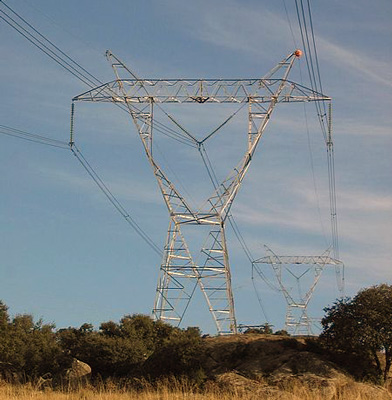
These high-voltage power lines can often be seen crisscrossing the landscape. Next time you are outside, do have a look for them.
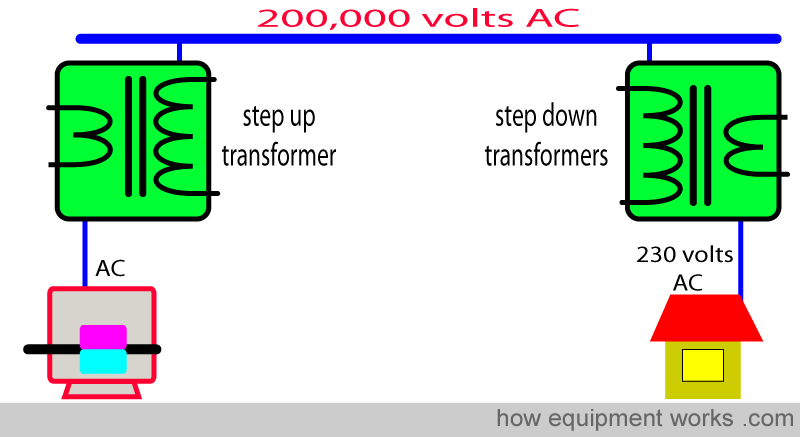
This is where transformers come in. Generators produce a relatively low voltage. This low voltage is raised by a step-up transformer to a high voltage, which is used to send the electricity over a long distance. As the wires reach you, the high voltage is reduced using a series of step-down transformers. The only practical way to generate the high voltages and subsequent reduction needed for economical power transmission is to use transformers. That is why AC is used for power transmission, all the way to the wall socket in your hospital and home.
Summary:
It is important that you know about electricity. It will help you to better understand electrical safety.
Current is related to the flow of electrons and is measured in Amperes.
Potential difference is what makes the electrons flow (current) and is measured in “Volts”. There are many sources of potential difference such as batteries, electrical supply sockets at home and hospital etc. Current is directly related to the potential difference, and this forms part of Ohm’s Law.
Resistance is something that resists current flow and is measured in Ohms. Current is inversely proportional to resistance. This relationship forms part of Ohm’s Law.
Ohm’s Law defines the relationship between voltage, current, and resistance. If you know two of the three components of Ohm’s Law, you can find out the third.
The current can be DC or AC. In DC, the electrons flow in one direction whereas in AC, the electrons alternate their direction.
You know (thanks to an oscilloscope) how DC and AC behave over time. You know how the AC waveform is formed.
Transformers are needed to make high voltages needed to economically send current over long distances. Transformers work only with AC, and that is why the power company supplies your home and hospital with AC.
Now that you have a basic understanding of electricity, you can safely read “Electrical Safety” by clicking “Next” at the bottom of this page.

Hello! My name is Pras, and I am the author of this website. I have made the website completely free to access so that people from all over the world can benefit from it.
If you can afford it, I would be very grateful if you would consider making a single donation of one dollar (or the equivalent in your currency) to help cover the expenses needed to run this website (e.g. for special software and computers). For this website to survive, donations are desperately needed. Sadly, without donations, this website may have to be closed down.
Unfortunately, perhaps because many people think that someone else will donate, this website gets only very few donations. If you are able to, please consider making a single donation equivalent to one dollar. With support from people like you, I am sure this educational website will continue to survive and grow. Thank you very much for your support.